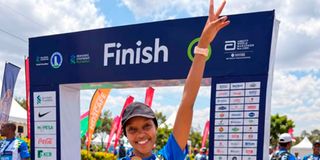
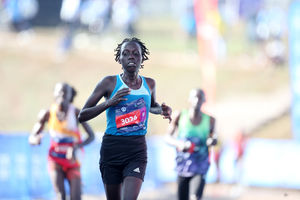
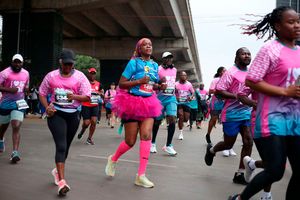
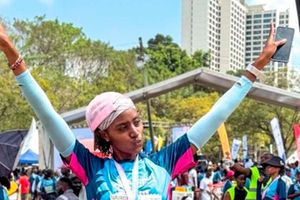
At kilometre 35 of the Standard Chartered Nairobi Marathon on Sunday, Ally Gakweli developed cramps in both thighs and needed medical assistance. It was his first full marathon, and he had prepared for months.
“I’ve done 21km five times. And the question I had for myself is, can I do a marathon?” he says.
He had spent four to five months preparing, with easy runs of between 10km and 15km, weekday speed sessions and weekend long runs of about 30km.
His biggest adjustment was Friday evenings out with friends, which became less frequent because he needed to be rested for Saturday morning runs.
“It was no, no, no, no to most of the plans on Friday evening or Saturday evening for the past couple of months,” he says.
He also increased his carbohydrate intake and paid closer attention to sleep, using his Garmin watch to monitor his rest.
Gakweli estimates he spent about Sh5,000 on two pairs of running shoes, Sh2,500 on registration and about Sh1,200 on transport, mainly Uber rides. He also pays Sh5,000 a month for a gym membership, although this was an existing expense rather than a cost incurred specifically for the race.
On race day, he ate five slices of bread with honey and tea. He also took an energy gel shortly before the race.
The first 30 kilometres were demanding, particularly because of the course’s elevation, but the biggest challenge came later. Around kilometre 35, his thighs began to cramp. He sought medical assistance and received oral rehydration salts and treatment for his legs. At one point, he says, he could not bend his knees properly.
“I actually stopped because I couldn’t go on,” he says.
After taking a break, he decided to continue. He says he limped through the last 100 metres, almost hopping on one foot because of the cramps.
Gakweli finished the 42.195-kilometre race in three hours and 41 minutes, 11 minutes outside his target.
For Gakweli, he says, his marathon reinforced the value of choosing to take on difficult tasks.
“I don’t have to wait for life to deal a sore card to me. I can willingly put myself through something that’s not comfortable and come out of it,” he says.
Collins Omondi, another first-time marathoner, began running as a way to keep fit. He jogged a few kilometres occasionally until friends introduced him to We Run Nairobi, a running club, about one and a half years ago.
Collins Omondi completed his first full marathon in 3 hours and 32 minutes, just two minutes outside his target, after months of training with his running club.
Photo credit: Pool
After participating in the 10K race at the 2025 Standard Chartered Nairobi Marathon, he began considering the full distance. A year of consistent running gave him the confidence to attempt it this year.
“I felt I had built enough of a base after a year of training and consistent running. I felt mentally prepared. I just wanted to test my limits,” he says.
Collins devoted the final four months to focused marathon preparation. He ran four times a week, covering between 40km and 60km weekly, with shorter runs during the week and long runs of between 15km and 30km on Saturdays. He did not hire a coach, relying instead on his running club and friends who were also training.
He estimates that he spent between Sh20,000 and Sh30,000, with running shoes accounting for much of the expenditure.
“My biggest expense was mostly the running shoes because they're expensive. Some of the expenses went to race entry, hydration and transport to the venue,” he says.
Training for his marathon also changed his social life. Early morning runs meant going to bed earlier and turning down Friday-night outings. He increased his carbohydrate intake and paid more attention to hydration.
“The hardest adjustment was discipline. Saying no to late nights and staying consistent, even when I was tired of training,” he says.
On race day, Collins woke up at about 3.30 am, having prepared his running kit, gels, shoes and vest the previous night. He ate a banana, drank water and arrived at the starting point along Southern Bypass at around 4.30 am.
The first 20 kilometres went well, and his target of finishing in under three hours and 30 minutes seemed achievable. But at around kilometre 35, cramps struck both calves.
“It was painful. I almost quit the race,” he says.
He slowed down, stretched, took water and continued. He eventually crossed the finish line in three hours and 32 minutes, two minutes outside his target.
“Crossing the finish line was emotional. You train for so long and then that moment comes. I felt pain, relief, joy, everything at once,” he says.
The moment that stayed with him most was the final 200 metres, when members of his running club cheered him on.
Collins is still undecided about attempting another full marathon, but if he does, he plans to work more on strength training and pay closer attention to hydration and nutrition during the race.
“It taught me that discipline beats motivation. There were days I didn't feel like running, but showing up anyway is what got me to the finishing line,” he says.
For Trizah Mukung, completing her first full marathon was about keeping a promise she had made to herself.
Trizah started running in January 2025. After completing the 21km race at the Standard Chartered Nairobi Marathon last year, she set herself a bigger challenge: returning in 2026 to run the full 42.195 kilometres.
“At the time, 42 km sounded like such a huge distance, especially considering that I wasn’t even a consistent runner,” she says.
Her confidence grew as she became more consistent and joined Miles and Smiles, a running community that organised weekly runs and helped her prepare for the longer distance.
She would do between 22km and 32km, and at the peak of training she covered approximately 70km to 80km a week.
“I had to become more intentional about eating balanced meals and knowing how to hydrate,” she says.
On race day, Trizah woke up at around 3.30 am. Despite months of training, she was nervous and had gone to bed late the previous night. She decided her main goal was to finish rather than put herself under pressure to achieve a particular time.
The reality of the distance hit her at around kilometre 35, when exhaustion set in and the remaining kilometres seemed much longer than she had anticipated. Her running partner, Whitney, who accompanied her throughout the race, helped her push on.
“When your own mind starts telling you that you have had enough, another person can remind you why you started,” she says.
Trizah says she finished in four hours and 50 minutes, beating her initial target of between five and six hours. She was delighted, particularly because she had never run farther than 32km at a go.
“Crossing the finish line felt unreal. Even now, I’m still processing the fact that I actually ran a full marathon,” she says.
The experience taught her the importance of consistency, patience and community. Before attempting another marathon, she hopes to improve her nutrition, incorporate strength training and seek more guidance on pacing and recovery.
For Vanessa Kamau, it was not a marathon but a 10km race that she is very proud of finishing. What began as an escape from a difficult period in her life has become a personal test of endurance she is eager to take on again.
Vanessa started running in May 2026, joining a group called Fitbit for Saturday morning runs in Nairobi’s Lavington and Westlands. At first, she alternated between running and walking, taking about an hour to complete five kilometres.
“I started running to get away from the chaos that was happening in my life. It became sort of an escape for me,” she says.
Her running was initially inconsistent, but about three months before the marathon, she began showing up more regularly. By the end of August, she could complete a 5km run. Then, on one training day, she discovered she had covered 8.1km instead of the five she thought she was running.
“I looked at my Strava, and it was showing me 8.1. Then I said, if I can do eight kilometres, I can do 10 kilometres,” she says.
That gave her the confidence to register for her first 10K race. Her preparation consisted mainly of Saturday runs, long walks when she could not run, and additional cardio during gym sessions. She did not have a personal coach or a specialised nutrition plan.
The main adjustment to her daily routine was making time for exercise. On days when she did not run, she tried to take long walks, while her gym sessions included more time on the treadmill.
She struggled to sleep the previous night and had laid out her kit in advance. On the way to the venue, road closures left her anxious as she hurried towards the starting point. She had gone alone, but her nerves eased when she met other runners making their way to the start.
“Sometimes you get your motivation from seeing other people also very motivated to do the same thing,” she says.
The more difficult part came between seven and eight kilometres, when her legs began hurting, she was out of breath, and she struggled to drink fluids comfortably. She had hoped to finish in one hour but realised she needed to slow down and pay attention to how she was feeling. The heat made the final stretch harder.
“I was trying to finish the race in one hour for the 10K, but then I had to also listen to my body and decide, okay, this is the first time we're doing this, so let's slow down,” she says.
At one point, she stopped to take photographs with other women along the route and chat with them before continuing. The interaction left her feeling energised.
As she approached the finish, she spotted coloured powder in the air and heard spectators cheering. She sprinted towards the line, finishing in one hour and 14 minutes, according to her account, 14 minutes outside her target.
“When I crossed it, I felt the tears in my eyes. I had done it,” she says.
Vanessa plans to attempt a half-marathon in the first half of 2027 and hopes to run the full 42.195 kilometres later that year.
Her advice to other beginners is to build distance gradually, train consistently, wear suitable shoes and make the experience enjoyable.
“Believe in yourself a bit more,” she says.
“We are doing it for fitness, we're doing it for mental health, we're doing it for fun,” she says. “Have fun with it.”