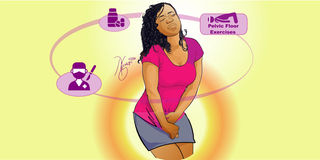
Rose and James are a young couple in their late twenties. They have been married for just two years, but their once-vibrant sex life has all but disappeared. They have not been intimate for three months, and neither seems to understand why the passion has faded.
Worried about what this might mean for their marriage, they have tried everything they can think of. They have researched the problem, experimented with various remedies, including herbal concoctions, but nothing seems to work.
Last week, they walked into the clinic hoping I could work some magic and reignite the passion in their marriage. Before offering any solutions, however, I needed to understand what had gone wrong. My first task was to investigate the possible causes of their difficulties.
“It is so frustrating. We are worried that we might slowly drift out of each other's hearts. We desperately need a lasting solution,” Rose said.
I began by taking a detailed sexual history, exploring their experiences before marriage and how their relationship had evolved. I also examined each of them. This was important because several medical conditions can cause a loss of sexual desire.
I ordered laboratory tests to complement my clinical assessment. To everyone's surprise, the results were normal.
“The problem with you doctors is that you are always quick to dismiss anything African,” Rose protested, interrupting my explanation. “Why are you not considering the possibility that this could be witchcraft?”
She explained that some people had opposed their marriage from the beginning and believed they might have resorted to witchcraft to ensure it failed.
I listened without dismissing her concerns. However, I explained that witchcraft has no scientifically established diagnostic criteria and that I was therefore not qualified to investigate or offer an opinion on it.
Before I could continue, James raised another concern.
“Doctor, is there an alternative to urine pads? They are quite expensive, especially when someone has to use several in a day,” he asked.
It was an unexpected question, but it opened an important door.
On further enquiry, I discovered that Rose had been experiencing involuntary urine leakage and had to wear absorbent pads throughout the day.
“Sometimes the smell becomes quite strong, especially when she has not changed the pads. I find it difficult to feel intimate when that happens,” James added.
There's a price to pay for being a sugar baby.
The condition is known as urinary incontinence, which simply means the involuntary leakage of urine. It is more common than many women realise, yet it is often suffered in silence because of embarrassment.
The first is called stress urinary incontinence. It occurs when activities that increase pressure in the abdomen, such as coughing, sneezing, laughing, lifting heavy objects or climbing stairs, cause urine to leak. This usually happens when the muscles supporting the bladder and urethra, particularly the pelvic floor muscles, are weakened.
Another type is urge urinary incontinence. This occurs when a woman experiences a sudden, overwhelming urge to pass urine and cannot reach the toilet in time. The bladder contracts involuntarily, forcing urine out even when the woman is trying to hold it.
In some cases, urinary incontinence may also be associated with urinary tract infections, neurological conditions, certain medications and other underlying medical problems. A proper medical assessment is therefore essential to establish the cause.
“Well, that explains a lot. Mine happens whenever I cough, climb stairs or do similar activities,” Rose said anxiously. “Can it be treated? I always thought it was normal because I don't experience any pain. I have used pads for as long as I can remember.”
I reassured her that urinary incontinence is treatable, although the appropriate treatment depends on its underlying cause and severity.
In Rose's case, the assessment pointed to weakened pelvic floor muscles. I referred her to a physiotherapist for supervised pelvic floor exercises to strengthen the muscles responsible for supporting the bladder and controlling urine flow. Improvement would take time, and she would need to remain consistent with the exercises. In some cases, treatment may take several months.
“So why didn't anyone tell me this was not normal?” Rose asked, her eyes filling with tears.
Her reaction reminded me of how deeply intimate health problems can affect a woman's confidence, self-esteem and sense of worth. Many women quietly endure conditions that are treatable simply because they do not know where to seek help or feel too embarrassed to speak about them.
I also realised that treating Rose's urinary incontinence would only address part of the couple's problem. Their intimacy had suffered for months, and they would need guidance to rebuild it.
When a couple has experienced a prolonged period without sexual intimacy, restoring the physical condition that contributed to the problem does not automatically bring back desire. The couple may also need sex education, counselling and practical guidance to reconnect emotionally and physically. For Rose and James, this would be an important part of their recovery.