When couples struggle to conceive, attention often turns quickly to women. Yet fertility specialists say men are equally important to the conversation, especially as more people choose to start or grow their families later in life.
According to fertility specialist Dr Kireki Omanwa, male fertility challenges are more common than many people realise but often go undetected because testing tends to focus on women first.
He gives an example of a case where a man who has four children from a previous relationship. The man remarried and his current wife is six months pregnant. However, when the man underwent routine fertility testing, results repeatedly showed no sperm.
Further investigations, including blood tests and a scrotal ultrasound scan, showed that his hormone levels were very high and his testicles were very small.
A biopsy later confirmed that he had never produced sperm, a condition described as Primary Arrest of Spermatogenesis, meaning sperm production does not complete.
“Many men have the problem, but the focus is usually on the women,” he notes.
According to him, fatherhood can be understood in two ways: genetic fatherhood, where a man contributes biologically, and social fatherhood, where he plays a parenting role without a biological link.
Dr Wanjiru Ndegwa, an IVF and fertility specialist, says sperm plays a much bigger role in conception than many people realise, not only in genetics but also in the overall pregnancy journey.
She notes that male factor infertility is increasingly being seen in clinics as more men begin to seek medical help.
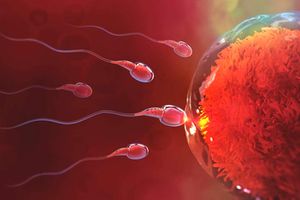
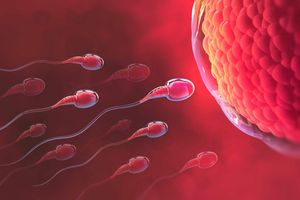
“Sperm health is assessed through several aspects. These include sperm count, where normal levels are considered to be more than 40 million in a sample. Movement is also important, with healthy sperm expected to move at about 30–32 per cent. Quality and shape of sperm, often referred to as morphology, are also assessed.”
For couples under 35, fertility experts generally recommend seeking medical advice after one year of regular, unprotected intercourse without conception. Research shows that most healthy couples conceive within this period.
Statistics show that up to 80 per cent of normal couples conceive within one year, and another 10 per cent in the second year.
After 35, however, both partners may begin to experience changes.
A 2024 study published in Reproductive Biology, which analysed 4,250 men undergoing fertility evaluation, found that sperm DNA damage remained relatively stable until age 35 before increasing with age. The researchers noted that male age, like female age, can influence fertility and should be considered when planning a family.
“For women, egg quality declines with age. For men, sperm quality can also reduce depending on age and environmental influences,” she says.
Dr Ndegwa stresses that couples planning for a child after 35 should consider early evaluation by a fertility specialist or gynaecologist. This involves reviewing medical history and carrying out specific tests.
For women, tests may include transvaginal scans to check the reproductive organs, including the uterus, cervix, ovaries and fallopian tubes, an anti-Müllerian hormone (AMH) test to check the number of eggs, thyroid tests, an hCG (human chorionic gonadotropin) test to check the pregnancy hormones, and a general physical examination.
For men, the main test is semen analysis, which checks sperm parameters such as count, movement, and quality.
Dr Richard Saning’o, a naturopath, points to modern lifestyles as a growing influence on fertility. He says people are increasingly exposed to toxic substances, which over time may interfere with the body’s hormonal systems and other functions, including those linked to reproductive health.
"Natural systems in the body, including those linked to hormone production and regulation, may be affected by these lifestyle changes,” he explains.