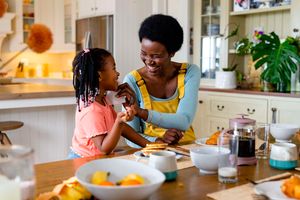
For many single mothers, dating a man with children feels less like starting a love story and more like stepping into a family drama already in progress.
For these women, it’s not about disliking their potential husband’s children—it’s about inheriting baggage, blurred boundaries, and responsibilities they never signed up for.
The man might be charming, ambitious, and ready to commit, but the moment he mentions “my children,” the women get unsettled.
Keziah Kihuga, a single mother of two, is among the women who express concerns about marrying a man with children.
“I prefer not to get married to a man with children because I honestly don’t believe that I can love his children, let alone parent them. In our society, women do 99 per cent of parenting. I have poured years of mental, emotional, and physical labour into raising my own; adding more children who are not mine feels like a burden I’m unwilling to carry,” she tells Nation Lifestyle.
She yearns for a helper and sometimes wishes her children could have “three or four parents, because raising a child into a decent human being is too much work for one person.” Yet, she is clear that the man she chooses should not have children from a previous relationship. “I have never been in a relationship with a man who has children. I’d rather be alone than date a man with children,” she says.
Keziah Kihuga, a property realtor at KezzCare Properties Limited and a mother of two, has never considered dating or marrying a man with children.
Photo credit: Pool
“I never got to be a young, carefree adult. Before I was 17, I was changing my younger siblings’ nappies. Then I started dating my children’s father when I was 17 and he was 21. At the time, we were trying to navigate adulthood. We weren’t ready. We lived together for five years. But by the time my youngest child was just a few months old, the relationship had crumbled. He has never seen the children since we parted,” she says.
“The idea of taking on another round of parenting and the children aren’t even mine feels like robbing myself twice,” she says.
“A man with children will always have to split his attention and resources. That means my children and I would never have his full focus. I don’t want to feel like I’m competing with another family. I want to keep my children’s world stable. Bringing in another man’s children creates divided loyalties, competition, and confusion. They deserve clarity and peace, not the complications of a blended setup,” she says.
The man might be charming, ambitious, and ready to commit, but the moment he mentions “my children,” the women get unsettled.
Photo credit: Pool
Culturally, she says, there are also negative stereotypes associated with stepmothers.
“I don’t want to be boxed into that role.,” she says, adding, “I have been called selfish and accused of limiting myself. But I would rather be called selfish than end up miserable.”
Studies on remarried women show that their satisfaction in a new relationship often depends on whether they feel secure about their place in the blended family, how well they manage conflicting expectations, and how clearly family boundaries are defined.
“I’m looking for someone who doesn’t want children in the future. I want us to build our own life together without external complications. I want an intelligent man who values me first and shares my vision of building a stable, luxurious, peaceful life,” she says.
According to the latest Kenya Demographic and Health Survey (KDHS), the proportion of households led by women in urban areas rose from 27 per cent in 2014 to 31 per cent. Among them are single women who still hope to remarry.
At the same time, the number of single fathers is also increasing, as outdated stereotypes that questioned men’s ability to parent alone continue to fade. Today, more men are confidently raising children on their own, challenging the long-held belief that caregiving is solely a mother’s role.
At some point, many of these single parents may consider remarriage. But who really makes an ideal partner the second time around? Lucky, who opted to use only one name, is a mother of one.
“Raising my child alone has been challenging, but also gratifying,” she says. But she craves affection and one time dated a father of three.
“He was a good man, but he often had to cancel our dates or sometimes a date with my child to handle emergencies with his children. Not that I didn’t want him to care for his children, but most of the time, when he received the calls, they were lies from his attention-seeking ex-wife. I realised neither I nor my child was going to come first, and that was it for me,” she says.
The 31-year-old says she desires a relationship in which her partner’s attention and dedication are completely turned to her and her children.
“When a man already has children, no matter how well-intentioned he is, his priorities are constantly divided. That doesn’t seem fair to me or my children. Some will argue that I already have a child, and my focus should be on finding someone with a child to make work easier, but only a few men will love your child wholeheartedly, and even if they do, that will change once you have a child with them,” she says.
“I have seen and read posts from women who wanted to leave their marriages because they felt their children were being neglected. Raising children is already costly, and I don’t want to get into endless arguments over money. What I need most is emotional stability and full commitment,” she explains. She is also of the opinion that stepmothers are viewed negatively.
“I don’t want to expose myself or my children to that. My child’s emotional well-being comes first. I don’t want my child to feel inferior to another family or to have to continually adapt to complex dynamics. Stepmothers are often seen as unjust, if not cruel, in our culture, and blended families are viewed negatively. Being with someone who has children already will constantly put me under scrutiny from the extended family because, no matter how good you are, they will always find something to blame you for. I wouldn’t want my child or myself to face such stigma,” she says.
“They say I’ll miss out on a good man. However, I believe that everyone has the right to decide what works for them. I deal with criticism by reminding myself that no one else will bear the repercussions of my decisions except for my child. I don’t see children as baggage. I’d say the dynamics surrounding co-parenting, ex-partners, and responsibility and divided attention are too heavy. I’ve seen cases where husbands do everything in the house except caring for the child or children their wife had before they met,” Lucky says.
Rurigi Kariuki, a psychologist, has worked with several single mothers in therapy and group settings who prefer not to remarry, especially if the new man already has children.
“Many women nowadays choose to remain single, and in therapy conversations, the reasons include protecting their children, avoiding conflict in blended families, or simply valuing the independence they have built,” he says.
Rurigi Kariuki is a counselling psychologist based in an NGO in Nairobi.
Photo credit: Pool
Both men and women can be cautious about remarriage, but the hesitation is stronger among single mothers.
“Men are generally more open to remarrying compared to women, but I’ve also spoken to fathers who hesitate to marry women with children. Their concerns revolve around finances, balancing loyalties among children, or the fear that blending two families may bring more strain than support.”
Mr Kariuki notes their decisions often come from wanting stability for their children and themselves.
“Culturally, women are seen as natural caregivers,” he explains. “That means a single mother can feel pressured to mother children who are not her own before she is ready. This can trigger anxiety and self-doubt.”
Beyond unclear roles, there is also the fear of conflict. “Children sometimes resist a new partner, not out of hate, but because they feel loyal to their biological mother or unsettled by too much change. The stepchildren often direct their grief or anger toward the new adult in their lives.”
For the woman, that rejection can cut deeply, stirring old wounds about belonging and worth. And children are only part of it. “A man’s continued contact with his ex-partner, necessary for co-parenting, can bring up fresh insecurities,” he says.
Even when the relationship is strictly about the children, a single mother may quietly wonder, “Is his heart still tied to the past? Am I really secure in his life?”
Family doesn’t always make things easier. “Relatives often have strong opinions about new unions. Their silent disapproval or constant interference can turn into a heavy emotional burden, leaving the woman feeling like she is being tested at every step.”
Mr Kariuki shares that many single mothers have already been through seasons of abandonment or betrayal. Their hesitation is not about jealousy, but about wanting stability.
“They often ask themselves: Will his loyalty be divided? Will I always come second to his children or his ex-partner? Will I ever be his first choice?” he says. What they are seeking, he adds, is not perfection, but reassurance with clear signs that they are valued, safe, and prioritised.
Culture has its role in shaping these fears. Kenyan folktales and TV dramas have long painted stepmothers as cruel or jealous, a picture that lingers in the public mind.
“Even today, women who marry men with children often feel they are stepping into a role already shadowed by suspicion, often described as cultural imprinting. Many still believe that the best marriage is one without previous responsibilities,” he notes.
No matter how kind or nurturing she is, she fears being labelled the bad stepmother.
Generational attitudes compound the weight. Many still idealise “clean unions,” where neither partner brings prior commitments.
“Their disapproval can leave women feeling torn between their own happiness and the expectations of family loyalty. Younger women, shaped by city life and changing norms, may be more open to blended families.”
Yet even they carry the quiet echo of cultural stigma. Despite the challenges, Kariuki offers hopeful pathways for couples navigating blended families.
“Couples who openly talk about finances, parenting roles, and boundaries with ex-partners reduce uncertainty. Without such clarity, fears about the future easily overshadow love in the present,” he says.
He admits bonding with children may take time. He recommends slow, natural integration through shared activities, honest conversations, and space for children to express fears.
Additionally, family therapy helps a lot. “When all voices are heard in a safe space, blame gives way to understanding. The family system heals together, rather than leaving one person to carry the weight.”
Mr Kariuki emphasises that men should present their new partners with dignity and clarity. This, he says, will lessen suspicion and make acceptance possible.
Too often, conversations about stepfamilies stop at the challenges. Yet, there are real benefits.
“Men who are already fathers often bring patience, empathy, and hands-on parenting skills that enrich the new home. Stepchildren, once trust grows, can become sources of unexpected joy and companionship,” he says. “They also show children that family is not limited to biology but can be woven together through care, trust, and love.”
Isaac Maweu, a lifestyle coach, says the decision of whether to get into a blended family or not is layered with lifestyle values, cultural expectations, and practical realities that many women cannot ignore.
Isaac Maweu is a life coach at Greatness Assured Consultancy Limited, based in Nairobi.
Photo credit: Pool
Mr Maweu points out that one of the biggest reasons single mothers shy away from men with children is the sense of added responsibility.
“The children, to an extent, are an extra burden to the woman,” he says. Beyond that, the children belong to another woman who, if still in the picture, can create tension and conflict. There is also the unspoken fear that if the relationship turns south, the man may retreat to his previous family.
In today’s world, financial stability is more than just a preference. For single mothers who are already carrying the weight of providing for their own children, a partner’s ability to contribute financially to a secure life matters deeply.
“No one wishes to be in a relationship in the current world without financial stability. We live in a time where many women are hypergamous – they want to see that a man is financially stable. It is an added advantage because relationships today are monetised.”
Social norms still shape how women make choices. Society often prefers single mothers to childless men, painting them as the ‘right ones’. “Yes, it’s true,” Mr Maweu says. “Society defines marriage in a certain way, with standards, expectations, and culture. If a woman marries a man with children, people see red flags and pitfalls, and the pressure becomes difficult to ignore.”
For women willing to take the step, the reality of blended families can be challenging. Combining households means merging different values, habits, and traditions, all of which can be confusing for children. “Even striking a balance in discipline can be a challenge,” Mr Maweu notes.
Co-parenting schedules add another layer of strain. Former partners, at times, use children as weapons, creating conflict that spills over into the new relationship. Children themselves may feel torn between competing sets of values, leading to confusion and even emotional detachment.
“These situations increase the chances of adverse childhood experiences (ACEs),” Mr Maweu explains. “That affects children’s behaviour and even their mental health later in life.”
Finances also complicate things. Who pays for what? How will both sets of children be treated? Will there be fairness across households? These often weigh heavily on couples.
Age and experience also shape how women approach such decisions. “The older generation had a very different way of looking at things compared to younger single mothers,” Mr Maweu says.
“We always act from our past experiences. Older women may be more cautious, while younger single mothers shaped by new experiences and shifting norms may see things differently.”
For those who are open but worried about lifestyle clashes, Mr Maweu advises: “Understand what you want, rather than just accepting what is offered. That’s how you avoid regrets born from temporary feelings.”
He advises that women should try to picture themselves in that family setup and assess the challenges they might face. Premarital counselling or seeking guidance from a therapist can help couples prepare for the realities of blending households before making lifelong commitments, such as when conflict arises and how to handle it.