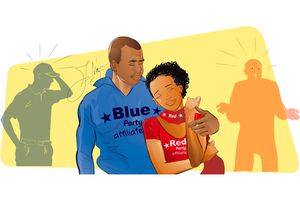
There was a serious disagreement at the Chama meeting last Saturday. The chairperson convened a meeting to discuss marital rape. In keeping with tradition, I was invited to this meeting because topics relating to sex were to be discussed, so that I could offer professional advice.
"I feel it is wrong for a man who purports to love you to force himself on you when you don't want to have sex," she said at the start of the meeting.
"We have information that some of our members are enduring such experiences in silence, and we want to know how to proceed."
There was some grumbling in the room, then a shrill voice from the back interjected forcefully: "With all due respect, I beg to differ with the chairperson. I feel we are heading in the wrong direction!" she said, going on to explain that a wife should never deny her husband sex.
She quoted the Bible, saying that all married people are commanded not to deny each other sex. She threatened to resign from Chama, claiming that women were continuously adopting an activist attitude towards marriage.
The vice chairperson immediately stood up and walked to the front, accidentally dropping her cup of tea and breaking it in the process. She was emotionally charged and ready to defend the chairperson.
"Are you not the same people who come here claiming that men are sleeping around and risking disease?" she asked. She explained how her friends had become infected with sexually transmitted diseases because they had ignored the issue and continued to have sex with unfaithful men.
According to her, it was not just a woman's physiology that made them not want sex at certain times of the month, but also the circumstances they found themselves in because of men.
"Can you imagine quarrelling with this man all day for whatever reason, being so upset, and then having him jump on you and rape you the moment he gets home?" she asked rhetorically. "I believe we have rights, and one of those rights is to consent to sex!"
"I don’t accept the idea of rights," interrupted a member. "Don’t men have the right to have sex with their wives too? Doesn't the law require that everyone meet their conjugal responsibilities and obligations? Can't you get divorced if you don't have sex with your husband?”
There was noise and shouting from the members, and nobody was listening to anyone else anymore.
Realising that things were getting out of hand, I stood up and requested to take over the discussion.
Rape is defined as sex in which one of the partners has not consented to the act. This is irrespective of the relationship between the two people involved. Therefore, marital rape is possible and may occur for various reasons, including relationship problems and conditions that reduce sexual desire.
On the other hand, married people do have conjugal rights and are legally expected to have sex. Denying your partner sex can be grounds for divorce.
However, the core issue in this discussion is the reason why lovers have sex. If you are having sex just to fulfil the legal requirements, you are doing yourself and your partner a disservice. It is also wrong to allow yourself to be raped or to actively rape your spouse; no lover would do that.
Sex in marriage is an expression of appreciation for each other. It involves allowing yourself to be vulnerable and relaxing to enjoy pleasure. It is also intentionally giving pleasure to someone you love, with the intention of making them happy.
Yes, there is a metaphysical and spiritual connection to it that cannot be described in words or understood by mortal minds. Sex is not just a physical act of rubbing body parts together.
Therefore, you cannot have sex with someone without being emotionally connected to them. You cannot do it with your enemy. Partners must be friends and emotionally connected to have fulfilling sex. Mending your relationship is critical for this to happen. Couples should seek help to build their relationships instead of enduring unfulfilling sex in dysfunctional relationships.
"I need time to digest this, and I believe the rest of you do too," said the chairperson, closing the meeting. The meeting dispersed in unusual quietness, which was very unlike the usually noisy endings to Chama meetings. This was a sign that many people were troubled by this heated discussion, which had not reached a clear-cut consensus.