Solo travel is having a moment in Kenya. This year, more Kenyans are discovering the thrill of travelling alone. Whether it’s a short break out of town or a quiet weekend in the city, Kenyans are carving out some time alone. With fewer schedules to juggle and more room to explore freely, travellers say going solo has become one of the most refreshing ways to take a break.
For Samson Mwambui, a critical care medical doctor and seasoned hiker, travelling alone this year wasn’t about convenience. It was a deliberate decision to sit with himself.
“I felt a strong pull to step out of my comfort zone,” he says. “I’ve always traveled with friends, but I wanted to challenge myself on a deeper, more personal level.”
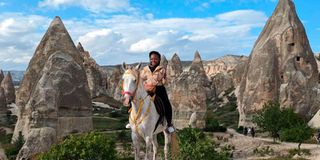
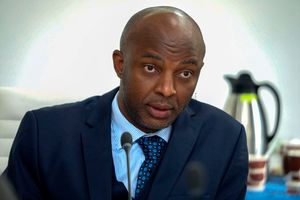
Samson Mwambui, a critical care medical doctor and seasoned hiker, chose to climb Mount Kilimanjaro solo as a personal challenge to step out of his comfort zone and reconnect with himself.
Photo credit: Pool
That pull led him to Mount Kilimanjaro. The mountain had lived on his bucket list for nearly six years, postponed repeatedly by finances and timing. When he finally made it, going solo felt symbolic. “Hiking Africa’s highest peak alone felt like a rite of passage,” he explains. “It was about disconnecting from my routine, reconnecting with myself, and proving I could take on something big completely on my own.”
Samson chose the Marangu Route, drawn by both its challenge and cultural richness. Still, the idea of climbing such a vast landscape alone came with doubts. “I wondered how I would manage the long hours without the usual group energy. I questioned if the silence would feel overwhelming,” he says. “But once I reached the gates, the fear melted into excitement.”
Physically, he was prepared. An extreme athlete, Samson regularly hikes Mount Kenya, often reaching Point Lenana in six hours. He trained through consistent hikes, cardio, strength training and long runs around Karura Forest. Preparation also meant travelling light, researching weather patterns, and mentally committing to enjoying the process, not just chasing the summit. “As a doctor, I also made sure my first aid kit and altitude medication were in order,” he adds.
Technology helped. Offline maps, Strava, weather apps and Kilimanjaro travel forums gave him insights from recent climbers. A local guide, Tumaini, provided real-time updates on the ground.
What stayed with him most, though, weren’t the logistics, but the quiet. “Walking in silence through the mist, forest and desert was surreal,” he says. “No city noise. Just wind, rain and thunder. There were moments where it felt like the mountain was speaking directly to me.”
The climb was not without hardship. During his summit push, the weather shifted suddenly, cutting through his gear. Exhaustion also set in; Samson completed the hike in just 48 hours, far less than the usual five to seven days. “When it got tough, I adjusted my pace, stayed hydrated and reminded myself why I started,” he says. “Solo travel forces you to rely on your inner voice.”
That reliance, he says, is what makes traveling alone different. “In a group, you’re always adjusting to someone else’s energy. Alone, you have full autonomy. You stop when you want, move when you want, reflect when you need to.”
The experience reshaped how he views solitude. “I learned that solitude is not loneliness. It’s clarity,” he says. “The more I push myself, the more grounded I feel.” Since then, he has continued hiking Mount Kenya solo, returning to Nairobi feeling stronger and more self-assured each time.
For Samson, the journey changed his relationship with travel altogether. “It reminded me that the world is friendlier than we think,” he says, pointing to the kindness of guides, locals and even strangers on the trail. “Travel doesn’t have to wait for the right company. Sometimes, you’re the only company you need.”
Would he recommend solo travel? Without hesitation. “It forces growth. It teaches you to trust yourself,” he says. His advice to first-timers is simple: start somewhere you feel drawn to, research well, pack smart, share your itinerary and don’t rush the experience.
Looking back, he admits he would do one thing differently: slow down. “I wish I had taken more days on the mountain and spent time in Moshi, eating local food, journaling and documenting the experience,” he says. “But overall, I’m glad I trusted myself enough to take the leap.”
For Scovia Miruka, a Kenyan travel and lifestyle creator, going solo this year wasn’t dramatic. It was practical, and deeply personal.
Scovia Miruka, a Kenyan travel and lifestyle creator, reflects on solo travel as a practical yet deeply personal experience that gave her freedom, confidence and time for self-reflection.
Photo credit: Pool
“I needed a break from work, and I really love travelling,” she says. “If there was no one to join me, I was still willing to go by myself.”
The trip was a last-minute decision, which shaped where she went. She picked destinations that did not require visas and found herself drawn to Asia. Excited, but cautious, she admits she had her fears. “Travelling alone, anything can happen and you literally have no one,” she says. “Of course I had fears.”
Still, doubt wasn’t one of them. Scovia had travelled solo before, so being alone didn’t feel foreign. Preparation became her anchor. She made sure she was financially ready, carried backup bank cards, and downloaded essential apps — ride-hailing services to avoid bargaining for taxis at airports, and Google Translate to help her communicate with drivers and service providers.
One moment tested her calm. She lost her ATM card. “That shook me a bit,” she admits. But having travelled with two cards meant she wasn’t stranded, a reminder of why solo travel demands extra foresight.
Among the highlights was finally visiting the Philippines, a destination she had dreamt of for years. Seeing the beaches in real life, she says, was surreal. “They were as beautiful as what you see on social media.”
What stayed with her most, though, wasn’t just the scenery. It was the autonomy. “Being able to make my own decisions, when to move, what to do, without compromising was really fulfilling,” she says. “Solo travel also allows you to face your demons. You sit with your feelings, process them. There are no distractions. It’s just you, your thoughts.”
Through that solitude, she learned something about herself. “I realised I am very brave,” she says. “That I can go anywhere, depend on myself, make decisions and follow through. I keep the promises I make to myself.”
Travel, she adds, has also softened her outlook on life. “It has made me more open-minded,” she says. “I can listen to other people’s perspectives and appreciate them, even when I don’t agree. It makes you less rigid because you’re exposed to different lives, different realities.”
Scovia strongly encourages others, especially women, to experience solo travel at least once. “It exposes you to so much,” she says. “It shows you that you can handle more than you think.”
For Caren Mwambodze, a travel content creator and a consultant, travelling alone this year began with a simple realisation: no one else was available, and that was okay.
Caren Mwambodze, a travel content creator and consultant, says solo travel taught her independence and self-trust.
Photo credit: Pool
“Some of my friends couldn’t travel at the time I wanted to,” she says. “But I also felt it was time. I had travelled a lot with friends, colleagues and family, and I wanted to challenge myself to do something alone.”
She admits the idea wasn’t entirely comfortable. Solo travel felt daunting, even unsettling. “You think, ‘If I go alone, what will happen?’” she says. “It can be very hectic.” Still, she went; scared, but determined and that, she says, became part of the lesson.
Her first solo trip of the year was deliberately local. She chose the Maasai Mara, factoring in ease of movement, language, logistics and familiarity. “I wanted somewhere not too complicated,” she explains. “With international travel, things like language barriers can really affect your experience, especially when you’re alone.”
Like many solo travellers, Caren carried her fears with her. Loneliness crossed her mind. So did fear. “I was a bit lonely. I was afraid,” she says. “But doing it scared taught me so much about myself, and I still had so much fun.”
Though she enjoys solitude, Caren describes herself as social, especially when travelling. Going alone opened unexpected doors. “It gave me the chance to meet people, to experience people,” she says. “That was beautiful.”
Preparation mattered. Beyond saving money, she says mental readiness was key. “I also prayed a lot before I went,” she says. “I prepared myself mentally and spiritually.” She shared her location with friends and family, kept them updated, and made sure she was financially covered in case something went wrong.
One moment stands above the rest. “The most memorable part was taking a hot air balloon ride, alone,” she says. “That experience is etched in my mind. It was just… wow.”
Not everything went smoothly. On her way to the Mara, heavy mud slowed their safari vehicle, delaying their arrival at the lodge and nearly costing them an evening game drive. “It was frustrating,” she admits. “But it also taught me that not everything goes the way you plan.” Strangers stepped in, a calm driver, fellow passengers, and the situation resolved itself. “That experience reminded me how kind people can be.”
Travelling alone, she says, forced introspection. “It made me think about myself, my goals, my plans,” she says. “There’s something powerful about enjoying an experience alone.” She realised she prefers things done a certain way and can get frustrated when plans shift, but solo travel softened that edge. “I learned that it’s okay when things don’t go my way. You adapt.”
The contrast with group travel was clear. Alone, decisions were simple. “If I want to do something, I just do it,” she says. “I don’t have to negotiate itineraries or costs.” Still, she is honest about the trade-offs. “There’s loneliness that comes with solo travel. It’s not always glamorous. When you’re with others, there’s community. Alone, you don’t have that.”
The bigger takeaway surprised her. “I realised I’m more capable and independent than I thought,” she says. “Solo travel showed me I don’t have to wait for perfect conditions or perfect company to live the life I want.”
Caren says solo travel reshaped how she sees people, too. “Most people are really nice,” she says. “You just have to stay aware of your surroundings.” While she’s open to travelling alone, she advises caution, especially for beginners. “I wouldn’t recommend solo travel as a first or second trip, especially to places where the language and culture are very different.”
Her advice is simple but firm: plan. “Plan, plan, plan,” she says. “Have your accommodation, transfers, and itinerary sorted. It relieves so much stress.” Agencies can help, she adds, especially for complex destinations.
Looking back, she says she would leave less to chance. “I wing things a lot,” she admits. “Next time, I’d plan more days properly.” Still, she has no regrets. “The hardest part is deciding to go,” she says. “Once you’re there, you realise you’re stronger and braver than you imagined.”
For Nifty Nidus, the push to travel solo this year came from a mix of curiosity and a desire not to miss out. She had initially planned to travel with friends, but when circumstances changed, she decided to go alone. “What really inspired me to take a solo trip was fear of missing out. I’ve been leaning into doing things alone as part of a personal theme I set for myself,” Nidus said. “I also wanted to challenge myself creatively and emotionally, and solo travel felt like the perfect way to do that.”
Nifty Nidus says travelling solo to South Africa pushed her to step out of her comfort zone, teaching her independence, creativity and the confidence to navigate challenges on her own.
Photo credit: Pool
South Africa became her destination of choice. “It had always been on my radar, so choosing the destination was easy. The fact that it’s now visa-free for Kenyans made planning smoother, and I’d seen so much creator content from there that I wanted to experience it for myself and share my own perspective,” she explained.
Like many first-time solo travelers, Nidus had her fears. “Of course I had fears. My biggest worry was my suitcase being over 23 kilos because I’m a chronic overpacker. I’d also never navigated an airport alone before, so I kept wondering how people actually do this. But I reminded myself that every seasoned traveller starts somewhere, and this was my beginning,” she said.
Her preparation was meticulous. She spent hours researching destinations, saving TikTok and Instagram posts, reaching out to other creators, and making sure she had the right tools for the journey. “The Currency app was a lifesaver for understanding exchange rates. I used an eSIM to stay connected, Uber to get around, Booking.com for accommodation and the GetYourGuide app to book activities. Using the right apps made solo travel feel less overwhelming and more empowering,” Nidus said.
Yet it wasn’t without surprises. The most memorable moment for her wasn’t the helicopter tour she had planned, but a spontaneous birthday celebration at a club. “I got a surprise birthday cake with ‘Happy Birthday Nymph’ written on it, while 50 Cent played in the background. The staff danced and sang. It was surreal and reminded me that kindness and celebration can find you anywhere,” she recalled.
Challenges arose too, such as missing a flight from Cape Town to Johannesburg. “It was my first international trip and I was alone in a country where I didn’t know anyone,” Nidus said. “But the airport staff were incredibly supportive and helped me board the next flight. That experience taught me to stay calm, ask for help and trust that things can work out.”
Travelling alone, Nidus said, offered a freedom that group trips rarely provide. “You move at your own pace, make spontaneous decisions and reflect more deeply. I felt more present and more in tune with myself than I ever have while travelling with others,” she said.
She also discovered new facets of herself. “I learned that I can do anything I set my mind to. I realised I’m resourceful, resilient and capable of creating joy even in unfamiliar places. It also affirmed that my voice and perspective as a creator matters,” Nidus said.
Solo travel, she explained, changed her outlook on life and travel. “It taught me to trust my instincts and embrace uncertainty. Travel now feels less about ticking off destinations and more about immersing, observing and growing,” she said.
And for anyone considering their first solo journey, Nidus’s advice is simple: “Just do it, do it alone, do it scared, do it uncertain. You’ll figure things out along the way. Document your journey, even if it’s just for yourself. It helps you see how far you’ve come.”
For Whitney Mosingi, founder and CEO of Solive Travel Ltd, solo travel isn’t a new experience, it’s been part of her life since 2017. She first embraced it out of necessity. “I tried organising group trips with friends and family, but as adults, everyone has different priorities in terms of time and money. Most of the time, I would end up alone,” Mosingi explained. “I realised that if I wanted to do the things I wanted to do and travel as much as I wanted, I had to be comfortable with solo trips instead of waiting for people. If you wait for everyone else, you could be waiting for years.”
Whitney Mosingi, CEO of Solive Travel Ltd, says solo travel has taught her freedom, self-reliance, and the joy of connecting with people, showing that travelling alone can be empowering and memorable.
Photo credit: Pool
Preparation, she said, is key. Mosingi conducts extensive research, often months in advance. “I prepare financially, start saving for the trip, know my budget, and understand what the country requires of tourists. I check how friendly it is, read other people’s experiences, and plan my itinerary, but I also leave room for flexibility,” she said.
Apps and technology play an important role in easing solo travel. “It depends on the location. If I’m going to Asia, I use Grab because Uber doesn’t work. If I’m in France, Google Translate is essential. Communication and transportation apps help you navigate a new country with ease,” Mosingi said.
Yet for her, the most memorable aspect of any trip isn’t the sights or activities, it’s the people she meets along the way. “All my trips, the most memorable part has been the people I encounter. Ninety-nine percent of them are incredibly kind and willing to help. Even as a female traveler, I’ve experienced so much generosity,” she said.
Challenges are inevitable, from language barriers to delayed flights, but Mosingi views them as part of the experience. “Not everything goes according to plan. You need a Plan A through Z. Flexibility is everything,” she said.
Solo travel, she explained, also brings an unmatched sense of freedom and self-reliance. “When you travel alone, you have total freedom. You can choose your pace, decide on activities, or even rest without consulting anyone. But you also have to rely entirely on yourself. Your senses and decision-making need to be sharp because there’s no one else to share responsibilities with,” Mosingi said.
Through these journeys, she has learned a lot about herself. “I’ve learned that I am very independent, solution-oriented, and love interacting with people from all walks of life. Solo travel has taught me that people are generally kind, and that the world is not as harsh as I might have thought,” she said.
Her advice for anyone considering solo travel is simple: start small. “Take a coffee by yourself, go for a walk alone, or a staycation in a familiar city. Learn to enjoy your own company because a lot of solo travel involves being alone,” she said. Reflecting on her experiences, she acknowledged the learning curve: “Not every trip goes perfectly. I’ve learned to adjust, leave room for rest, and be realistic with itineraries. But I’m grateful for every experience.”
Sally Jebet Rotich, a Kisumu-based social media marketer and budget traveller, says taking a solo trip this year was less about adventure and more about necessity. After what she describes as a difficult period, she felt the need to step away from familiar spaces and sit with her thoughts, alone. “I needed to be by myself, to think and reflect,” she says, adding that solo travel allowed her to be fully present, momentarily pausing the rush of everyday life.
Sally Jebet Rotich, a Kisumu-based social media marketer, says solo travel taught her self-reliance, reflection, and confidence, allowing her to fully embrace her own company while navigating new experiences.
Photo credit: Pool
Destination choices, she explains, were shaped largely by budget and proximity, with short-haul routes within East Africa offering flexibility for impromptu travel. While online travel guides on platforms like TikTok heavily influenced her planning, safety remained a constant consideration, particularly as a woman travelling alone. She says she times her journeys to arrive during daylight and stays hyper-vigilant with her documents and luggage.
Still, the experience has been deeply affirming. Travelling solo, Jebet says, has taught her to trust her instincts, enjoy her own company and make decisions without compromise. “You’re responsible for everything; the fun, the rest, the choices,” she notes.
The experience has also reshaped her outlook on people and travel itself, revealing how universal everyday struggles are across borders and how kindness and shared information often bridge cultural gaps. She believes solo travel, while challenging, pushes people beyond their comfort zones and builds confidence and social awareness. “It teaches you how much you can rely on yourself,” she says, encouraging others, especially first-time travelers, to start small, stay flexible and immerse themselves in local life rather than tourist routines.