Arrows darkened the sky — the shafts falling like black rain, blotting the sun. Elite warriors charged. Shields locked. Spears struck. It was 431 BC, and Sparta and Athens were at war.
As detailed in the book The Peloponnesian War by Thucydides, Sparta won the physical war but Athens won the cultural war. Today, no Spartan play is staged in any theatre on earth, and no Spartan philosopher is quoted.
Sparta is forgotten. Athens, the loser of the battle, gave us Plato, Socrates, Sophocles, Euripides, many other great writers, and the very idea of democracy and tragedy (drama). The Spartan spear rusted; Athenian art is still with us today.
Kenya risks repeating Sparta’s mistake of neglecting its art, even though 100 years from now anyone seeking to have an immersive experience of colonial Kenya will turn not to official history but to Ngũgĩ’s fiction . History will note that the State of Emergency was declared in 1952; Ngũgĩ will show what it felt like for a boy watching his family’s land disappear and his brothers slip into the forest.
History gives dates, decrees, and the skeleton of a people. Fiction gives texture — the mist on the ridges, the speech and mannerisms, the fear, the laughter, and the breath of being alive inside the moment. To read history is necessary; to read fiction is to see the fuller human picture.
And yet this truth seems lost on our policymakers, a blindness made stark in the 2026/27 budget. The neglect of our arts, culture, and literature was evident on Thursday, June 11, 2026, when Cabinet Secretary John Mbadi presented the national budget to Parliament. Of the Sh4.8 trillion total, less than half a percent reached cultural work, and when Parliament revised the estimates, culture was slashed first—losing Sh2.76 billion while security agencies gained nearly Sh14 billion.
Cabinet Secretary for the National Treasury and Economic Planning John Mbadi presents the Financial Year 2026/27 budget highlights at Parliament Buildings, Nairobi on Thursday, June 11, 2026.
Photo credit: Dennis Onsongo | Nation Media Group
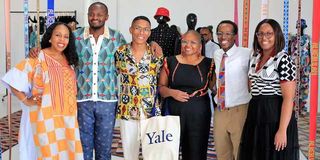
I was thinking of this neglect on June 25, 2026, when I interviewed Charlotte Ashamu, Director of International Programmes at Yale University’s Institute for the Preservation of Cultural Heritage (IPCH). “Why,” I asked her, “is culture so starved of funds across Africa, and governments crave something more tangible, like a road?” The line crackled through the gulf between us with a breath of static and a hiss of distance — a bright, high-wattage shimmer from a Yale University afternoon reaching across continents, meeting the fading red smear of my Nairobi sunset as night closed in. There was a long silence on the other end as the Yale heritage expert thought the question over. “One of the reasons culture is so underfunded,” she said finally, “is that there is very little awareness about why it is an economic asset.”
Africa — a continent with a median age of 19 and millions of bright, restless young people — is sitting on its biggest untapped economic engine: its creative industries (the crafts, literature, music, film, fashion, and heritage sites). To help tap this potential, Yale University has selected the second cohort of the Yale Directors Forum (YDF), an international fellowship programme for cultural heritage leaders.
On June 24, 2026, Ashamu announced that “the cohort includes 12 leaders from nine countries across Africa, Latin America, and the Caribbean. YDF is a global network of accomplished leaders working to preserve, protect, and share cultural heritage in both tangible and intangible forms, including artworks, photographs, archives, and other cultural collections, as well as living traditions such as cuisine, music, and practices passed across generations.”
When I asked whether her programme directly touched literature, she named Book Bunk, the Nairobi outfit founded by the writer Wanjiru Koinange and the publisher Angela Wachuka, a fellow in the first cohort. Book Bunk has taken Nairobi’s old colonial libraries — the McMillan on Banda Street and the branches in Eastlands and Kaloleni — and brought them back to life.
Also, the just-announced second cohort includes Iona McCreath of the Nairobi fashion house KikoRomeo, which over three decades has amassed a collection of East African textiles and craft traditions. “Most people would say that is a fashion brand, but a great deal of cultural heritage preservation is actually taking place outside of traditional institutions like museums or universities,” Ashamu said.
The others in the just-released list of Yale Fellows include Aisha Adamu Augie (Nigeria), Fu’ad Lawal (Nigeria), Sylvia Arthur (Ghana), Jess Kilubukila (Democratic Republic of Congo), Batana Vundla (South Africa), Wandile Mabaso (South Africa), Silvia Rosi (Togo), Kirt Henry (Jamaica), Faith Anderson (Jamaica), Raquel Barreto (Brazil) and Ana Elizabeth González (Panama).
For proof that culture can help in economic development, Ashamu singles out the Ghanaian coast studded with old fortresses, Cape Coast and Elmina, from whose dungeons African slaves were sold. They are tourist sites already; they are also, she argues, a huge opportunity left lying unexploited. “There is so much work that could be done to invest in the actual sites,” she said, “restoring buildings, creating engaging exhibitions and educational content, and building small businesses around those sites that can sell crafts and goods to tourists.”
I thought of Mombasa’s Fort Jesus and of how many such places in Kenya could be transformed into engines of more cultural tourism if given the same seriousness as roads or stadiums: from Gede Ruins, Koobi Fora, and the Turkana Basin; and the railway towns—Voi, Makindu, and Naivasha—whose colonial-era architecture is falling into decay.
And beyond these, there is Kenyan writing and storytelling not fully exploited. Our country sits on a mountain of folktales—Lwanda Magere, the Hare and Hyena stories, the Gikuyu creation story at Mũkũrwe wa Nyagathanga , and others that can become intellectual property of great wealth. As we build the stadiums and roads, let’s also remember to invest in our arts, literature and culture.