Hello

Your subscription is almost coming to an end. Don’t miss out on the great content on Nation.Africa

Ready to continue your informative journey with us?

Hello

Your premium access has ended, but the best of Nation.Africa is still within reach. Renew now to unlock exclusive stories and in-depth features.

Reclaim your full access. Click below to renew.

Caption for the landscape image:

Freshness at a cost: When feminine washes help, and when they harm

Scroll down to read the article

Feminine hygiene products have become a staple in many women's bathroom cabinets.

Photo credit: Pool

Freshness, confidence, intimate hygiene. That is the promise splashed across supermarket shelves and social media feeds promoting feminine washes. The products have become a staple in many women's bathroom cabinets, marketed as an essential part of personal care. But according to gynaecologists, most women may not need them at all.

"Generally, feminine washes are not medically necessary for most women. They have a small window where we use them," says Dr Lilian Wangui, a consultant obstetrician-gynaecologist.
That window, she explains, is largely limited to women struggling with recurrent vaginal infections. For everyone else, the vagina is already equipped with its own sophisticated cleaning system.

"If you have no infections, no unusual smell and no problems with your vagina, then this is not the product for you," she says.

Lilian Wangui

Dr Lilian Wangui, a consultant obstetrician-gynaecologist at The Surgery, says feminine washes should not be used as everyday products.

Photo credit: Pool

While feminine washes are widely available over the counter, Dr Wangui cautions that they are not everyday products for every woman. Many contain ingredients beyond the lactic acid that helps maintain vaginal acidity. Preservatives, stabilisers and foaming agents may also be included.

"The skin around the vagina area is very sensitive. You can use it in the beginning, and after some time you start burning, or itching."

For women who repeatedly struggle with vaginal infections, feminine washes may have a role after treatment, but they are not medicines.

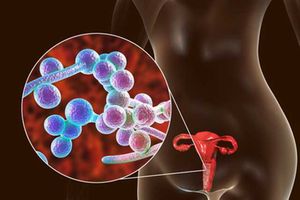
Whether the problem is recurrent bacterial vaginosis, which often causes a strong-smelling discharge, or recurring yeast infections that cause itching, the infection must first be managed with appropriate treatment.

"Only then may a feminine wash be introduced as an additional measure for three to six months to restore the pH," she says, adding that the natural vaginal acidity ranges between 3.8 and 4.2.

For many women with recurrent infections, the approach works well. For others, there may be little change, requiring alternative options such as probiotic preparations.

If a feminine wash is being considered, Dr Wangui advises choosing carefully.

"Use products that contain natural ingredients and very little chemicals. Avoid anything scented, because the scent is itself a chemical.”

Woman

Prolonged use of feminine washes can be problematic.

Photo credit: Pool

Although some women continue using feminine washes indefinitely, Dr Wangui cautions that prolonged use can be problematic.

"When irritation develops after months or even years of use, one may not immediately realise that the wash itself could be contributing to the discomfort."

Younger girls who have begun menstruating and those with recurrent pH-related problems may use the washes under guidance. There are also formulations designed for post-menopausal women, whose vaginal pH is naturally different and not so acidic.

Pregnant women are also eligible to use feminine washes because the products are intended for external use only.

One of the biggest misconceptions is the belief that a healthy vagina should have no discharge at all, which makes some women search for products that promise to eliminate discharge completely.

"Some view discharge and menstruation as dirt and respond by cleaning the area aggressively, sometimes by using rough materials in an attempt to feel cleaner."

Feminine hygiene products have become a staple in many women's bathroom cabinets.

Photo credit: Pool

Another common mistake is douching (washing inside the vagina using water or other fluids), which can disrupt the natural vaginal environment and create bigger problems.

"The vagina is a self-cleansing organ. It contains normal bacteria that help maintain balance. Douching can push bacteria higher into the uterus, increasing the risk of pelvic infections."

For that reason, Dr Wangui warns that feminine washes, when prescribed, should only be used on the vulva, the external genital area, and never inside the vagina.

She advises reducing excess sugar intake, noting that high sugar consumption can encourage the overgrowth of fungi that contribute to recurrent infections.

Additionally, she recommends including probiotics in the diet through foods such as yoghurt and fermented milk.

Follow our WhatsApp channel for breaking news updates and more stories like this.