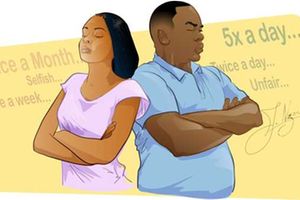
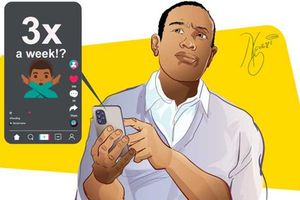
A boy does not have to insult girls to prove his masculinity. Nor should an influencer’s confidence, wealth or popularity make his advice about women the gospel truth. Those are among the ideas contained in England’s renewed effort to teach respectful relationships to its primary and secondary school children.
The “Relationships Education, Relationships and Sex Education and Health Education” guidance, published in July 2025 and which came into effect in September 2026, will ensure that concepts like online misogyny, incel (involuntary celibacy) culture, artificial intelligence and deepfakes are discussed in classrooms.
“Pupils should have an opportunity to discuss how some sub-cultures might influence our understanding of sexual ethics, including the sexual norms endorsed by so-called ‘involuntary celibates’ (incels) or online influencers,” the guidelines said in part.
By incel culture, the document was referring to an online trend that primarily has a male following. The subscribers of the culture define themselves by their inability to find romantic or sexual partners.
The BBC reported in 2021: “The idea that all women are money-grabbing, promiscuous and manipulative comes across strongly on incel threads.”
Originally started in the late 1990s as a supportive space for lonely individuals of all genders, the incel community migrated to mainstream online forums and became a manly affair as it progressed. Those deep into the incel culture like to portray victimisation, resentment towards women, and hostility towards a society they believe is rigged against them.
A boy does not have to insult girls to prove his masculinity.
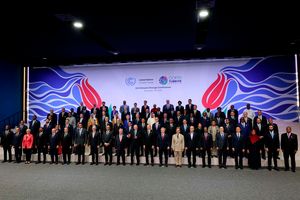
Photo credit: Pool
“Children and young people need knowledge and skills that will enable them to make informed and ethical decisions about their wellbeing, health and relationships,” the guidance says in its introduction. “High quality, evidence-based teaching of relationships, sex and health education can help prepare pupils for the opportunities and responsibilities of adult life, and can promote their moral, social, mental and physical development.”
Both boys and girls will be equipped with life skills in the guidance that replaced an earlier one that had been issued in 2019. Ranging from what to do to prevent pregnancy and what happens if a girl becomes pregnant, the guidelines place a lot of emphasis on how to relate to online influencers.
“Pupils may be exposed to online content which normalises harmful or violent sexual behaviours, which might include sexist and misogynistic influencers who normalise sexual harassment and abuse. Young people may be more vulnerable to this content when they have low self-esteem, are being bullied, or have other challenges in their lives,” the guidelines say.
“Teachers should encourage pupils to consider how this content may be harmful to both men and women, while avoiding stigmatising or perpetuating harmful stereotypes about boys, and avoiding directly signposting to specific content and content producers.”
Boys need a good male role model to show them how to be winners in the world of men.
Photo credit: Samuel Muigai | Nation Media Group
Regarding boys, it indicates that there should not be assumptions that they are always the problem in society.
“Pupils should have opportunities to develop positive conceptions of masculinity and femininity, including how to identify and learn from positive male role models. It is important for pupils to understand that most boys and young men are respectful to girls and young women and each other,” the guideline says.
As the England project gathers steam, one would wonder about the Kenyan context. Who is teaching boys to become men and to avoid being misled by content creators?
For Dr John Oteyo, a psychology lecturer at Kenyatta University, Kenya should take the intervention seriously without importing it wholesale.
Asked whether the country should follow the England example, he said: “I can say it’s a yes or no, but dominantly a yes because it needs to be tailored to the Kenyan context.”
Dr Oteyo, who is also an addiction counsellor, expressed his worry about the culture in Kenya where attention and monetisation reward provocative behaviour. The “tap-tap” economy that encourages monetisation, he noted, is not being properly policed.
“You watch some of the live streams and the kind of language they use there, and even the activities they do there, you can imagine people having a sexual activity – whether real or imagined – and they are livestreaming because basically they want to trend,” he said.
“Against this background, something needs to be done in the education sector,” Dr Oteyo added. “We can come up with a way in which we can responsibly assist our children so that they can understand some of those dangers.”
English authorities hope the new way of teaching will have children more enlightened to face the world.
“I want our children to be equipped to defy the malign forces that exist online. Schools and parents alike have a vital role to play, helping children identify positive role models and resist the manipulation too often used online to groom impressionable young minds,” the then England Secretary of State for Education, Bridget Phillipson, said at the launch.
As per the guidelines, secondary pupils should discuss how pornography can distort expectations, how online influencers shape sexual ethics and how unequal power affects relationships. They should also learn to manage rejection, disappointment and the ending of friendships without turning hurt into hostility.
A press release issued during the launch of the guidelines illustrated why such education was necessary. Done by England’s Department for Education, it showed that 54 per cent of surveyed pupils aged 11-19 had witnessed comments they considered misogynistic in the previous week, while 37 per cent had heard comments that concerned them about girls’ safety. These describe reported experiences, not proof that the new lessons work.
The situation is equally dire in Kenya, where the 2025-2026 Kenya mini demographic and health survey found that one in every 10 girls aged 15-19 had ever been pregnant.
Dr Oteyo argued that Kenya can include social media awareness in the competency-based education curriculum, including grooming and how to handle artificial intelligence.
He noted that parents also need to be brought into the picture. Busy parents, he said, have handed influence to screens – which he termed “the surrogate parents”. To solve this, he recommended the starting of parent-teacher association clinics or seminars where adults can learn how to guide children’s digital lives.
“This is not the time to hide and say these things don’t happen. It is happening,” he said.
England’s framework similarly requires openness about teaching materials and distinguishes sex education from relationships and health education. Parents can request withdrawal from sex education, subject to the guidance’s provisions, but not from relationships or health education.