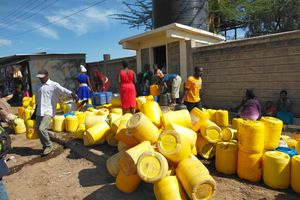
Caption for the landscape image: Tax pain: Nairobi residents pay more for water, power and basic services Monday, February 16, 2026 Scroll down to read the article Vendors pushing a handcart full of water container in Kaloleni Nairobi. Photo credit: Dennis Onsongo | Nation Media Group By Kevin Cheruiyot & Ndubi Moturi Article Related When we find Ms Grace Atieno, it is just after mid-morning in Lindi Ward, Kibra, Nairobi County. Inside her single-room house, plastic jerricans are stacked neatly in one corner. Some are empty, and others are half full. PREMIUM Revealed: How overtaxing Kenyans has led to revenue shortfall Parliamentary Budget Office says overtaxing Kenyans encourages tax evasion. PREMIUM MPs’ think tank warns against new taxes The government has, in recent years, embarked on an ambitious strategy to expand the tax base and strengthen revenue collection. PREMIUM Kitengela residents face acute water shortage as cartels make millions Currently, a 20-litre jerrycan of fresh water sells for between Sh30 and Sh50. . Recommended for you PREMIUM Shakahola: The Bible verses at the heart of a massacre PREMIUM Shakahola: The red flags that preceded mass deaths PREMIUM Woman wins Sh500,000 after husband moves lover into matrimonial home PREMIUM Drone strikes stall two fuel tankers bound for Kenya Login to join the discussion Please enable JavaScript to view the comments powered by Disqus. In the headlines Elections News Counties Business Opinion Sports Life & Style Health Podcasts Photos Newsletters Puzzles PREMIUM How Kenya’s running legends are building fortunes beyond the track Champions who have channeled their sporting fortunes into shopping centres, hotels, schools. PREMIUM Woman wins Sh500,000 after husband moves lover into matrimonial home Judge orders the lover to vacate the Kisumu home within 14 days. Prof Ndetei summoned for cross-examination in Dr Mutiso murder case bail dispute Murder suspects claimed the affidavit filed in court by Prof Ndetei was a forgery.
PREMIUM Revealed: How overtaxing Kenyans has led to revenue shortfall Parliamentary Budget Office says overtaxing Kenyans encourages tax evasion.
PREMIUM MPs’ think tank warns against new taxes The government has, in recent years, embarked on an ambitious strategy to expand the tax base and strengthen revenue collection.
PREMIUM Kitengela residents face acute water shortage as cartels make millions Currently, a 20-litre jerrycan of fresh water sells for between Sh30 and Sh50.
PREMIUM How Kenya’s running legends are building fortunes beyond the track Champions who have channeled their sporting fortunes into shopping centres, hotels, schools.
PREMIUM Woman wins Sh500,000 after husband moves lover into matrimonial home Judge orders the lover to vacate the Kisumu home within 14 days.
Prof Ndetei summoned for cross-examination in Dr Mutiso murder case bail dispute Murder suspects claimed the affidavit filed in court by Prof Ndetei was a forgery.