To build their case, the DCI lined up several witnesses, including data experts, ensuring the suspects would not evade justice. The accused officers were later convicted and sentenced to 35 years in prison.
The conviction of former police officers Emmanuel Wafula Viambaka and Godwine Sirengo Wekesa demonstrated one thing: the police can work effectively when they choose to, and rogue officers can also be held to account.
It all began on October 7, 2020, when Wafula and Sirengo, officers attached to Mbururu Police Station in Likuyani Sub-county, Kakamega County, arrested Dennis Lusava Malongo.
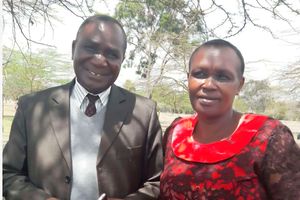
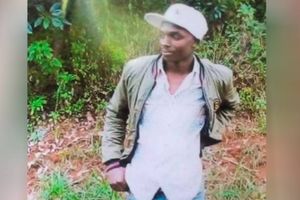
Hours before his arrest, Lusava had shared breakfast with his mother, Agnes Shikonjela Ambale. There was nothing unusual about the moment — just tea and a quiet mother-son conversation. Hours later, he would be dead.
After breakfast, Lusava left for Matunda Market but never returned home. Along the way, he was arrested by police officers and taken to Mbururu Police Post.
He had initially clashed with the officers after being arrested for failing to wear a face mask in public, one of the measures during the Covid-19 outbreak. Those who were nearby intervened and rescued him at the time.
Police officers Godwine Sirengo Wekesa (right) and Emmanuel Wafula Viambaka (left) at the Eldoret High Court on July 29, 2025.
Photo credit: Jared Nyataya | Nation Media Group
However, days later, the officers traced Lusava, arrested him again, and detained him at the station. While in custody, he was allegedly handcuffed to a window and beaten with kicks, blows, and electric cables. On the same day, Lusava went missing.
Relatives could not find him at the station, where officers on duty claimed he had been released on police bond. Subsequently, the station was abruptly closed, and access was restricted.
But the explanation quickly unravelled; no one in the community had seen him leave. As hours passed without answers, suspicion turned to anger.
News of Lusava’s disappearance spread quickly through Mbururu. Villagers, accustomed to resolving disputes quietly, now faced a troubling reality—a young man taken by police had vanished.
Tension escalated as residents demanded answers. Angry villagers eventually set the police station ablaze.
For days, Lusava’s family searched desperately. His father, Stephen Indesha Malongo, moved between mortuaries, hoping and fearing to find his son.
Five days later, on October 12, their worst fears were confirmed at a mortuary in Webuye. Lusava’s body had been recovered from River Nzoia.
A view of River Nzoia from Rwambwa bridge.
Photo credit: File | Nation
The condition of the body told a grim story. It showed signs of prolonged submersion, and his limbs appeared bound, suggesting restraint before death. Investigators concluded the river had been used to dispose of the body in an attempt to erase evidence.
The case drew the attention of DCI detectives, then under the leadership of George Kinoti. What followed was a meticulous investigation combining forensic analysis, witness testimony, and digital evidence.
Following Lusava’s death, the two officers were arrested and charged with murder. They denied the charges, beginning a long court battle that placed the burden on the prosecution to prove guilt beyond a reasonable doubt, as stipulated in the Constitution.
During the trial before Justice Reuben Nyakundi, the prosecution, led by Ms Kirenge Sidi, presented a detailed case built on forensic findings, expert testimony, and circumstantial evidence. A total of 21 witnesses testified to establish a prima facie case.
Corporal Jonathan Limo, a liaison officer at Safaricom, testified that the company received a request from the DCI for call data records linked to the suspects.
He told the court that records showed that on the night Lusava disappeared, the two officers switched off their phones simultaneously at 9:23 pm in the same location — Ndalu in Moi’s Bridge. Their devices remained inactive for hours before reconnecting the following morning.
Wafula also used another number to communicate with his long-time friend, Reuben Obadiah Ongai, at around 8 pm.
Further evidence revealed that a vehicle borrowed under false pretences that night had been used to transport Lusava’s body.
In his testimony, Obadiah told the court that Wafula called him at around 8 pm, requesting to borrow his car, claiming that a colleague’s wife was in labour and needed to be rushed to the hospital.
Without hesitation, Obadiah handed over his car, registration number KBH 939J, in exchange for Wafula’s motorcycle. The vehicle was returned hours later at around 3 am.
It was only later, when investigators came knocking, that the vehicle was impounded as part of a murder investigation. Obadiah would learn that it had been used to transport Lusava’s body.
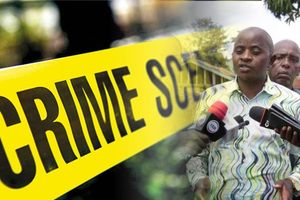
Officers Emmanuel Wafula and Godwine Sirengo were sentenced to 35 years for the 2020 murder of Dennis Lusava, a suspect they beat to death and dumped in River Nzoia.
Photo credit: Nation
The first prosecution witness, Lusava’s mother, Agnes Shikonjela Ambale, testified that on the day of the incident, a friend informed her that her son had been arrested and taken to Mbururu Police Post.
At around 1 pm, she went to the station and found her son handcuffed to a window.
She told the court that Lusava had been severely beaten and was unable to stand. She arranged for food to be brought to him, but he was unable to eat due to swollen hands.
She further testified that three officers beat her son in an attempt to force him to eat. Wafula and Sirengo asked her to bring clothes for Lusava, claiming he was only in shorts, contrary to what he had been wearing when he left home—a pair of trousers and a maroon T-shirt.
She later returned with clothes but was unable to raise the Sh2,000 required to secure his release. When she went back later, she was denied access. The station appeared unusually guarded, with curtains rolled down, and the two officers told them to go look for him at the chang’aa dens.
“It was around 5pm when I came back to the station; they told me that they had already released him and no one could enter the station. I searched for several days until I found his body at Webuye Mortuary on October 12, 2020. I identified his body for post-mortem,” she told the court.
Police officer Charles Wachira testified that on October 11, 2020, he was informed of a case of drowning in River Nzoia. He responded with other officers to the scene, which was 600 metres from the Webuye bridge.
There was a body floating in the river, which was retrieved by local divers. The body had been tied with a nylon rope around the neck and leg. The officer photographed the scene, and the body was taken to the mortuary. He later handed over the photographs to the DCI Homicide team in Nairobi.
Policarp Kweyu, the head of the DNA section at the Kisumu Government Chemist, testified that he received items and samples for analysis in relation to the investigations into the murder of Lusava.
He observed stains on the T-shirt, towel, sisal rope, car reflector, wire cable, and car mat obtained from KBH 939J, all of which tested positive for human blood.
He was able to positively identify the body as Lusava following a 99.9 per cent match with samples obtained from his biological mother.
The bloodstains further matched Lusava’s DNA profile. The exhibit memo form, together with the submitted exhibits and the resulting report, was collectively produced as Exhibit 5.
Dr Dickson Muchana, a pathologist based in Kakamega, testified that he conducted the post-mortem. He concluded that the cause of death was circulatory collapse due to extensive soft tissue injuries following an assault.
He noted that Lusava had severe injuries on the neck, chest, and back, leading to circulatory failure. The body also had extensive bruising on the upper back, left arm, left side of the torso, legs, right elbow, and forearm.
He further stated that the stomach contained little food, suggesting Lusava died about four hours after his last meal. The body showed signs of decomposition, including skin slippage, and the estimated time of death was about two weeks before the post-mortem.
At some point, the second accused had attempted to enter into a plea bargain, although he later withdrew, and it was never admitted as evidence.
At the close of the prosecution’s case, the court ruled that a prima facie case had been established, placing both accused persons on their defence.
In his defence, Wafula denied the charges, stating that Lusava had previously been involved in an altercation with another officer and had been lawfully arrested.
He claimed Lusava was briefly held at Mbururu Police Station before being released on the instructions of a senior officer and that he had no knowledge of his whereabouts thereafter.
He also denied tampering with the Occurrence Book and rejected the forensic evidence linking him to the crime.
Sirengo similarly distanced himself from the killing, stating that he was only performing general duties at the time.
The defence argued that Lusava had been released and presented witnesses who claimed to have seen him alive afterwards.
However, the court found these accounts inconsistent and unsupported.
Crucially, there was no official record of Lusava’s release — no Occurrence Book entry and no credible evidence showing he had left custody alive.
Justice Nyakundi dismissed the defence, stating that the claims of release were not supported by credible evidence and that the alleged sightings did not outweigh the prosecution’s case.
In his ruling, Justice Nyakundi found that the prosecution had proven beyond a reasonable doubt that Wafula and Wekesa were guilty of murder.
In a landmark judgment delivered in Eldoret, he described the case as a turning point in addressing custodial deaths and rogue policing practices.
“For those reasons, the framework of this case recognises the significant degree of premeditation and criminality involved. I sentence each accused person to thirty-five years’ imprisonment, with consideration for time spent in remand custody,” he ruled.
For Lusava’s family, the conviction brought a measure of justice but not closure.
His absence lingers in the quiet spaces of their lives. His mother carries unanswered questions. His father lives with a silence that words cannot fill.
Julius Nyaga, the family advocate contracted by the International Justice Mission, commended DCI officers for a job well done.
He noted that, unlike many cases where the court relies on IPOA files, this case was investigated by the DCI, which did a thorough job.
The two police officers are currently serving their sentence, and their story teaches that professionalism within the police service is necessary to achieve justice. The case also reveals, in its most unsettling form, how quickly a life can fracture when power is exercised without restraint and emotion is left unchecked.
Wafula’s life once followed a path that many would see as steady and even promising. A graduate of Masinde Muliro University of Science and Technology, he was not just a police officer; by the time his case came to a conclusion, he had transitioned into education, working as a teacher in Nairobi.
Beyond the classroom, he carried another identity—that of a Swahili poet. His work had found space on television, radio, and in print, where language became his instrument and expression his refuge.
There was depth there, creativity, and the kind of cultural grounding that often signals a life directed toward construction rather than destruction. Yet, standing in stark contrast to that promise is the reality that would eventually define him—a convicted murderer who pounced on an innocent man and beat him to death.
It is a sobering reminder that education alone does not guarantee judgment, that talent does not insulate against failure, and that a single moment of unchecked impulse can undo years of building.