More than 11,000 Saccos in the country are facing deregistration as part of the government’s sweeping reforms in the over Sh1.2 trillion cooperatives sector grappling with proliferation of unregulated entities.
The development comes as the government has announced the lifting of a moratorium suspending registration of new Savings and Credit Cooperative Societies (Saccos) that has been in place since May 2025.
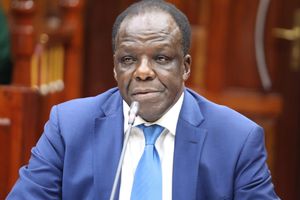
Cooperatives and Micro, Small and Medium Enterprises Development Cabinet Secretary Wycliffe Oparanya revealed that only 2,000 out of 14,000 registered Saccos in Kenya have been able to file their annual returns, including audited accounts detailing their operations as required by law despite repeated reminders.
Consequently, the minister said that they will give the non-compliant Saccos 30 days to comply, failure to which the non-compliant Saccos will have their licences revoked.
Last month, the government directed all Saccos in the country to file their annual returns with the office of the Commissioner for Cooperatives or face revocation of their licenses.
“We will soon publish in the newspaper the names of the 2,000 Saccos with up to date returns and give 30 days to the remaining ones to respond and if they don’t respond, we will assume they are either inactive or not there and will therefore be deregistered,” said Mr Oparanya while appearing before Senate plenary on Wednesday.
“We will also contact the Kenya Bankers Association that if any of them is holding any bank account, they should be closed so that they are not used in future to defraud innocent Kenyans of their hard-earned money,” he added.
Cabinet Secretary for Co-operatives and Micro, Small and Medium Enterprises (MSMEs) Development, Wycliffe Oparanya during a courtesy visit at the Nation Centre in Nairobi on April 8, 2026.
Photo credit: Wilfred Nyangaresi | Nation Media Group
The development comes after nominated Senator Margaret Kamar had asked the minister to tell the House what action the government will take on the non-compliant Saccos.
“What is going to happen to them to make them respond because they are still there on the ground or are they going to re-register?”
Mr Oparanya observed that there are many Saccos in the country but those filing annual returns are few, raising concerns that some are just there in name but do nothing, adding that there could be some unscrupulous people using the inactive Saccos to do illegal businesses.
He pointed out that it is only through filing returns that the government can monitor how these organisations operate and where they are located.
“We have noted that when elections are around the corner, that is when Sacco registration goes up. During that time there are harambees for Saccos which then go under immediately after.”
The former Kakamega governor announced the resumption of registration of new Saccos but under new administration registration guidelines.
This is after a five-member Committee of Experts, formed last year May, was to review the legal and institutional framework and other operational areas in the sector and come up with recommendations to be used in developing policies and guidelines towards the improvement and transformation of the sector. The team handed in its final report last month.
Among the new stringent guidelines contained in the report include attaching cash flow for the next three financial years as proof of viability, show the specific promoters of the Sacco, proof of bank account with at least Sh10 million minimum core capital to show viability, and proper by-laws governing the Sacco.
Justification for registration suspension
Others are complete application forms signed by both the director of Cooperatives at the county level and Commissioner of Cooperatives.
On its part, the government will establish deposit-guarantee funds, managed independently, to be used in refunding deposits to members for Saccos that go under genuinely as receivership proceeds.
“Savings and Credit Cooperatives Societies Regulatory Authority had limited mandate to only Saccos with Sh100 million and above but the new recommendation has expanded its mandate to oversee all cooperatives,” said the CS.
“These are some of the conditions we have put in place to ensure we take care of the interests of members. We must guard the resources of innocent members who come together to form a Sacco. Saccos that are able to fulfill the conditions I have pointed out here can now register immediately.”
Nyandarua County Senator John Methu speaks during the official unveiling of DCP party’s elected members to the County Assembly at the DCP headquarters in Nairobi on December 3, 2025.
Photo credit: Bonface Bogita | Nation Media Group
Nyandarua Senator John Methu, however, questioned the justification for new Saccos registration suspension asking whether public participation was conducted before the decision was taken.
Nonetheless, Mr Oparanya defended the suspension, saying it was to allow for a comprehensive review of the sector’s regulatory and governance landscape with the aim of safeguarding members’ interests.
He cited recent cases of Metropolitan Sacco going under with some Sh7 billion in members’ deposit and another Sh12 billion in members’ deposit by the Kenya Union of Savings and Credit Cooperatives Limited.
Subsequently, he said the aim of the suspension was to allow time to reform the legal and regulatory framework, prevent brand dilution and market saturation, enable cleanup of existing Saccos landscape, protection of members’ savings amid governance failures that have occurred in the sector as well as align Kenya with global best practices.
“The suspension of registration of new Saccos was not a freeze but a strategic pause to protect members, restore integrity and lay the foundation for a resilient and well-regulated Sacco sector. It was to ensure future Saccos are not just registered but ready to serve, govern ethically and align with Kenya’s financial inclusion goals and objectives,” he said.
At the same time, the CS said the government has commenced a process for mergers of Saccos engaged in back office service activities (Bosa) operating in the same economic sector.
He said the move is informed by many small Saccos registered across the country to provide only Bosa services being inactive and existing only on paper while those that are active are neither stable nor financially viable because they serve some few members with limited impact on financial inclusion.
Consequently, Mr Opranya said, a time has come for the Sacco sector to explore market-driven solutions for consultations and mergers of these very small Bosa-only Saccos as the only way to ensure their financial viability and stability.
He said the ministry shall issue guidelines to provide for the amalgamation of the cooperative Sacco society.
“In this regard, officials of Saccos operating within the same traditional economic and social bond are being requested to immediately commence conversations leading to mergers as a solution to their survival. This is the way to go in order to have a prosperous Sacco sector.”