Kenya and the Democratic Republic of Congo (DRC) have committed to end four years of animosity, in a diplomatic push mediated by Brazzaville and Lomé.
The deal was reached on Sunday after the presidents of the two countries met alongside Republic of Congo President Denis Sassou Nguesso and Faure Gnassingbé, President of Togo’s Council of Ministers in Oyo, Republic of the Congo.
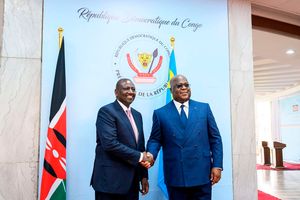
Presidents William Ruto of Kenya and DRC’s Félix Tshisekedi agreed to work towards restoring full diplomatic relations and strengthening cooperation between the two countries.
The two sides will accept the appointment of ambassadors to their respective countries after four years. This was part of the outcome of the high-level Quadripartite Political Summit.
The summit was facilitated by President Nguesso who has an interest in ensuring the two countries rebuild ties because they are part of a long-term vision for an infrastructure connection from the port of Mombasa to the Congo River.
The meeting came amid the ongoing security crisis in eastern DRC, where diplomatic efforts to end the conflict have continued, and against a backdrop of tensions that have strained relations between Kinshasa and Nairobi in recent years.
Kinshasa says it agreed to the summit as part of broader consultations among African leaders aimed at strengthening political dialogue, fostering mutual trust and contributing to lasting solutions to regional security challenges.
But President Tshisekedi also emphasised that the DRC is committed to safeguarding its “sovereignty and territorial integrity, as well as to pursuing a just and lasting peace in the eastern part of the country, within the framework of the African Union-led mediation efforts, complementing the Washington and Doha peace processes”, according to a dispatch from the presidency.
During the talks, Presidents Ruto and Tshisekedi agreed to give priority to dialogue and diplomatic consultations in addressing any differences between Kenya and the DRC, State House, Nairobi said.
“They committed to resolving disputes peacefully through diplomatic channels to safeguard regional peace and stability,” Nairobi said.
The two presidents also agreed to expand cooperation in trade, investment, security, politics and culture to promote economic development and improve the lives of citizens of both countries.
On diplomatic relations, they agreed to work towards restoring representation at ambassadorial level, holding regular political consultations and resuming the work of the Joint Grand Commission for Cooperation between Kenya and the DRC.
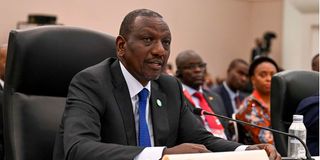
From right: President William Ruto, Republic of the Congo President Denis Sassou N’Guesso, President of the Council of Ministers of the Togolese Republic, Faure Essozimna Gnassingbé and Democratic Republic of the Congo President Félix Tshisekedi during the High-Level Quadripartite Political Summit in Oyo, Republic of the Congo on November 22, 2026.
The commission had been dormant since President Ruto took power. It was the body that would ordinarily address trade disputes and diplomatic misunderstandings. But ambassadors from both sides did not report for duty after Dr John Masafu’s term in Kinshasa ended in 2023.
The two leaders further committed to strengthening collaboration in regional peace and security, and integration through the International Conference on the Great Lakes Region and the East African Community.
The mini-summit, according to a dispatch in Kinshasa, was to intended to explore solutions to the DRC-Rwanda conflict, which repeatedly threatens to paralyse the entire region, and to thaw relations between Kinshasa and Nairobi.
Kenya and the DRC have had frosty relations for the last four years. Nairobi’s nominated ambassadors, Shem Amadi and Peter Tum, were both refused accreditation in quick succession in Kinshasa, which protested Kenya’s hosting of Congolese rebels, the M23, whose leaders face the death penalty in Kinshasa.
In 2025, Nairobi nominated Judy Kiaria Nkumiri as Consul-General to Goma, eastern DRC. Kinshasa immediately protested and rejected the move, citing lack of prior consultation, violation of the Vienna Convention on Consular Relations (which requires host-state approval and an exequatur), and the fact that Goma was under M23 control.
Kinshasa argued that the move risked appearing to legitimise rebel occupation and undermine DRC sovereignty.
Kenya clarified that a presidential nomination is not itself a posting and that formal agrément/exequatur would still be sought after parliamentary approval, but the rejection stood.
On the DRC side, the mini-summit was said to “aim, in particular, to strengthen dialogue and trust among African leaders and contribute to finding lasting solutions to the security crisis in eastern DRC”.
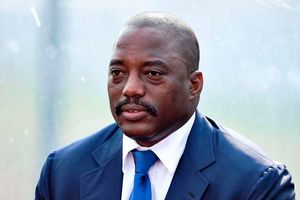
The Democratic Republic of Congo former President Joseph Kabila.
Photo credit: Reuters
From Kinshasa’s perspective, President Ruto is sympathetic to his Rwandan counterpart, Paul Kagame. Dr Ruto previously dismissed the DRC’s accusations that Rwanda supports the M23 rebel movement.
“The M23 issue is a matter between Congolese citizens. How is M23 President Kagame’s problem?” President Ruto asked in an interview in May 2024.
His remarks came just five months after Nairobi hosted a meeting at which Corneille Nangaa announced the creation of an armed movement, the Congo River Alliance (AFC), whose stated aim was to “overthrow” President Tshisekedi.
President Nguesso, whom his Kinshasa counterpart often affectionately calls “Papa”, seeks to restore peace to the region, against the backdrop of former DRC President Joseph Kabila’s efforts to oust his successor.
Kabila has become the leader of the AFC/M23 rebellion, which has been rebranded as the Front for the Refoundation of the Nation (FRN).
President Nguesso is attempting to reclaim the African diplomatic initiative at a time when American-led peace efforts have failed to secure a ceasefire, nearly a year after presidents Tshisekedi and Kagame signed an agreement brokered by President Donald Trump.
In a statement recorded in mid-November, Bertrand Bisimwa, the FRN’s vice-president, warned that the rebel movement was on the verge of rejecting the Qatari mediator.
According to the rebel movement, both the Qatari and American mediators “remain passive and silent when we raise complaints”. The rebels believe that the Qatari mediator is showing undue leniency towards the DRC authorities, while sanctions continue to be imposed on them.
Sunday’s meeting brought together a particularly well-assembled group of leaders. Togo’s Gnassingbé is among the few figures who enjoy a high degree of trust among the authorities in Rwanda and the DRC, and among Mr Kabila’s circle. President Ruto could help to strengthen this diplomatic outreach along the Kigali axis, while President Nguesso could help bridge the differences between the various parties, given his reportedly close relationship with President Tshisekedi.
At a time when the Washington and Doha peace processes have yet to deliver tangible results, African leaders may be making fresh attempts to bring the countries of the Great Lakes region back together.
This argument is frequently voiced by supporters of President Tshisekedi, some of whom did not hesitate to attack the Kenyan embassy in the DRC in January 2025 following the M23 capture of Goma.
Although Congolese authorities subsequently expressed regret to their Kenyan counterparts, the diplomatic climate in practice deteriorated further. Kinshasa continued to adopt a policy of rejection or indifference towards the diplomats Kenya sought to post to the DRC.
These diplomatic disputes between Kenya and the DRC have not, however, completely severed ties between the two countries, whose economic links remain strong. One of the clearest examples is the growing presence of Equity BCDC, the most visible Kenyan company in the DRC.
With nearly 90,000 employees, 80 branches of its own and 420 partner agencies, Equity BCDC is currently the second-largest bank in the DRC. It is followed by KCB, which acquired a stake in Congolese bank Trust Merchant Bank (TMB) in 2022. KCB’s experience in the DRC, however, appears less successful than that of Equity BCDC.
Despite the fluctuating political and diplomatic relationship, Equity BCDC is looking to expand its branch network. It has organised trade missions, two so far, to explore business opportunities in a country offering considerable commercial potential.
“The DRC has the region’s most extensive regional interconnection network, which facilitates cross-border trade. It has 11 major economic corridors that support trade flows across the region while providing connections with Central Africa, Southern Africa and parts of East Africa,” the Equity Group said in a statement following its second trade mission in 2024.
In the aviation sector, attempts at cooperation between Kenya Airways and Congo Airways have been less successful. The two airlines signed an aircraft leasing agreement in April 2021 covering two Embraer E190 aircraft.
However, the agreement was not renewed. Kenya Airways eventually withdrew its aircraft over what it described as “strictly operational reasons”.
The agreement had also provided for a codeshare partnership covering cargo transportation. Kenya Airways had additionally offered training at its Pride Centre and considered exchanging technical staff in various fields to facilitate the transfer of expertise between the two airlines.
Kenya has regularly viewed certain Congolese cities as important commercial hubs. In 2021, Nairobi launched a direct air connection to Goma, operated by Jambojet. The service was intended to boost trade with Goma, which was regarded as a major economic centre.
There is also the trade and cargo transport through Kenya’s Port of Mombasa. The port is used primarily by traders from eastern DRC. In 2022, the Congolese state-owned shipping company, Lignes Maritimes Congolaises, began operations at the Port of Mombasa.
In 2023, the Kenya Ports Authority ranked the DRC as the port’s third-largest market, accounting for an 8.2 per cent market share.
In 2023, Mombasa port authorities launched a charm offensive to encourage traders from the DRC to make greater use of the facility, which is in fierce competition with the Port of Dar es Salaam in Tanzania.