Kenya has raised fuel prices to the highest level in East Africa, sparking debate over whether neighbouring countries will follow suit. The cost of fuel at the pump is never a simple matter though, as it reflects global oil prices, exchange rates, supply stability, and taxes.
The latest increase has reignited questions among Kenyans about whether Nairobi consistently charges more than its peers, including landlocked countries that depend on imports through the Port of Mombasa.
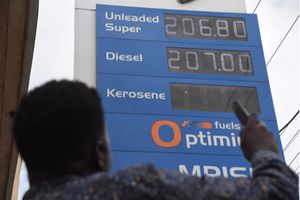
The Energy and Petroleum Regulatory Authority (Epra) cited surging global prices and supply shocks in the Middle East as justification for the hike. Super petrol rose by Sh28.69 ($0.22) to Sh206.97 ($1.60), while diesel jumped by Sh40.30 ($0.31) to Sh206.84 ($1.61) in Nairobi. Kerosene remained unchanged at Sh152.78 ($1.18).
Prices of two Petrol Stations in Eldoret City, Uasin Gishu County, on April 15, 2026, after the Energy and Petroleum Regulatory Authority (EPRA) announced price increases on Tuesday. Petrol increased by Sh28.69 per Litre, while Diesel increased by Sh40.30 per Litre.
Photo credit: Jared Nyataya| Nation Media Group
Leaving aside political promises to lower taxes, it is clear that Kenya’s fuel prices, from 15 April, have risen the most sharply. Before this, other neighbours either absorbed the costs or taxed citizens differently to compensate.
Each month, Epra uses a formula introduced under the Petroleum Pricing Regulations (2022) to set prices. This formula considers international crude oil prices, the prevailing exchange rate, and local taxes and levies such as VAT, excise duty, the Petroleum Development Levy (PDL), and the Road Maintenance Levy (RML). Kenya’s VAT on fuel is 16 percent, lower than Uganda’s 18 percent.
Other parameters include freight and insurance charges for cargo through Mombasa, storage and distribution costs from depots to retail stations, and regulated margins for oil marketers and dealers.
International crude oil prices directly affect import costs, while the strength of the Kenyan shilling against the US dollar determines how much local importers pay. Epra evaluates these components monthly to ensure regulated and consistent pricing.
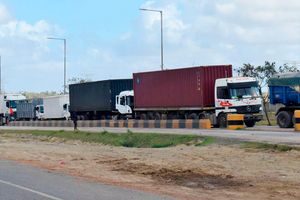
Containers with various imported goods at the port of Mombasa.
Photo credit: File | Nation Media Group
Kenya, like its neighbours, does not refine crude oil and therefore imports most of its petrol, diesel, and kerosene. The landed cost of fuel includes the Free-on-Board (FOB) refinery price, plus premiums and freight covering sea transport and insurance.
Previously, Kenya sourced refined petroleum products through an Open Tender System (OTS), where oil marketing companies competed to import consignments. However, in March 2023 the government switched to a government-to-government (G-to-G) arrangement. Selected companies now source products from state-owned oil majors in the Middle East—Saudi Aramco, Emirates National Oil Company, and Abu Dhabi National Oil Company.
This agreement includes a 180-day credit period, designed to reduce immediate demand for US dollars, stabilise the shilling, and secure supplies. The government argued that abandoning the OTS system would preserve foreign currency and ensure exchange rate stability.
Uganda currently has the cheapest fuel in the region, with petrol selling at USh5,400 ($1.46) and diesel at USh5,250 ($1.42).
“Based on current surveys of Nairobi, Kampala, Kigali, and Dar es Salaam, Kampala now has the most favourable pricing in East Africa,” said Peter Ochieng, a regional fuel marketing consultant. “That’s something Ugandan consumers should note. It’s always good to comment when things are done well.”
Uganda had also raised prices recently, citing the Middle East crisis. After holding at USh5,080 ($1.37) for petrol and USh4,950 ($1.34) for diesel for over a year, pumps rose to current levels.
The Uganda National Oil Company (Unoc) reassured the public that supply is “stable and secure,” with a 119-million-litre petrol vessel expected at Mombasa Port. Dr Patricia Litho, spokesperson at the Ministry of Energy, cautioned oil marketing companies against exploiting consumers despite dollar pressures at 3720/3730.
Uganda’s pump prices are determined by international finished product prices, freight and trader premiums, local handling from Mombasa or Dar es Salaam, exchange rates, and taxes such as excise duty. Global benchmark rates account for 80–87 percent of Unoc’s sale price.
In March 2023, the government authorised Unoc to be the sole importer of petroleum products, replacing the OTS system that relied on Kenyan middlemen. The aim was to curb distortions and ensure national control.
Following the Petroleum Supply (Amendment) Act in October 2023, Unoc partnered with Vitol Group, the world’s largest independent oil trader. Vitol supplies $250 million worth of fuel monthly, delivers it to Mombasa, and hands it to Unoc, which then transports the fuel via the Kenya pipeline to Eldoret, selling it to Uganda’s 40 licensed oil marketing companies.
In Tanzania, a significant difference in retail fuel pricing is the exemption from Value Added Tax (VAT) imposed on petroleum products in other EAC countries such as Kenya and Uganda.
The pricing formula normally used by the Energy and Water Utilities Regulatory Authority (Ewura) is based on prevailing prices benchmarked to Arab Gulf rates, monthly foreign exchange rates, and supplier/freight/insurance premiums which also often change monthly on shipments destined for Tanzania ports.
Workers on a Kenya Pipeline Company extension project. Uganda signed a crude oil pipeline agreement with Tanzania to explore the Tanga route.
Photo credit: File | Nation Media Group
Ewura calculates its monthly cap prices separately for the three import shipment entry ports - Dar es Salaam, Tanga, Mtwara - while inland regions add transport costs to the port price.
Other costs added to the wholesale prices are import-related (port, inspection and demurrage charges), excise duty as outlined in the EAC schedule, a petroleum fee, customs processing fee and separate fuel levies to the Road Fund, Rural Energy Agency and Tanzania Bureau of Standards.
These assorted government taxes and levies are fixed under the annual Finance Act and, when combined, comprise roughly 35 to 40 percent of consumer prices at the pump.
Rwanda sets pump prices through a controlled system managed by the Rwanda Utilities Regulatory Authority (Rura), which reviews prices every three months. On 6 April, however, Rura adjusted prices just a month after the previous review. Petrol was set at Rwf2,303 ($1.57) per litre and diesel at Rwf2,205 ($1.57). This represented increases of 16 percent for petrol and 13.2 percent for diesel—the highest in recent years.
Before 14 April, Rwanda had the highest prices in the region, reflecting its heavier import bill.
Economist Straton Habyalimana explained that prices are determined by international market trends and subsidies needed to maintain reasonable profit margins. RURA also fixes profit margins for distributors and station operators to ensure viability while preventing excessive consumer costs.
Oil tankers delivering fuel to Uganda queue at Busia Kenya border.
Photo credit: File | Nation Media Group
Rwanda imports petroleum products via regional routes from ports in Tanzania and Kenya. Transport and logistics costs—including freight, insurance, storage, and handling—form a substantial part of the final pump price.
Exchange rates also play a role. When global oil prices rise or the Rwandan franc depreciates against the dollar, import costs increase, driving up pump prices. The central bank reported that the franc depreciated by 9.68 percent in the 2024/25 financial year against the dollar, an improvement from 12.59 percent the previous year.
Ethiopia is pursuing a greener policy compared to its peers. In Addis Ababa last week, petrol sold at ETB142.41 ($0.84) per litre and diesel at ETB163.09 ($1.04). Prices rose twice in a month following the US and Israel’s attack on Iran on 28 February, according to the Ministry of Trade and Regional Integration, which sets price caps.
Ethiopia imports fuel via the state-owned Ethiopian Petroleum Supply Enterprise. The government sets retail prices nationwide and absorbs some global shocks through subsidies, including the cost of transporting fuel from Djibouti port.
Recently, however, the government began phasing out subsidies to allow market forces greater influence. Ethiopia also became the first country in the region to ban imports of new fossil fuel cars, starting last year.
Previously, car buyers faced taxes exceeding 100 percent, doubling the cost compared to Kenya, Tanzania, or Uganda. The ban on fossil fuel cars marks a significant policy shift, aligning Ethiopia with greener energy goals even as fuel prices remain relatively lower than in Kenya.
Reporting by James Anyanzwa, Bob Karashani, Dorothy Nakaweesi and Alex Ngarambe