Kenyans have started feeling the heat after businesses across sectors went on a price increase spree on Wednesday, in reaction to the raise of fuel prices by up to Sh40 per litre.
Businesses across food, transport and manufacturing sectors dealt with the fuel price increase almost immediately, announcing higher prices for maize flour, matatu, cab and other transportation services and passing over the burden to consumers.
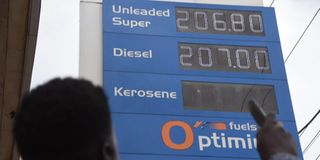
This followed the Energy and Petroleum Regulatory Authority’s (Epra) increase of petrol prices by Sh28.69 and diesel by Sh40.3, both to retail at Sh206 per litre in Nairobi.
Players across the sectors declined to absorb costs brought by the higher fuel prices, with Matatu owners raising fares by 25 percent, as digital taxi drivers’ associations and freight transportation services equally declared higher charges.
In the food sector, several millers said they were adjusting maize and wheat flour prices in reaction to the high fuel prices since they would have direct impacts in their distribution and production operations.
Mr John Mwara, the Chief Executive Officer of Nairobi-based Simba Mfalme Millers, said there would be an immediate increase in maize flour prices by up to 15 percent since the cost of distributing product to retailers and consumers would be hit directly.
“I can see the price of flour going up by 10-15 percent almost immediately since we cannot absorb these new costs. We are working out how the new prices will look like, but it will take effect immediately.
“The most immediate impact will be on distribution of maize flour to retailers and consumers. This will be a direct hit since transport cost on distribution accounts for 10 to 15 percent of flour price,” Mr Mwara said.
Matatu owners announce fares will increase by 25pc after fuel price hike
The businessman said most millers operate on margins of between 7 and 10 percent and cannot take more costs, signaling the direction most businesses are expected to take, as consumers are left to shoulder the burden.
Millers, like many other industries, reckon that they rely heavily on diesel for transportation of raw materials and distribution of their products, forming up to 30 percent of their costs.
This is despite diesel playing a crucial role in the production process since it feeds into electricity generation and power costs.
“Power forms about 20 percent of millers’ production costs and by the end of the month, it may cause flour prices to rise further,” Mr Mwara said.
Mr Mutai Kipngetich, another miller, said most companies were in conversations with retailers to determine the rate at which they would raise flour prices without pushing customers away. Mr Mutai said many millers could cut production as demand is projected to diminish.
Most millers are waiting to assess the impact new fuel prices will have on electricity and other inputs such as packaging materials and project they might raise prices even further by the end of the month.
The increase in fuel prices stems from a war that has been going on for nearly two months in the Middle East, pitting the United States and Israel on one side, and Iran on the other.
Since the war broke out on February 28, there have been attacks on energy sites across several Middle East countries and ships transiting the Strait of Hormuz, choking up a narrow water way used to transport about a fifth of the oil consumed globally.
Kenya sources its fuel from the United Arab Emirates, Saudi Arabia and Oman, all Middle East States that have been caught up in the war.
The high fuel prices also had Matatu Owners Association (MOA) chairperson Albert Karakacha announcing the immediate change of fare prices across the country, as the businesses acted to protect their profits.
“We have consulted and agreed that we are going to increase the prices by 25 percent all over the country so that we can cushion our margins. We are urging our customers, who are members of the public that it is not our wish to go into that direction. We are in business and they have to bear with us,” Mr Karakacha said.
The Organization of Online Drivers and the Nairobi Online Drivers also announced new fares parallel to those set by ride-hailing platforms, in an apparent defiance to avoid absorbing costs as a result of the high fuel prices.
“The minimum fare of Sh450 for a maximum of 3km for short trips will ensure that drivers earn a fair and sustainable income amidst the changing economic environment,” the Organization of Online Drivers said in a statement.
The Nairobi Online Drivers said its members would not operate under rates currently set by Uber, Bolt and Faras, although they would be available on the platform, while Ena Coach announced an increase of fares across different routes, including Nairobi – Mombasa (from Sh1,600 to Sh2,000) and Nairobi -Upcountry through Nakuru (from Sh1,600 to Sh1,800).
Cabinet Secretary, Ministry of Energy and Petroleum, Opiyo Wandayi (Left) Kenya Pipeline Company (KPC) acting Managing Director Pius Mwendwa (Right) and Acting Director General of the Energy and Petroleum Regulatory Authority (EPRA), Joseph Oketch (Centre) before the National Assembly Departmental Committee on Energy, on Monday, April 13, 2026.
Photo credit: Dennis Onsongo | Nation
The Digital Boda Drivers and Deliveries Association of Kenya (DBDDAK) also signaled the increase of its charges, saying that they will not sustain their operations with the current fuel prices.
“Should there be delays in fare adjustments (by e-hailing and delivery companies), riders and rivers may be compelled to adopt practical measures at the ground level to sustain their livelihoods,” DBDDAK chairperson Calvince Okumu said.
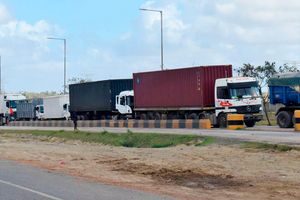
On the cargo transportation side, KTA Chairman Newton Wang’oo urged transporters to raise charges by 13 to 14 percent, noting that fuel constitutes more than half of operating costs in freight transport.
“Members are advised that such a substantial rise in input costs cannot be absorbed sustainably. It is therefore necessary for all members to immediately review their cost structures and adjust transport rates accordingly to reflect the new cost realities,” Mr Wang’oo said.
Speaking in Kisii, President William Ruto announced that the government had released a Sh6.5 billion subsidy and cut Value Added Tax (VAT) on fuel by half to 8 percent for three months, to cushion Kenyans from even higher prices.
The President also castigated people planning public demonstrations over the high fuel prices, noting that the challenge is global and the solution lies in an end on the Middle East war.
“We are going to make sure that we cushion the people of Kenya from high prices of fuel,” the President said.
President Ruto said the measures were aimed at ensuring Kenyans are not subjected to higher fuel prices as a result of the Middle East conflict, which has disrupted global fuel supply.
The Kenya Association of Manufacturers (KAM) warned that employers may be forced to downsize in the coming days should the government allow the high fuel prices to raise commodity prices to the point of pushing demand to neighboring countries.
KAM’s Chief Executive Officer (CEO) Tobias Alando said manufacturers rely heavily on petrol and diesel for production and transportation whose prices have gone up, risking the loss of demand to Uganda and Tanzania where prices remain relatively lower.
“Kenyan manufacturers are bound to experience a significant loss of market share for their products, leading to loss of revenue. To remain afloat, they are likely to cut down on operational costs through downsizing. As such, their contribution to the growth of the economy will dwindle, as the government also loses revenue,” Mr Alando said.
The manufacturers’ lobby noted that the government continues to be one of the biggest beneficiaries in the high costs, since taxes constitute about 46 percent of fuel prices.
It also noted that electricity prices are expected to increase since fuel cost constitutes Sh3.57 per kilowatt-hour (kWh) of electricity consumed.
“To shield the country from the impact of the high cost of fuel, we urge the government to suspend some of the taxes on fuel as an alternative mechanism,” Mr Alando said.
Energy Principal Secretary Alex Wachira warned Kenyans to brace for higher electricity bills due to a likely rise in the fuel cost component.
Appearing before the National Assembly Public Accounts Committee (PAC), PS Wachira said the expected increase is driven by a surge in global crude oil prices linked to the ongoing US-Israel conflict with Iran. However, he noted that the government is ramping up hydropower generation to cushion consumers from a sharp spike in power costs.
Energy PS Alex Wachira addresses the 11th Powering Africa Summit in Washington DC on March 19, 2026.
Photo credit: Photo I Pool
“In your electricity bills, there is a fuel energy charge. We are working to ensure that any increase remains marginal by boosting hydropower production, thanks to the good rains we have received,” said PS Wachira.
The PS was responding to concerns raised by Aldai MP Marianne Kitany, who sought clarity on how rising global oil prices would affect electricity costs and what measures the government is taking to cushion consumers.
Kenya generates electricity from multiple sources, including hydropower, geothermal, wind, solar, and thermal energy. Thermal generation relies on heavy fuel oil (HFO), particularly for off-grid regions.
Counties such as Wajir, Mandera, Marsabit, and Turkana depend on diesel-powered generators due to their lack of connection to the national grid.
Despite the challenges, PS Wachira said Kenya currently has adequate HFO stocks, which should stabilise the situation in the short term.
“We may see a slight increase in the pass-through cost of diesel-generated electricity, but due to strong hydropower output, the impact is likely to remain minimal,” he said.
As businesses and consumers braced for dire implications of the high fuel prices, however, the interests of players in the importation and retail of fuel in the country will remain protected, since their margins remain the same.
In the pricing formula that will now apply until May 14, 2026, oil companies that import fuel into the country will continue pocketing a margin of about Sh6 for every litre of fuel they bring in, with oil marketers engaged in retail of the product at petrol stations making Sh11.25 for each litre of petrol, diesel or kerosene they sell.
The Kenya Pipeline Company will also be getting more from its fuel transportation services, with a litre of fuel now set to be charged Sh2.85 from Mombasa to Nairobi, up from Sh2.79.
This is besides an increase in compensation for pipeline losses which has been raised from Sh0.04 to a high of Sh0.09 per litre, with compensation for depot losses also rising from Sh0.66 to Sh0.83 per litre of petrol.
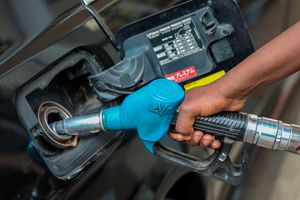
An attendant fuels a vehicle.
Photo credit: Dennis Onsongo | Nation Media Group
Mr John Mutua, the Programs Coordinator at the Institute of Economic Affairs (IEA), projects that Kenyans might be forced forego spending on non-essential goods and activities to cope with an expected overall rise in cost of living, since the high fuel prices will permeate the entire economy.
Mr Mutua says depending on how long the Middle East war persists, which has been the primary driver of the fuel price increases, the government could also find itself offering more support to the economy, beyond the reduction VAT on fuel.
“Consumers will have to weigh heavy options when making purchase and only focus on essential products and services. Some commuters may have to use vehicles in the morning and walk in the evening while private vehicle owners may have to go back to PSVs,” Mr Mutua said.
The economist also projected the possibility of workers demanding wage increases to accommodate the rise in cost of living should the situation persist for weeks, a view shared by Mr Mwara, the Simba Mfalme Millers owner.