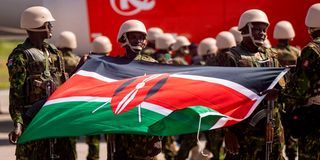
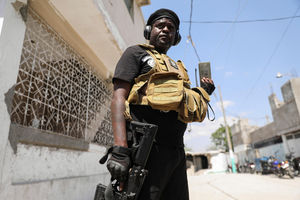
Kenya is asking for an adequate UN role for the Multinational Security Support (MSS) in Haiti to turn around a huge tide of gang violence engulfing the Caribbean nation.
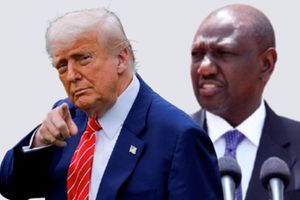
In a phone call on Tuesday night, Kenya’s President William Ruto told US Secretary of State Marco Rubio that the UN should back the Mission to ensure it is fully facilitated to defeat the gangs. It is the latest signal that Kenya wants the mandate of the Mission it leads extended, rather than ended when its time comes in October.
It is also the second time Kenya has pushed for an expanded UN role for the Mission, which, even though endorsed by the UN Security Council, is fully dependent on volunteer donors and troops.
“We concurred on the imperative and support for a resolution at the UN Security Council that establishes a UN support office for the Multinational Security Support (MSS) mission in Haiti, to aid efforts to stabilise and secure Haiti,” Ruto said on X after the call.
US Secretary of State Marco Rubio waves before departing at La Aurora International Airport in Guatemala City February 5, 2025.
Photo credit: Reuters
Rubio didn’t confirm the concurrence, but a US State Department statement said Rubio commended “Kenya’s continued leadership and ongoing efforts to restore peace and security in Haiti.
“They reaffirmed our strategic partnership and discussed commercial opportunities to further strengthen economic cooperation between the United States and Kenya,” it added.
The call was important for two reasons. One was that it came after a State Department report indicted Kenya on human rights violations, even though lobbies had accused the Donald Trump administration of watering down the reporting on countries, generally.
This development also comes as US lawmakers push for investigations into President Ruto’s administration over the reported killing of at least 128 protesters in Kenya, alleged links to Sudan’s Rapid Support Forces (RSF), and Somalia’s Al-Shabaab.
Idaho Senator Jim Risch, who chairs the Senate Foreign Relations Committee, has proposed amendments to the US National Defense Authorisation Act for the 2026 financial year, calling on Congress to review Kenya’s MNNA designation.
Yet a discussion on Haiti is important too. Kenya has, since June last year, deployed police troops and led the MSS. But it has struggled against the more equipped Haitian gangs. As such, Nairobi has demanded adequate funding and equipping of the mission, including placing it directly under the kitty of the UN.
Its fate, for now, remains unclear as the UN Security Council prepares to discuss whether to extend its mandate. Some countries, like Russia and China, had previously rejected the idea of turning it into a UN mission.
President Ruto is advocating for the establishment of a United Nations (UN) support office for the MSS mission, which he believes will be instrumental in restoring and stabilising the Caribbean-based nation.
Should a UN support office be established in gang-infested Haiti, both citizens and officers would receive direct assistance, which would be crucial in efforts to restore peace.
Currently, the UN operates in Haiti through the UN Integrated Office in Haiti (BINUH), a separate entity from the MSS, but which is directly funded by the UN as a humanitarian agency.
Multinational Security Support Mission Commander Godfrey Otunge and Haitian National Police Director-General Rameau Normil chat as they await the arrival of US Secretary of State Antony Blinken at the MSS base in Port Au Prince, Haiti September 5, 2024.
Photo credit: Roberyto Schmidt | Reuters
Meanwhile, the MSS mission said it had successfully expelled gang members from Dufour, north-east of Haiti, which had been under gang control since 2024.
The operation was carried out by MSS officers in collaboration with personnel from the Haiti National Police (HNP), according to a dispatch from MSS.
The gangs have previously ambushed the MSS mission, resulting in the deaths of two Kenyan police officers so far.
Typically, the gangs dig trenches to prevent officers from accessing areas under their control.
According to Geoffrey Otunge, commander of the MSS mission, further ambushes should be expected.
"We are focused on the quiet and peaceful regions, where we now plan to reinforce with specialised units. This way, as we confront them here, if they attempt to expand their territories, the peaceful regions will have the capacity to respond," he said.
Kenya first deployed officers to Haiti in June 2024, following President Ruto’s agreement to assist in combating the gangs that have rendered the country ungovernable.
The Kenyan-led mission has faced persistent criticism, with sceptics questioning its effectiveness.
Since Kenya’s entry into Haiti, reports suggest that more people have died within a single year than in previous years, the result of gang coalescing for violence such as kidnapping, assassinations, rape, and forcible displacements, according to BINUH.
Since January, BINUH estimates that over 1.3 million people have been displaced due to ongoing clashes between police and gangs.
@cliffmedia649 Haitian notorious gang leader Jimmy "Barbeque" Cherizer responds to $5 million bounty/reward for his arrest😯😯 On Tuesday, August 12, 2025, the United States announced a $5 million reward for information leading to the arrest of Haitian gang leader Jimmy "Barbeque" Cherizier, who is accused of violating U.S. sanctions. Cherizier, 48, along with another individual named Bazile Richardson, has been indicted on charges related to conspiring to transfer funds from the United States to support gang activities in Haiti, according to the Justice Department. "There is a compelling reason why a $5 million reward has been offered for information that results in Cherizier's arrest," stated U.S. Attorney Jeanine Pirro during a press conference. #haiti #haitiantiktok ♬ original sound - Cliff's Media
This week, Haitian gang leader, Jimmy Cherizier, also known as Barbecue, took to social media to respond to indictments by the US government by pledging to cooperate if the US ‘doesn’t lie.’
In videos shared on his pages, where he spoke in Haitian Creole, the feared gang leader—who heads Viv Ansanm coalition of gangs in the Caribbean nation—said he was prepared to collaborate. He had, however, previously indicated readiness to hold dialogue with Haitian authorities only to make an about-turn.
Last week, the US offered a reward of $5 million for any information leading to the arrest and conviction of Barbecue, a former police officer in Haiti. Washington had earlier sanctioned him and other gang leaders, making it a criminal offence for any US entity to enter business with him, and banning him from setting foot on US soil.
In a video, though, he spoke of wanting to cooperate as long as it is a fair investigation.
“My name is Jimmy Cherizier, ‘Barbecue’. If the FBI wants me, I’m here. I’m willing to collaborate with them on one condition: there can be no lies told,” he said in the video.
According to him, US national Bazile Richardson, whom the US fingered for working with Haitian gangs, has never sent him money to fund the ongoing unrest in the country.
“Basil Richardson is innocent. He has never sent any money to me to finance anything in Haiti. Stop with all those lies, and we can collaborate,” he added.
In a statement, the US Department of State accused the pair of soliciting money from Haitians residing in the US to fund the violence that has resulted in deaths and displacement. Bazile Richardson was arrested on July 23 in Pasadena, Texas, and is expected to make his initial court appearance today in the District of Columbia.
The department further claimed that, as the leader of Viv Ansanm—which was designated by the Secretary of State on 2 May 2025 as a Foreign Terrorist Organisation and Specially Designated Global Terrorist (SDGT)—Cherizier is a central figure responsible for gang violence in Haiti.
“Notorious for his total disregard for human dignity, Cherizier is directly involved in the mass murder and rape of Haitian civilians,” the statement read.
In December 2020, Cherizier and two Haitian public officials were sanctioned under the Global Magnitsky Human Rights Accountability Act for their roles in the La Saline massacre and other severe human rights abuses.