When former Prime Minister Raila Odinga left for India, few imagined it would be his last journey.
His elder brother, Dr Oburu Oginga, now reveals the quiet fears, conflicting medical opinions, and premonitions that marked the final chapter of his life.
For Dr Oginga, the loss was not just of a political icon but of a ‘twin soul.’
“Raila was more than a brother to me,” he said during an exclusive interview with NTV and Daily Nation .
The untold story of Raila’s death
“We grew up like twins. I was born in October 1943, and he in January 1945—just a year and two months apart.”
He recalls their final conversation vividly — a routine call that would later turn into a haunting memory.
“I spoke to him the night before he died. He was in very good spirits. We talked about several issues, and we were to meet in Dubai that weekend. He was traveling on Friday, and I was to go on Sunday. We even agreed on a few matters,” Dr Oginga recounts.
That Tuesday October 14 night chat gave him no reason to worry. But at dawn, on Wednesday October 15, his sister Dr Wenwa Akinyi called, shattering his calm. “She told me Raila had collapsed in Kerala,” he says.
“At that time, I was putting on my golf suit, preparing to go and play. I almost collapsed myself.”
Siaya Senator Oginga Oburu during an interview with NTV at Serena Hotel Nairobi on Thursday, October 30, 2025.
Photo credit: Dennis Onsongo | Nation Media Group
As panic gripped the family, communication lines buzzed between Nairobi and India.
“My sister Ruth was crying but couldn’t understand what the doctors were saying because they spoke in Hindi. I called one of our Indian friends in Nairobi to interpret. He said Raila was in critical condition but the doctors were trying.”
Moments later, the devastating confirmation came.
“Ruth called again, crying uncontrollably. Then she said, ‘Bro, we’ve lost him.’ I called Winnie, and she too said, ‘Uncle, we’ve lost the battle.’ I almost collapsed, but I had to be strong. I was now the head of the family.”
According to Dr Oginga, Odinga’s health troubles began months earlier when doctors in Nairobi discovered a blood clot in his head.
“They were dissolving it using a strong steroid,” he explains.
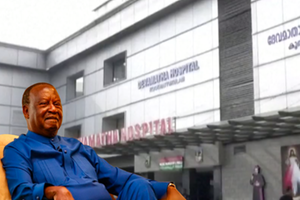
The Devamatha Hospital in Kerala, southern India, where former Prime Minister Raila Odinga died.
Photo credit: Nation Media Group
“But it was wearing him down. That’s why he missed public functions, like former Minister Dalmas Otieno’s burial, where I went to represent him.”
Despite the fatigue, the medication worked, said Dr Oginga.
“When he went to India, the doctors in Mumbai cleared the clot completely. He was up and about, speaking well. He was later discharged and moved to Kerala for recuperation,” says Dr Oginga.
What many did not know, however, was that there had been disagreement among doctors before Odinga's evacuation from Nairobi to India.
“Here at home, doctors had different opinions about his treatment,” Dr Oginga reveals.
“It was President Ruto who intervened after visiting him at home. They discussed his condition and agreed that he should be flown to India, where there was better equipment.”
“President Ruto personally organized his evacuation the next day. He took it seriously, and we didn’t even have to ask for help. He provided everything, including the special care. For that, we are very grateful.”
In India, Odinga’s condition seemed to stabilize.
“He had completed treatment and was simply recuperating at an Ayurvedic hospital in Kerala, the same place our daughter Rosemary went for her eye's treatment,” says Dr Oginga.
“They use herbal medicine and vegetarian food. We often went there as a family for rest. He had been there just a week after discharge and was to leave for Dubai on Friday October 17. But he collapsed on Wednesday morning.”
Raila's 72-hour burial wish
“We were discussing family matters—our estate and how to finalize it. I told him life is temporary; if anything happened to either of us, our children might not work together as we do. He agreed with me completely,” he says.
“It was as if there was premonition. Before we could act on it, he was gone.”
He pauses, reflecting on the weight of that realization.
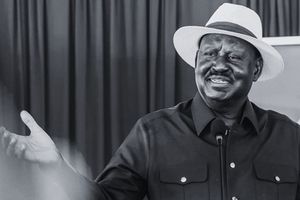
ODM party leader Raila Odinga speaks to the Sunday Nation at his Karen home, Nairobi on August 05, 2020.
Photo credit: Joan Pereruan | Nation Media Group
“It’s something that will stay with me forever. We were so close that even our clothes and shoes were interchangeable. He would get new ones and give me one of each.”
“His 72-hour burial wish was both painful and helpful,” Dr Oginga explains.
“The emotions were overwhelming. People would come, see you, and just break down. Their tears made you relive every memory.”
He recalls being overwhelmed by mourners at Kang’o ka Jaramogi and Opoda Farm. “In our culture, you can’t tell anyone not to mourn. Even those who disagreed with him politically came. We said, let’s put aside differences—there is no permanent enmity in politics.”
“When we went to the airport to receive his body, I underestimated the crowd. The sea of people was unbelievable,” he says.
“We tried to ask the crowd to move to Kasarani so the family could prepare the body, but they refused. The attachment people had to him was overwhelming.”
Siaya Senator Oginga Oburu during an interview with NTV at Serena Hotel Nairobi on Thursday, October 30, 2025.
Photo credit: Dennis Onsongo | Nation Media Group
“It took police teargas to disperse sections of the crowd at Kasarani as the body was being dressed by a team from Lee Mortuary and the Military. “It wasn’t hostility—it was pure love,” Dr Oginga adds. “People couldn’t let go.”
It is at that point that Dr Oginga explains that Odinga's remains were removed from the casket from India and places in a new one.
"You know in India, they don't bury the dead, they cremate. So they don't make decent caskets," he explained.
“Deputy President Prof Kithure Kindiki was my co-chair, and he was very thorough. The team worked late into the night to make sure the funeral succeeded. We are grateful to everyone who helped.”
The mourning, he says, will continue long after the official 40 days. “People will keep coming. We cannot stop them. Raila touched too many lives. His death has left a vacuum that will take a long time to fill.”
For Dr Oginga, the pain remains raw.
“We have not recovered yet,” he says quietly. “But I thank God that his passing united the country in grief, even among those who once opposed him.