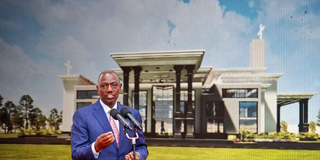
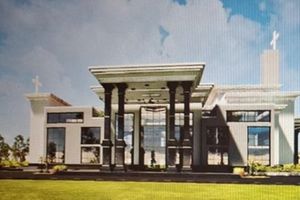
Caption for the landscape image: Court asked to stop Ruto from using personal funds to build State House church Thursday, July 24, 2025 Scroll down to read the article A third petition has been filed in court challenging President William Ruto's decision to build a church at State House. Photo credit: Pool By Joseph Wangui Correspondent Nation Media Group Article Related A second petition has been filed at the High Court in Nairobi seeking to stop the construction of the Sh1.2 billion church in State House, Nairobi. The petition also seeks to bar any person, including Dr Ruto, from using private funds to build a church on government land. PREMIUM Ruto’s Church: How other African rulers also splurged on grand worship sites From Mobutu Sese Seko in Zaire to Nana Akufo-Addo in Ghana and Abdelaziz Bouteflika in Algeria, rulers have mooted massive worship sites. PREMIUM Ruto: I have no apologies over State House church Head of State says he will fund the project with his own money. . Recommended for you PREMIUM Drone strikes stall two fuel tankers bound for Kenya PREMIUM Family’s Russia hope shattered by DNA confirmation of Shakahola death PREMIUM Civil servants face vetting over Sh6.2bn payroll fraud PREMIUM The Coast question: Who will inherit Raila’s loyal base? Login to join the discussion Please enable JavaScript to view the comments powered by Disqus. In the headlines Elections News Counties Business Opinion Sports Life & Style Health Podcasts Photos Newsletters Puzzles PREMIUM Civil servants face vetting over Sh6.2bn payroll fraud State renews push to identify irregular recruitment and weaknesses in management of public funds. PREMIUM Machetes, extortion and fear: Inside Homa Bay’s gang crisis Local business operators bore the brunt of the lawlessness. PREMIUM Mosiria exposes bitter fallout with Sakaja Nairobi County Chief Officer declares intention to challenge Governor Sakaja in 2027.
PREMIUM Ruto’s Church: How other African rulers also splurged on grand worship sites From Mobutu Sese Seko in Zaire to Nana Akufo-Addo in Ghana and Abdelaziz Bouteflika in Algeria, rulers have mooted massive worship sites.
PREMIUM Ruto: I have no apologies over State House church Head of State says he will fund the project with his own money.
PREMIUM Civil servants face vetting over Sh6.2bn payroll fraud State renews push to identify irregular recruitment and weaknesses in management of public funds.
PREMIUM Machetes, extortion and fear: Inside Homa Bay’s gang crisis Local business operators bore the brunt of the lawlessness.
PREMIUM Mosiria exposes bitter fallout with Sakaja Nairobi County Chief Officer declares intention to challenge Governor Sakaja in 2027.