The High Court in Nairobi has ruled that the State violated the Constitution by continuing to prosecute robbery with violence cases under Penal Code provisions that were declared unconstitutional seven years ago.
In a judgment that could reshape Kenya’s criminal justice system, the court faulted the State for disregarding binding 2018 court rulings and ordered strict judicial oversight to enforce reforms. The judgment exposes the State to potential future litigation on the Bill of Rights, including claims for unlawful detention, wrongful conviction and constitutional damages.
The court found that State agencies, including the police and the Director of Public Prosecutions (DPP), have unlawfully arrested, charged, detained, and convicted suspects under invalidated provisions since 2018.
The separatist leader is facing seven charges of terrorism and treason, each of which carries a life sentence.
Photo credit: File
The judge described the continued enforcement as a blatant breach of constitutional supremacy and fair trial rights.
The ruling stemmed from a petition filed by Katiba Institute, acting on behalf of all individuals arrested, charged, or convicted of robbery with violence or attempted robbery since March 15, 2018 — after the Penal Code provisions supporting those prosecutions were struck down.
The petitioners argued that the State lacked legal authority to pursue charges under laws already deemed unconstitutional.
The court agreed, stating that once the High Court declared Sections 295, 296, and 297 of the Penal Code unconstitutional in 2016—with an 18-month suspension—the State had an unequivocal duty to amend the law.
That obligation expired on March 15, 2018, rendering subsequent prosecutions illegal. The court had previously ruled these sections unconstitutional in a separate petition, citing vagueness and failure to meet constitutional standards requiring clear offense particulars for suspects to mount proper defenses.
“Enforcing provisions declared unconstitutional by a competent court is a direct affront to Article 2 of the Constitution,” the judge ruled, emphasizing that any act inconsistent with the Constitution is invalid.
Despite this, the petitioners noted that no action was taken to implement the 2018 judgment, allowing the DPP, Attorney General, and Kenya Law Reform Commission to continue charging suspects under annulled laws.
The court dismissed State arguments that the petition was improperly filed, rejecting claims of jurisdictional barriers or the need for prior legislative redress in Parliament. It affirmed that constitutional violations fall squarely within the High Court’s mandate.
Additionally, the court ruled that prosecuting suspects under defunct laws violates the right to a fair trial under Article 50, as no one can be convicted for acts not legally recognised as offenses at the time of prosecution.
While acknowledging the violations affected thousands, the court declined to issue blanket orders halting all prosecutions or releasing convicted prisoners, warning such measures would disrupt the justice system and harm public interest.
Instead, the court imposed a structural interdict, placing the Attorney General, DPP, and Parliament under judicial supervision.
To avoid a legal vacuum in prosecuting serious crimes, the court suspended its declarations until June 30, 2027, but warned that non-compliance would trigger automatic consequences.
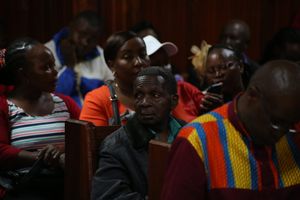
Milimani Law Courts in Nairobi.
Photo credit: File | Nation Media Group
After the suspension lapses, pending or future charges under the unconstitutional provisions will be quashed unless supported by valid law, and affected individuals must be released.
“The State cannot arrogate powers not granted by the Constitution,” the judge stressed, underscoring that compliance with court rulings is mandatory.
For prosecutors, the ruling introduces constitutional risk into every robbery with violence case. While prosecutions may continue temporarily, the clock is now running. If Parliament fails to amend the law by the court-imposed deadline in 2027, pending cases will collapse automatically.
To the accused persons, the judgment formally acknowledges that their rights were violated, even as immediate relief is deferred. It opens a pathway to potential future remedies while signaling that unconstitutional prosecutions cannot be normalised or ignored.