Skewed negotiations presided over by men and repeat offences committed by the same people against underage girls are among the key reasons why amendments to the Sexual Offences Act received overwhelming support in Parliament.
The Sexual Offences (Amendment) Bill 2025, sponsored by Garissa County woman representative Amina Siyad, seeks to amend the Sexual Offences Act (Cap. 63A) to strengthen the legal framework governing the prosecution of sexual offences in Kenya
The Bill introduces a new Section 40A to expressly provide that offences under the Sexual Offences Act shall be prosecuted exclusively through the formal judicial system.
It further declares void any agreement or settlement purporting to dispose of sexual offences outside the court process.
Punishment for sex offenders under the Sexual Offences Act is administered on a graduated scale.
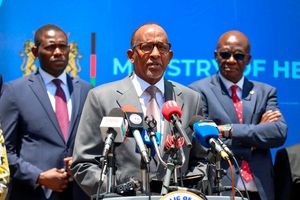
Photo credit: Photo I Pool
This proposal is firmly grounded in Article 159(3) of the Constitution, which prohibits the use of traditional dispute resolution mechanisms in matters that are repugnant to justice and morality or inconsistent with the Constitution.
In supporting the Bill, lawmakers also argued that sexual offences are public crimes prosecuted in the name of the Republic, not private disputes between individuals or families; hence, allowing out-of-court settlement undermines the criminal justice system and defeats the State's constitutional duty to protect its citizens and maintain public order.
According to the lawmakers, criminal liability cannot lawfully be negotiated away through private arrangements
Ms Siyad pointed out that Sexual offences are grave criminal matters affecting not only individuals but society as a whole. Therefore, they cannot be privately negotiated.
The Sexual Offences Act was first brought to Parliament during the 10th Parliament by the current Supreme Court judge Njoki Ndung’u. Since then, there have been a few amendments to the law.
“Despite the existence of clear laws criminalising sexual offences, we continue to witness instances where such offences are subjected to informal settlement, including through traditional or community dispute resolution mechanisms. In some cases, families or communities negotiate compensation or settlement outside the judicial system, effectively denying victims justice and allowing perpetrators to escape accountability,” Ms Siyad said.
Nominated MP Suleka Harun said that a sexual offence is a crime committed against the State; hence, it cannot be turned into a family affair or an affair that can be discussed under a tree.
“Justice must be served in courts. Justice cannot be for sale. Justice cannot be discussed under a tree. Justice must be done in our courts as per the Constitution of this country. We all have a right to get justice. Also, the body of a little girl or a young woman who has been defiled or raped is not a commodity to be discussed or negotiated under a tree,” Ms Harun said.
North Imenti MP Rahim Dawood pointed out that if an offence has been committed and there is enough proof for it, then there should be no out-of-court settlement.
“This is not a civil matter, it is a criminal offence. What has been done will stay in the mind of the minor. You cannot clean it up. So, it will be such a tragedy to let somebody who has done it to one child to be back into society so that they can do that same offence to another child,” Mr Dawood said.
According to Tharaka MP George Murugara, a sexual offence is a criminal offence which should not be compromised out of court because such cases have only a complainant, but the person prosecuting is the State.
Despite the provision of Article 159 of the Constitution, which encourages Alternative Dispute Resolution (ADR) mechanisms, Mr Murugara said the provision only applies to civil matters and not criminal cases.
“There should be no room for mediation or any form of out-of-court settlement, because these are very serious offences touching on the dignity, the very person, the very core of a human being known as woman. There is no way as men we can go out there, assault women sexually and then after that we go to our fellow men to tell them to negotiate for us to get off the hook and provide them with some form of retribution,” Mr Murugara said.
Kitui West MP Edith Nyenze opposed settling sexual offences cases out of court as an offender can simply pay a small fee and get off the hook, a move which encourages sexual offences against women and young men.
“If such cases are settled out of court, more girls may become pregnant, contract diseases, suffer indignity, including the loss of their virginity, and drop out of school. Their lives and plans will be disrupted without anyone being held responsible,” Ms Nyenze said.
The Bill sailed through third reading, and the House will be concluding its consideration next week before presenting it to the President for assent.