A teacher has lost his Sh1.7 million car after the High Court found that the vehicle was acquired using proceeds linked to an alleged human trafficking operation.
Justice BM Musyoki ordered the forfeiture of the vehicle to the government after finding that Evans Kimtai Sichei had failed to explain how he raised the money used to buy it.
The judge said the Assets Recovery Agency (ARA) had established, on a balance of probabilities, that the vehicle was proceeds of crime.
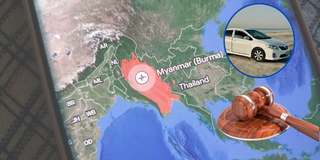
The case arose from investigations into the alleged trafficking of Kenyans who were promised well-paying jobs in Thailand but were allegedly taken to Myanmar and forced to engage in cybercrime under harsh conditions.
According to an investigator, some victims paid between Sh50,000 and Sh150,000 in “facilitation fees” to an M-Pesa wallet belonging to Mr Sichei and another line linked to his alleged accomplice, Emmah Bonareri Rosana.
Investigators further alleged that relatives of some victims paid between Sh70,000 and Sh100,000 in ransom to secure their release.
The Employment and Labour Relations court ruled that Gratify Solutions International Ltd and its directors were liable for trafficking Haron Nyakang’o to Myanmar in December last year.
Photo credit: Shutterstock
The court was told that statements from victims Evans Kipyegon Kironget, Isaac Kipruto Mering, Phillip Ruto Cheptot, Jonathan Kusimba, Felix Kwemoi Cheptinde and Daniel Simotwa showed that they had collectively lost Sh616,700.
Sichei and Rosana were arrested on March 11, 2025 and charged at Kahawa Law Courts with trafficking in persons among other offences.
The recovery agency subsequently investigated Mr Sichei’s financial transactions, focusing on his M-Pesa wallet and its links to the alleged victims.
The agency said the transactions showed suspicious patterns including substantial deposits followed by almost immediate withdrawals, which it considered an indication that attempts were being made to conceal the money trail.
Investigators also linked Sichei to Rosana through substantial financial transactions, saying they suspected the money was being moved to disguise its source.
The vehicle became a key part of the investigation after the court heard that it had been purchased from Ramna International Motors in Mombasa for Sh1.7 million.
A representative of the motor vehicle dealer, Arif Saleh Subeya, told investigators that the purchase price was paid in instalments through M-Pesa transactions from Sichei’s registered number.
Investigators said the same number had received money from people allegedly trafficked in the scheme.
Photo credit: Shutterstock
Sichei opposed the forfeiture application, saying the criminal case against him was malicious and intended to damage his reputation.
He told the court that he was a teacher, farmer and businessman and that these activities enabled him to buy the vehicle.
He also said the vehicle had been used as a taxi and that its seizure had deprived him and his family of a source of income.
Sichei further argued that the vehicle could not have been bought using proceeds from the alleged offences because he had acquired and registered it before the period indicated in the criminal charges.
Justice Musyoki, however, rejected the argument that the vehicle’s acquisition date automatically cleared it of suspicion.
The judge said the outcome of the criminal case would not determine the asset forfeiture proceedings, noting that civil forfeiture focuses on the property rather than the guilt of its owner.
“The respondent has been shown to have received money from some identified and disclosed victims. These facts speak more than mere suspicions,” Justice Musyoki said in a judgment delivered in Nairobi on October 2, 2026.
“I do not think that people will just appear and record statements implicating someone they don’t know in a serious offence like trafficking in persons,” the judge said.
Justice Musyoki said that after ARA presented evidence raising reasonable grounds to suspect that the vehicle had been acquired through crime, Sichei was required to explain its legitimate source.
Although Sichei said he was a teacher, farmer and businessman, he did not tell the court how much he earned from those activities, the nature of his business or what he farmed.
He also did not produce documents showing that he was employed as a teacher or provide evidence of his salary.
The judge questioned why Sichei had not shown whether the Sh1.7 million used to buy the vehicle came from his salary, business profits or farming.
“He has not even disclosed the kind of business he does and what he farms,” Justice Musyoki said.
The judge also took issue with his failure to provide details about the income generated from using the vehicle as a taxi.
Justice Musyoki said a vehicle acquired using proceeds of crime does not become legitimate simply because it is later used in a lawful business.
“A property which is acquired using proceeds of crime does not cease to be tainted because it has since the acquisition been absorbed in a legitimate business,” he said.
The judge concluded that Sichei had failed to show how he acquired the vehicle or demonstrate that it was not proceeds of crime.
He consequently declared the Toyota Axio KDN 780J to be proceeds of crime and ordered its forfeiture to the government.
The National Transport and Safety Authority was directed to transfer ownership of the vehicle to ARA.