In a courtroom in Nanyuki recently, a landmark ruling that could reshape how Kenyan courts handle genetic proof and paternity disputes in succession battles was made.
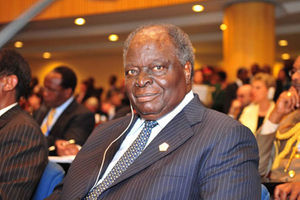
The case before the High Court involved a protracted legal feud over the estate of a wealthy man codenamed in court documents as GHS, a prominent political figure, who rose to national prominence post-independence, serving as both a Cabinet Minister and Member of Parliament.
At the heart of the dispute was a fundamental question: Can a DNA test between siblings conclusively determine inheritance rights or settle a paternity dispute?
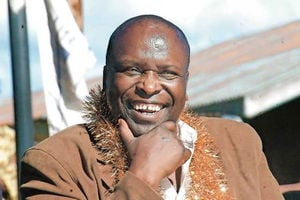
The legal battle was initiated by a man identified as CMW, who claimed to be GHS’s biological son and wants a share of the vast multi-million shilling estate comprising commercial buildings in Nairobi and Nyahururu towns, residential units in Nairobi as well as hospitality and agricultural sector investments.
The case proceedings underscored how science collides with privacy, dignity and inheritance law.
Sought recognition after death
At the heart of the dispute was a fundamental question: Can a DNA test between siblings conclusively determine inheritance rights or settle a paternity dispute?
Photo credit: Shutterstock
CMW's pursuit of recognition began shortly after GHS’s death. GHS had been a formidable presence in Kenyan politics for decades, serving in both the Executive and Legislature since independence.
His influence extended well beyond his official roles, particularly in matters concerning land and national security.
Central to these disputes is CMW, who asserts his lineage based on alleged physical resemblance and a past relationship between GHS and his mother.
For nearly a decade, he has pursued legal validation, maintaining that DNA testing is the only definitive method to confirm his paternity.
Court records reveal that CMW first sought judicial intervention when he filed a paternity claim at the Nyahururu High Court.
That case was dismissed due to non-attendance, leaving his claims unresolved. Undeterred, he later sought an order from the Nanyuki High Court compelling one of GHS’s acknowledged sons, PMK, to undergo DNA testing to establish their biological relationship.
CMW argued that a sibling-to-sibling genetic analysis was indispensable in settling the inheritance dispute and securing his rightful share of the estate.
He contended that his late mother had disclosed GHS’s paternity before her death and that the politician had consistently supported them financially during his lifetime.
His application rested heavily on assertions of physical resemblance, which GHS’s other children dismissed as legally irrelevant.
They argued that mere likeness could never substitute for concrete evidence of parentage. The court ultimately rejected CMW’s request, ruling that compelling an adult to submit DNA samples violated constitutional protections of bodily autonomy, privacy and dignity.
Moreover, the court said that sibling DNA comparisons could not conclusively establish paternity—only a direct test between a child and their alleged parent could provide definitive proof.
The judge presiding over the case underscored the legal and ethical complexities involved. He also questioned the logic of compelling a sibling-to-sibling DNA test to determine paternity. The applicant's decision to single out PMK for testing, and not the other children, also troubled the court.
“There is no law and it is an absurdity to require an assumed son of someone to provide DNA sample to aid the determination of the paternity of another, who purports to be the son of the father of the said person. Such a person would in my view have no legal obligation to undertake the test,” the judge stated.
Misuse of posthumous genetic testing
The legal battle was initiated by a man identified as Mr CMW, who claimed to be GHS’s biological son.
Photo credit: Shutterstock
The ruling highlighted broader concerns about the misuse of genetic testing in inheritance disputes, particularly when pursued posthumously through surviving relatives rather than the alleged father himself.
The court further criticised CMW’s selective targeting of PMK for testing, describing it as discriminatory and lacking evidentiary justification.
Without a compelling legal basis, the judge ruled, courts could not sanction such invasive measures—even in the pursuit of scientific truth.
The decision reinforced longstanding judicial scepticism toward forced DNA testing, citing precedents from both Kenyan and international jurisprudence that prioritise individual rights over speculative claims.
Beyond legal technicalities, the judgment carried a pointed admonition to those who pursue paternity tests posthumously. It stated that paternity disputes should be resolved during the alleged father’s lifetime. The judge cautioned against posthumous attempts to establish lineage through the surviving children, warning that such efforts risked intruding on personal freedoms without guaranteeing clarity.
"I hasten to add that in my view, it is upon an individual, and especially when they are adults, to resolve paternity issues with the alleged father during the lifetime of a deceased. Attempting to do so through DNA testing of the other children of the person upon his demise must be frowned upon. Who knows? They may as well not be children of the deceased!,"the judge remarked.
GHS’s named heirs, who serve as executors of his Will, vehemently opposed CMW’s application, branding it legally baseless and an abuse of court processes. They maintained that GHS had fathered only five children and dismissed his claims as opportunistic. Their legal team pointed to prior unsuccessful attempts by CMW to secure DNA testing while GHS was alive.
"The application for DNA testing is a continuation of the applicant’s vexatious fishing expedition, and is bad in law and an abuse of court process," they argued.
The ruling marks the latest development in a saga that has unfolded over nearly a decade. A related 2023 decision by the Nyahururu High Court had already set a stringent precedent, requiring robust evidence for paternity claims in succession cases.
That earlier ruling emphasised that inheritance disputes must be grounded in verifiable facts, not conjecture or superficial similarities.
For now, GHS’s estate remains under the stewardship of his appointed executors, while CMW’s quest for recognition remains unresolved.
The court’s decision has firmly closed the door on sibling DNA testing as a pathway to inheritance, reinforcing the primacy of constitutional rights over unverified claims.