Less than nine months to the 2027 General Election, politicians across the country are under intense scrutiny, as they woo voters using all manner of gifts, some of which have sparked debate.
Even before official campaigns begin, politicians aligned with both the government and the opposition sides are leaving nothing to chance with giveaways as part of the game. These include cash, branded foodstuffs and household items as politicians seek to build goodwill and strengthen their political networks.
But, while goodies flowing freely ahead of the General Election is not new in Kenyan politics, some politicians have taken the ‘generosity’ to unexpected levels.
T-Shirts, caps, foodstuff and cash have for a long time been part of the enticement strategy, but others have gone for the unusual to include branded underwear, mattresses, school uniforms and household items, stirring conversations on decency.
For some politicians, unconventional gifts are a perfect opportunity to dominate public conversations and attract the attention of potential supporters.
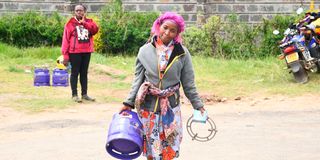
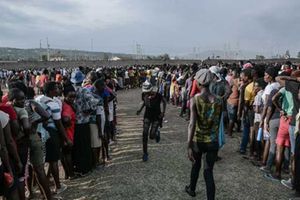
Residents of Ol Kalou Constituency in Nyandarua County receive mattresses, blankets, and gas cylinders as campaigns for the July 16 by-election gather momentum.
Photo credit: Pool
In the latest incident, a gubernatorial aspirant in Kisii County, Mr Kevin Nyamari, found himself at the centre of a social media storm after he distributed underwear featuring his picture to women.
The incident comes weeks after Kirinyaga Senator and 2027 governor aspirant Kamau Murango denied any involvement in the distribution of branded underwear that some had linked him with. But in Kisii, the aspirant framed the gesture as a contribution to women's ‘dignity’.
"Giving someone a pair of undergarments may seem small, but dignity has no small contribution. The confidence they carry is enormous," said Mr Nyamari, after distributing the garments.
"My commitment to supporting vulnerable members of our community, particularly girls and women, has always been driven by dignity, compassion and social responsibility," he added.
On Monday, Nyamari appeared to take the controversy in his stride, turning the rowing public interest into another opportunity for humour. He joked that he was receiving thousands of requests for the undergarments, suggesting that demand had exceeded his capacity to supply the items.
"Brothers and sisters, the requests are now coming in thousands. Apparently everyone wants a pair and the demand is too high for me to meet," he said.
However, the act has in the past few days attracted widespread debate, with critics questioning whether the initiative was appropriate for a political aspirant.
"Politicians should respect moral boundaries and provide practical support or economic empowerment rather than intimate items," Dr Peter Mbae, a governance expert and politician, told the Daily Nation.
Turkana University don Prof Tom Nyamache, who is also a governance expert, said that “women need meaningful, uplifting programmes with a lasting impact rather than underwear."
While the initiative has been largely met by a backlash, some Kenyans have defended the practice saying they were creative ways of wooing voters with low-budget campaigns.
"It is all about spreading love, dignity and making a difference, though small," said Mary Nyanchera, a resident of Kisii County.
While underwear and clothing are an essential part of everyday life, few would have expected them to feature among political campaign goodies.
A few months ago, Ndia Member of Parliament George Kariuki also used an unusual way to campaign after donating school uniforms bearing his name to pupils in his constituency.
The MP defended his actions, explaining that the uniforms were purchased using his personal funds, adding that even global development and aid agencies brand their donations.
Energy Principal Secretary Alex Wachira gifts an Ol Kalou ward electorate with a six kilogram gas cylinder on July 7, 2026.
Photo credit: Boniface Mwangi | Nation Media Group
"The uniforms I donated were bought using my own money, not the National Government Constituency Development Funds. When I visited the school, I found pupils wearing tattered clothes. It really touched me. There is nothing wrong with branding a donation. Even global organisations brand their donations," he said.
The incidents have now brought into sharp focus, the unconventional tactics emerging as politicians position themselves ahead of the 2027 General Election.
Lawyer and political analyst Steve Kabita says that as the campaign season nears, Kenyans should expect even more bizarre initiatives as political competition intensifies.
"Politicians know that no publicity is bad publicity. They will capitalise on anything that gives them political mileage," he stated.
The unconventional political gifts have evoked memories of the recent Ol Kalou by-election, in Nyandarua County, where politicians gifted the electorate with various branded campaign merchandise including purple-painted gas cylinders, shoes, mattresses and other goodies.
The by-election also turned into a spectacle of grand gifting and development as Cabinet Secretaries, Principal Secretaries, and top government officials camped in the constituency dishing all manner of goodies.
The government even provided two boats to be used in Gwa Kiongo Dam while electricity poles were erected across the constituency with many residents who had gone for decades without power in their homes finally having their prayers answered.
The activities came to a grinding halt after the United Democratic Alliance (UDA) candidate suffered a humbling defeat at the hands of Democracy for the Citizens Party’s Sammy Kamau Ngotho.
Although, the Independent Electoral and Boundaries Commission (IEBC) says branded giveaways are not illegal, it warns politicians against premature campaigns.
"Official campaign period starts on May 29, 2027. Political engagement before official campaign period are unlawful," stated IEBC boss Erastus Ethekon.
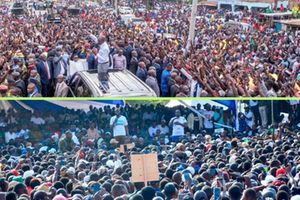
The warning comes against the backdrop of escalating political activity across the country, with politicians already positioning themselves for the 2027 contest, even though the official campaign period remains several months away. In recent months, Kenya has witnessed an uptick in political rallies, roadside meetings, youth mobilisation drives and billboard campaigns.
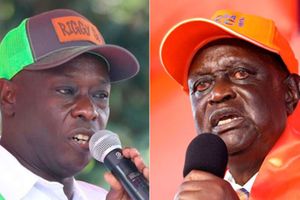
While President William Ruto and his deputy Prof Kithure Kindiki have framed their countrywide tours as economic empowerment initiatives, and the Rigathi Gachagua-led opposition branded their gatherings as public engagement forums, the meetings bear many hallmarks of political campaigns.