Ukraine has expressed alarm over reports of Kenyan nationals fighting alongside Russian troops, warning that Moscow is using deceptive overseas job offers to lure African youth into a war they barely understand.
Russia’s invasion of Ukraine, now in its fourth year, has redrawn global alliances and created new moral questions for countries far from the battlefield. For Kenya—a nation that has largely stayed neutral in the conflict—the reports of its citizens fighting for Moscow touch on deeper issues of unemployment, desperation, and the global reach of online recruitment networks that prey on economic hardship.
In an exclusive interview with the Nation , Ukraine’s ambassador to Kenya, Yurii Tokar, confirmed that one Kenyan fighter is currently in Ukrainian custody, having been captured while serving with Russian forces.
The envoy said the man, now considered a Prisoner of War (POW), admitted to entering Russia as a tourist before being tricked into signing a military contract.
“The POW himself confessed that he was deceived into joining the Russian army,” Ambassador Tokar said. “This case is now under official investigation. Ukraine treats such incidents with full transparency and respect for international law.”
The ambassador added that the detainee is being held under humane conditions in line with the Geneva Conventions, and that the International Committee of the Red Cross has full access to him.
“He receives humane treatment and medical care,” Mr Tokar said. “This stands in sharp contrast with the conduct of Russian forces, who frequently abandon or even execute their own wounded soldiers.”
The case of the captured Kenyan has opened a wider debate about the growing number of Kenyans who have joined—or been coerced into joining—Russia’s army.
Some, like Kevin, a former General Service Unit (GSU) officer from Kenya’s Rift Valley, say they enlisted knowingly, drawn by promises of better pay and respect.
“When I left Kenya in July, I knew that I would be part of the Russian army,” Kevin told Nation in a phone interview from southern Russia. “Here, I’m respected and well paid—better than I ever earned in Kenya.”
Kevin says the decision to leave Kenya was driven by frustration. After leaving the disciplined forces, he spent months looking for work. “I had a diploma in security management but no one was hiring,” he said. “Then someone told me about contracts in Russia—I thought it was construction or guarding oil fields.”
His family opposed the move, but he says poverty left him little choice. “When you can’t feed your children, you stop thinking about politics or ideology,” he said quietly.
Kevin, who claims to earn Sh316,000 a month, insists that he is not on the firing line but helps ferry meals and bodies of fallen soldiers. “I don’t see any reason to go back,” he added. “At the end of the day, all we want is money.”
Others say they were duped into the war, tricked by agents posing as employment recruiters.
In Nairobi’s Seasons area, one victim who asked not to be named said he was promised a lucrative IT job in Russia by an agent, Ms Edna Kendi, of Kenkir Travel Agency.
“I even paid Sh60,000 for processing and documentation,” he recalled. “But when we arrived in Russia, we were told we’d been enlisted into the army.”
When contacted, Ms Kendi denied involvement, though the victim’s wife said she has lodged a complaint against her. “Her husband is a senior DCI officer protecting her,” the wife alleged.
Investigations by international media and watchdogs show that Russia has expanded its recruitment beyond its borders, targeting Latin America, the Middle East and Africa.
Many recruits are enticed through Telegram channels, Facebook job adverts and unofficial “cultural exchange” programmes that promise stable pay, housing and legal residency. Once in Russia, they are often taken to military bases, issued uniforms and asked to sign documents in Russian—sometimes under pressure.
Ambassador Tokar described Russia’s foreign recruitment as a form of human trafficking, arguing that it preys on Africa’s unemployed youth.
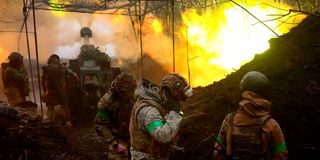
“Russia’s battlefield losses have surpassed one million soldiers,” he said. “It is now importing cannon fodder from anywhere it can—from North Korea to Africa.”
He warned that African recruits are treated as expendable and that Ukrainian intelligence has documented cases of wounded foreign soldiers being executed by their commanders to avoid medical expenses.
“You may be promised good wages or safe roles,” he cautioned Kenyan youth, “but the reality is very different. You will end up in trenches, under fire, in a war that is not yours.”
Kenya’s Ministry of Foreign Affairs has confirmed it is aware of a recruitment syndicate targeting Kenyans. Principal Secretary Dr Korir Sing’oei told the Nation that 29 Kenyans are believed to be involuntarily held in Belgorod, near a major Wagner Group base.
“MOFA is in discussion with authorities in Kyiv and has raised the issue with the Russian Embassy,” Dr Sing’oei said. “The Russian authorities deny any government involvement.”
He clarified that it is not illegal for Kenyans to join the Russian army voluntarily, but emphasised that any form of deception constitutes a criminal offence.
Kenya is not alone. Uganda, Zimbabwe and Nigeria have reported similar cases of citizens being lured into Russian military service.
In Zimbabwe, the government said at least six men disappeared after travelling to Moscow for “training”. In Nigeria, authorities recently issued a travel advisory warning that job adverts promising “security roles” in Russia or Belarus could be fronts for mercenary recruitment.
The trend underscores how the war’s tentacles now reach far beyond Europe’s borders, drawing in the Global South in unexpected ways.
Despite the sensitive nature of the issue, Ambassador Tokar stressed that Ukraine’s approach to Kenya remains cooperative, not confrontational.
“We are ready to work with Kenya on humanitarian and legal aspects of this case,” he said. “We do not let the actions of a few misguided individuals define relations between our countries.”
He cited Ukraine’s Grain from Ukraine Initiative—which has delivered over 309,000 tonnes of food to 18 African and Middle Eastern nations, including Kenya—as proof of Kyiv’s commitment to Africa.
“Africa’s voice matters,” he said. “Ukraine welcomes African initiatives that promote a just and lasting peace—not one that rewards aggression or exploitation.”
As the war grinds on, the human cost continues to ripple across continents. For Ukraine, the presence of African fighters on Russian soil is not just a legal or military concern—it is a symbol of how economic despair can be weaponised.
For Kenya, it is a test of how to protect its citizens abroad without becoming entangled in great-power rivalries.
“This war shows that Africa’s youth are the world’s most valuable—and most vulnerable—resource,” Ambassador Tokar reflected. “They deserve opportunity, not exploitation.”
The young men who left for Russia did so chasing hope. Whether deceived or deliberate, their stories now serve as a warning to others: that no salary is worth dying for in a war far from home.
“Do not be deceived,” Ambassador Tokar urged. “Your life is worth more than Moscow’s empty promises.”