The National Transport and Safety Authority (NTSA) has revealed that it has only 17 motor vehicle inspection centres across the country ahead of the planned rollout of annual inspections for private vehicles.
Speaking during NTV's and Nation FM's “Fixing the Nation” programme on Tuesday, NTSA Director-General Nashon Kondiwa said the authority plans to increase the number of inspection centres to at least 87 by next year.
“NTSA will license investors to establish 70 private inspection centres across the country as part of the reforms. We plan to have inspection centres in all the 47 counties while others will be located along major transport corridors and in cities such as Nairobi and Mombasa," said Mr Kondiwa.
Explainer: New NTSA vehicle inspection regulations
The admission has cast doubt on the authority's capacity to conduct annual inspections for millions of private vehicles. Stakeholders have also questioned whether NTSA has sufficient staff to undertake the exercise.
Amid public uproar, Mr Kondiwa announced on Tuesday that the authority had temporarily suspended enforcement of the mandatory inspection of private vehicles.
“For private motor vehicles, we have suspended the exercise until early next year. Enforcement will begin once we have fully automated the 17 government inspection centres," he said.
The authority said it had notified the police not to demand proof of mandatory inspection certificates from private vehicle owners during road checks until further notice.
The suspension offers motorists temporary relief after concerns were raised over the implementation of the regulations, which were initially set to take effect on July 1.
Initially, NTSA had announced that all private vehicles older than four years would be subjected to annual inspections under the newly introduced road safety framework.
The authority said that although vehicle owners are expected to continue booking inspections through the NTSA services portal on eCitizen, enforcement will only begin once the implementation framework is fully established.
Mr Kondiwa also revealed that private vehicles account for more accidents than Public Service Vehicles (PSVs), underscoring the need to enforce strict roadworthiness checks.
Defending the new regulations, Mr Kondiwa dismissed claims that annual inspections are a money-making scheme, terming the exercise a matter of national security.
“Apart from boosting road safety, this motor vehicle inspection exercise is a matter of national security. It seeks to improve the integrity of records and build a complete vehicle registry for purposes of strengthening national security," he said.
However, the Director-General admitted that the authority does not know the exact number of vehicles on Kenyan roads.
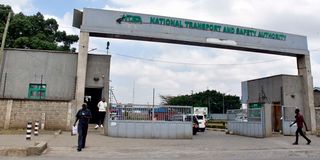
The National Transport and Safety Authority (NTSA) inspection yard along Likoni Road in Nairobi.
Photo credit: File | Nation Media Group
The government's plan to subject millions of private vehicles to mandatory annual inspections has triggered a political and public storm, with motorists and opposition leaders arguing that it will impose an additional financial burden on struggling Kenyans.
The new regulations significantly expand Kenya's vehicle inspection regime by requiring all privately owned vehicles that are more than four years old to undergo annual roadworthiness tests.
The inspection will cost Sh2,000 per vehicle, while motorcycles will also attract mandatory inspection charges.
Motorists who fail to subject their vehicles to inspection risk prosecution, fines of up to Sh20,000, imprisonment for up to six months, or both.
The Nation has established that with more than six million registered vehicles in Kenya, the government could collect at least Sh12 billion annually if all eligible vehicles paid the Sh1,000 booking fee and the Sh1,000 inspection fee.
Apart from the inspection charges, motorists have questioned the preparedness of inspection centres and the timelines for implementation.
The authority said the implementation dates for the suspended provisions would be announced after adequate preparations are completed.
The new inspection framework is part of NTSA's broader efforts to improve road safety, reduce mechanical-related crashes and ensure that vehicles operating on Kenyan roads meet minimum safety standards.
Under the regulations, commercial service vehicles and school transport vehicles will continue undergoing mandatory inspections at NTSA centres and must display valid inspection stickers before being allowed to operate.
Mr Kondiwa said the annual inspection requirement is already anchored in law but acknowledged that a 12-month interval may not be sufficient for vehicles that spend most of their time on the road.
According to him, the inspection process will involve establishing a vehicle's roadworthiness, verifying key vehicle data and particulars, checking mechanical conditions and conducting emissions tests.
Separately, the Law Society of Kenya (LSK) has moved to the High Court seeking to stop the new vehicle inspection rules, arguing that they unlawfully create criminal offences and financial obligations affecting millions of motorists without meeting constitutional requirements.
The society filed a constitutional petition and an urgent application seeking interim orders suspending the Traffic (Motor Vehicle Inspection) Rules, 2026, before they take effect on July 1.
Unlike an earlier case filed by lawyer Charles Mugane , which focused on inspection fees, eCitizen payments and alleged revenue collection, LSK frames the dispute as a broader constitutional challenge, arguing that the rules were enacted without mandatory public participation and unlawfully create offences and financial obligations.
LSK sued the Cabinet Secretary for Roads and Transport, NTSA and the Attorney-General, saying the regulations exceed the executive's delegated law-making powers.
The petition challenges Legal Notice No. 13 of 2026, which introduces mandatory annual inspections for private and government vehicles older than four years, requires inspections before registration for specified vehicles and creates offences for non-compliance.
“The impugned rules violate constitutional and statutory limits on delegated legislation by creating offences and imposing fines on ordinary Kenyans without parliamentary scrutiny,” LSK argues in court papers.
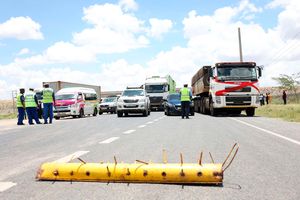
Police officers and officials from the National Transport and Safety Authority inspect vehicles at a roadblock in Lukenya, Machakos county on March 27, 2024.
Photo credit: Evans Habil | Nation Media Group
The society contends that although the Cabinet Secretary has powers under the Traffic Act to make regulations on vehicle inspection, those powers must be exercised in accordance with the Constitution and the Statutory Instruments Act.
LSK also argues that the regulations required public participation and stakeholder consultations because they impose legal obligations and criminal consequences on motorists nationwide.
“Neither the petitioner nor members of the public and stakeholders directly affected by the regulations were adequately informed or invited to submit memoranda or comments on the rules,” the petition states.
LSK further argues that the regulations were published only days before implementation, limiting meaningful public engagement.
The petition also challenges the financial obligations introduced under the new framework, saying motorists will be required to pay booking fees to NTSA and inspection charges to licensed testing centres before their vehicles can be certified as roadworthy.
LSK wants the High Court to suspend implementation of the rules pending determination of the petition and ultimately declare them unconstitutional and void.
“It is the petitioner's contention that failure to grant the interim orders sought may result in considerable hardship to Kenyans who will be exposed to fines and arrests on the basis of provisions of law they were neither aware of nor given an opportunity to participate in," the society's lawyer argues.