Three years since the government made changes to the Basic Education Curriculum Framework and domiciled junior school in primary school, the matter has been debated but never settled.
The decision followed recommendations by the Presidential Working Party on education Reforms formed by Dr William Ruto soon after he took power in September 2022.
The main argument was that learners leaving primary school at Grade Six were too young to transit to secondary school.
In the original plan, primary school was to end at Grade Six while secondary schooling was split in two levels: junior and senior secondary.
However, the decision to domicile junior school – after the term “secondary” was dropped – in primary school has sparked an unexpected fight for the control of junior school, which has refused to die despite presidential pronouncements, statements by the Teachers Service Commission (TSC) and the Ministry of Education.
At the centre of the fight is the control for the billions of shillings allocated to fund learning as well as the dues and agency fees junior school teachers surrender to unions.
Presidential Working Party on Education Reforms chairman Raphael Munavu addresses journalists at the University of Nairobi on November 11, 2022.
Photo credit: Francis Nderitu | Nation Media Group
Endless demands for autonomy by the teachers deployed in junior school, conflicts at school level and raging battles for control by unions and associations have only served to make matters worse, at the expense of quality teaching and learning. For the three years of junior school, a total of Sh85.1 billion has been spent on the segment.
In its first year in 2023, junior school was allocated Sh25.5 billion in the national budget.
The following year, Sh30.7 billion was disbursed and Sh28.9 billion in the current fiscal year.
The money is under the control of primary school headteachers, who oversee both segments.
In a unique arrangement, junior schools have a separate committee from the one that manages primary schools but share the compound and a headteacher.
Every learner in junior school is entitled to Sh15,042 annually while those in primary and secondary school have an allocation of Sh1,420 and Sh22,244 respectively.
However, the funding for learners in secondary school has dwindled over the years, leaving the institutions in financial doldrums. Secondary schools are steeped in debt as they have been receiving as little as Sh16,000 per learner instead of the recommended Sh22,244.
Tharaka Nithi Senator Mwenda Gataya joined the debate on Thursday when he tabled a motion in the House that proposes the delinking of junior school from the primary section.
The lawmaker argues that domiciling junior school in primary school does not serve the expected intention since the learning institutions are ill-quipped and understaffed to prepare the children for instruction in senior school.
Tharaka-Nithi Senator Mwenda Gataya.
Photo credit: Dennis Onsongo | Nation Media Group
“The integration of junior schools in the primary school setup has posed challenges for teachers, including inadequate training on the competency-based education (CBE), limited opportunities for career advancement, conflict in leadership, decision-making and resource allocation, leading to strained relationships with headteachers,” Mr Gataya said in his motion proposal.
“Junior schools face critical shortages of essential infrastructure such as laboratories, libraries, ICT hubs and science equipment necessary for the implementation of the curriculum, coupled with inadequate access to approved learning materials and teaching resources, resulting in inconsistencies in curriculum delivery thus hindering effective teaching, learning and overall student development.”
In the current set-up, the Kenya Union of Post-Primary Education Teachers (Kuppet) draws most of its membership from secondary school teachers.
Members are deducted 1.8 per cent of their monthly basic pay, which is then remitted to Kuppet as union dues. Non-members who benefit from salary deals negotiated by the union pay the same amount as agency fees.
The Kenya National Union of Teachers (Knut), on the other hand, draws the majority of its members from primary schools. These pay two per cent of their basic salary as union dues or agency fees.
The set-up left out junior school teachers who, by training are secondary school tutors but deployed to a level hosted in primary schools.
That also boosted membership numbers for the union, making it increase its influence in the education sector.
Apart from the fights for control between the unions and associations, there have been reports of the teachers posted to junior schools squabbling with heads.
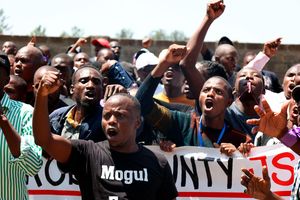
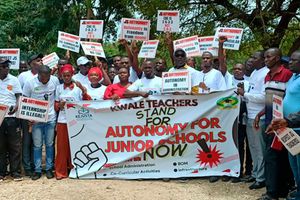
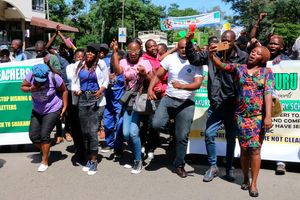
Junior Secondary School teachers from Nairobi County demonstrate outside the Teachers Service Commission offices on May 13, 2024.
Photo credit: Evans Havil | Nation Media Group
The teachers, who are university graduates, are said to look down on the headteachers who they perceive as academically inferior since many are primary teacher certificate (P1) holders.
President Ruto appeared to acknowledge the challenge when he addressed a group of junior school teachers in December.
“So the problem is that you are reporting to the bosses (headteachers) in primary school? I see the quagmire. But you are really pushing me, and I have heard you. I think you have a point,” the President said.
However, primary school headteachers do not read from the same script.
“We do not want politics in school. You either respect the administration in comprehensive schools or go and teach in senior school,” said Fuad Ali, the Kenya Primary School Heads Association chairman in a past interview with the Saturday Nation .
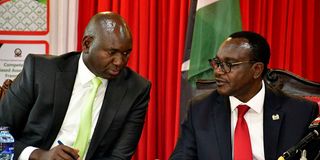
From left: Knut Nairobi Branch Chairman Nyamai Kasina, Knut National Assistant Executive Alvans Washington, Presidential Working Party on Education Reform Chairperson Prof. Raphael Munavu and Knut Nairobi Branch Secretary Macharia Mugwe confer with one another during public hearings on education reforms held at the University of Nairobi on November 11, 2022.
Photo credit: Francis Nderitu I Nation Media Group
His sentiments were echoed by Knut Secretary-General Collins Oyuu, who added that many headteachers have acquired university degrees and are more experienced than those deployed to teach in junior school.
“No one can be considered for promotion without looking at experience and number of years in service. You cannot come from college today and purport to be a deputy head of an institution,” Mr Oyuu said.
“It is experience and qualifications – how long have you have worked as a teacher and in which grade.”
Kuppet Deputy Secretary-General Moses Nthurima says junior school should be in secondary school, based on the curriculum and training needs and qualifications of the teachers.
“The law only recognises pre-primary, primary, secondary and tertiary levels of education. Where is the ministry getting the term ‘comprehensive’? Under the CBE, junior school should be part of high school – or at the very least, operate distinctly from primary level,” he said.
“When graduates are subjected to supervision by P1 teachers, it contradicts legitimate professional expectations. These teachers trained with the understanding that they would work alongside their peers in high school.”
In the ongoing union elections, Kuppet has reserved some seats for junior school teachers. This is meant to assuage them after the TSC started remitting union dues to Kuppet last year.