Public schools have closed a week earlier than scheduled due to delays in the release of government funds, throwing the academic calendar into disarray and raising concerns over preparations for national examinations.
The closure means learners will be home for a month instead of the scheduled three weeks.
According to the Kenya Secondary School Heads Association (Kessha), many institutions shut last week, with the remaining expected to do so by the end of today.
“Schools are broke and the situation is dire,” Kessha chairperson Willie Kuria said on Tuesday.
Mr Kuria said the delay in capitation disbursement has crippled the ability of schools to meet basic operations, particularly during second term, which is critical for the preparation of the Kenya Certificate of Secondary Education (KCSE) examinations.
“Preparation for these tests includes conducting science practicals and buying essential materials. Without money, this is impossible. Schools are sending students home, not by choice, but because they cannot continue operating,” he said.
Mr Kuria added that schools only received Sh2,300 per student in First Term and Sh3,200 this term – far below what is required to maintain academic and other programmes.
The early closure places pressure on Third Term, which is traditionally short but academically critical, as it will be the final opportunity to cover the syllabus and prepare for national assessments.
“How are we expected to feed students and settle electricity and water bills without money? We have been left with no option but to close early,” he said.
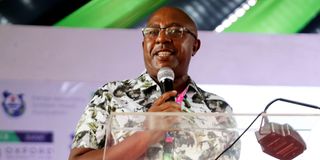
Education Cabinet Secretary Julius Ogamba (left) and National Chairman, Kenya Secondary Schools Heads Association Willy Kuria during the 48thKESSHA Annual National Conference for in Mombasa on June 25, 2025.
Photo credit: Kevin Odit | Nation Media Group
“This threatens the quality of education. We return in August to do all we can to cram the remaining syllabus into a few weeks. That’s not right.”
He criticised the government for not releasing funds on time, saying capitation should not be delayed until schools reopen, given that obligations like salaries and utilities persist even during holidays.
“Schools must continue paying salaries – sometimes two months in arrears – as well as utilities and other costs. Delayed capitation paralyses these things,” Mr Kuria said.
He added that some schools have shut postal services and offices due to inability to cover basic expenses.
As a result, they now rely on money collected from parents to cover costs that should be supported by the government.
“Many schools are running on nothing. Some don’t even have enough reams of paper for assessments. This is not sustainable,” he said.
Mr Kuria added that the government has slashed the annual capitation per student from Sh22,244 to about Sh16,900, with payments always delaying.
This has left schools struggling to pay for food, teaching materials and co-curricular activities.
“Some institutions have suspended sports, music, drama and other activities,” he said.
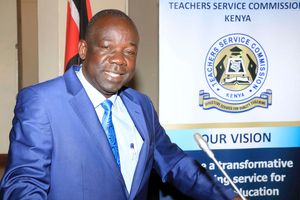
Education Cabinet Secretary Julius Ogamba.
Photo credit: Kevin Odit| Nation Media Group
Last week, Education Cabinet Secretary Julius Ogamba told principals that funds would be disbursed in Third Term, blaming the delays on the ongoing financial realignments.
He said the government is finalising the disbursement and that funds would be available in the final term.
Mr Kuria expressed scepticism, pointing to the shortfalls in Term One and Two.
“There is no clarity as we head to the last term. The statement by the CS is vague. We doubt it will be the full amount. We are drowning in debt. It is a cycle that will render schools bankrupt,” he added.