The crisis has exposed a significant financial mismatch that threatens the backbone of Kenya’s basic education system.
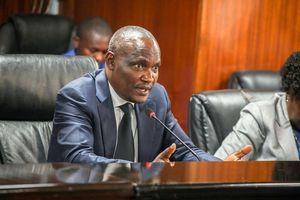
Education Cabinet Secretary Julius Ogamba.
Photo credit: Kevin Odit| Nation Media Group
Despite public reassurances from the Ministry of Education that Free Primary Education (FPE) and Free Day Secondary Education (FDSE) remain intact, school heads under the Kenya Secondary Schools Heads Association (Kessha) are raising the alarm.
According to Kessha, capitation per student has been slashed from the original Sh22,244 to below Sh17,000, with irregular and delayed disbursements compounding the issue. These challenges have forced many schools to release students before the official end of Term Two.
“CS Mbadi admitted to what is actually happening in public schools. We have been receiving less funding for years, but the situation has worsened. We have huge debts. The situation in schools is dire. We were supposed to get Sh6,600 this term, but we only received about Sh3,000. Schools cannot operate under such conditions,” said Kessha Chairperson Willy Kuria, who is also the Principal of Murang’a High School.
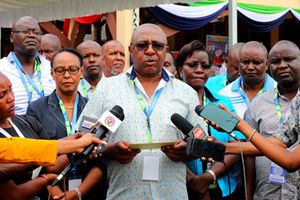
Kenya Secondary Schools Heads Association (Kessha) National Chairman Willy Kuria addresses principals attending the 48th Kessha conference in Mombasa on June 24, 2025.
Photo credit: Kevin Odit | Nation Media Group
“The only remedy is to allow cost-sharing. Let parents pay school fees like before because the state has failed to provide full capitation. Where is the money? Why are schools underfunded?” he posed.
He added that most schools have already shut down for the August holidays due to financial pressure. Only national and extra-county schools remain open—but not for long.
“By Wednesday, all schools will be closed. I urge the President to salvage the situation by ensuring full capitation is disbursed. The buck stops with him. We are headed for a crisis that hurts our children,” he warned.
Of the Sh702 billion allocated to the education sector in the current financial year, the actual amount reaching schools for student support is inadequate to cover essential needs such as learning materials, food, utilities, staff salaries and national examinations.
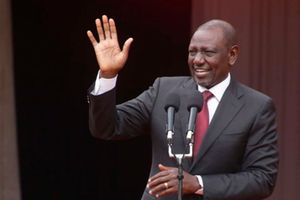
Speaking on Sunday at the Anglican Church of Kenya (ACK) St Martin’s Parish in Kariobangi North, Nairobi, the President reaffirmed his administration’s commitment to fully fund free primary and secondary education.
“Education is the greatest empowerment any country can give its citizens. We are committed to ensuring every child, regardless of background, has a fair chance to succeed,” said the President.
“Every Kenyan child must get an opportunity to access education. That is why I want to tell parents that the universal free and compulsory basic education program is still on course. We have employed 76,000 teachers and constructed 23,000 classrooms. We will employ more teachers to sustain the program,” he added.
However, during a media briefing at Sagana State Lodge in April, the President acknowledged that the Sh22,244 capitation amount was only theoretical.
“On paper, the capitation was Sh22,244, but the actual amount disbursed was less. What we have done is realign the figures to reflect what the government can realistically support,” he admitted.
Under the current funding model, schools are supposed to receive 50 percent of the capitation in Term One (Sh11,122), 30 percent in Term Two (Sh6,673), and the remaining 20 percent in Term Three (Sh4,448). However, disbursements have reportedly fallen short of these targets, severely destabilising school operations.
Basic Education Principal Secretary Prof Julius Bitok recently reassured the public that FPE remains intact and announced that the Ministry has initiated discussions with the National Assembly to secure additional funding.
Basic Education Principal Secretary Julius Bitok addresses participants during the launch of the Educational Assessment Resource Centre at New Mitihani House, Nairobi on July 4, 2025.
Photo credit: Bonface Bogita | Nation Media Group
“There has been growing public interest in this issue, and it's important to clarify that free basic education is not being scrapped. We continue to support learners through capitation, which remains the backbone of the government’s investment in education,” Prof Bitok said during a prize-giving ceremony at St Thomas Girls Secondary School in Kilifi County over the weekend.
He acknowledged that while Sh702 billion has been allocated to the education sector this year, the amount falls short of meeting growing demands due to rising enrolment and increased needs—such as support for national exams.
“To address this, we are actively engaging Parliament to secure additional resources and ensure every learner is adequately supported,” he said.
Kenya’s Free Primary Education (FPE) programme was launched in 2003 under the late President Mwai Kibaki, abolishing school fees and introducing capitation grants based on enrolment. The programme later expanded to include Free Day Secondary Education (FDSE), with a per-student grant of Sh22,244.
Despite notable progress, underfunding has persisted. Many public schools are burdened by mounting debts and limited resources. Stakeholders are now calling on the government to either restore full capitation in line with inflation or allow school administrators to revise school fees accordingly.
Since the Kenya Kwanza administration took office in 2022, education stakeholders say the disbursement of capitation funds has become more erratic and unpredictable—leaving schools in deeper financial distress.