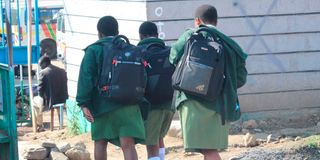
As schools close this week for the August holiday, they leave behind a turbulent second term that exposed the strengths and weaknesses of Kenya’s Competency-Based Education (CBE) reforms.
The term was marked by deadly school unrest, funding constraints, textbook shortages and the first major test of senior school under CBE as the inaugural Grade 10 cohort settled into the new system.
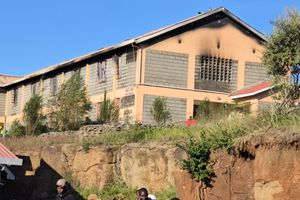
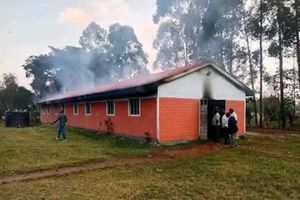
Ministry of Education data shows more than 330 cases of student unrest have been reported since April, including 95 school fires and dozens of attempted arson attacks. Eighteen learners died, making it one of the deadliest periods for schools in recent years.
Education Cabinet Secretary Julius Ogamba during a past event.
Photo credit: Wilfred Nyangaresi | Nation Media Group
Education Cabinet Secretary Julius Ogamba responded by appointing a multi-agency task force to investigate the unrest. Unlike previous inquiries, the team will include learners alongside teachers, principals, parents, psychologists, religious leaders, security agencies and child protection experts. Mr Ogamba said the task force would identify the root causes rather than focus only on perpetrators.
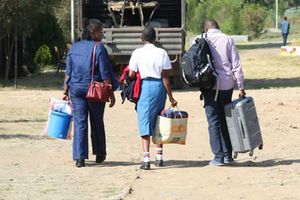
Students heading to Bomet bus stage after being released from school for the August holidays in this photo taken on July 24, 2026.
Photo credit: Vitalis Kimutai | Nation Media Group
School heads said the unrest reflected broader challenges, including mental health, drug abuse, social media influence, indiscipline and difficulties adjusting to boarding school life.
Kenya Secondary School Heads Association (KESSHA) chairman Willie Kuria said even traditionally stable schools experienced unrest.
The national chairman of Kenya Secondary Schools Heads Association Willie Kuria speaks during the Muranga County Conference in Mombasa on April 15, 2026.
Photo credit: Kevin Odit | Nation Media Group
He proposed allowing learners unable to cope with boarding schools to transfer to day schools, where they could receive closer parental supervision.
Basic Education Principal Secretary John Ololtuaa urged parents and religious leaders to share responsibility for discipline, while the ministry pledged to strengthen guidance and counselling and review the second-term calendar, the longest in the school year. The term also tested implementation of senior school under CBE. More than 1.1 million Grade 10 learners encountered shortages of specialised teachers, delayed textbooks, inadequate infrastructure and uncertainty over career pathways.
Basic Education Principal Secretary John Ololtuaa.
Photo credit: File | Nation Media Group
Kenya Institute of Curriculum Development Chief Executive Charles Ong’ondo attributed textbook shortages partly to inaccurate enrolment data submitted by schools after learner placement.
He said projected enrolment figures changed significantly once learners selected schools and pathways, leaving some schools with surplus books and others with shortages. By June, only 4,227 of about 10,000 secondary schools had submitted enrolment data.
Elimu Bora Working Group members Cornelius Oduor(left), Maxwel Magawi and David Karani addressing journalists in Nairobi on December 15,2024.
Photo credit: Evans Habil | Nation Media Group
Concerns also emerged over equity, with Kenya Human Rights Commission Deputy Executive Director Cornelius Oduor urging greater investment in all public schools to ensure learners receive equal opportunities regardless of where they study.
Meanwhile, school financing remained contentious. Principals argued that delayed capitation and rising costs had left schools struggling to meet their obligations. Parliament’s Public Investments Committee on Governance and Education plans to summon school principals over audit queries as it intensifies oversight of public funds.
The shortage of specialised teachers also persisted, particularly in technical and creative subjects required under CBE. The Teachers Service Commission said it is working with the Kenya School of TVET to identify qualified professionals for deployment. Political protests also disrupted learning in some areas during the term.
Despite the challenges, Kenya recorded its highest national examination registration, with 3.53 million candidates expected to sit the Kenya Primary School Education Assessment, Kenya Junior School Education Assessment and Kenya Certificate of Secondary Education examinations between October and November. KCSE candidature has exceeded one million for the first time.
As schools reopen next term, the success of CBE will depend not only on policy but also on whether schools receive the teachers, funding and resources needed to deliver the reforms.