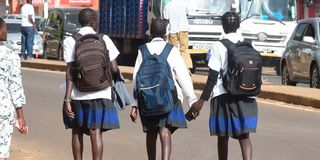
Thousands of learners from pre-primary, primary, junior school (JS), and secondary schools are set to resume learning tomorrow, marking the start of the second term in this year’s academic calendar amid growing financial strain in public learning institutions.
The second term, which runs for 14 weeks until July 31, is the longest and most demanding in the school calendar.
It is a critical period when teachers are expected to cover large portions of the syllabus, prepare learners for national examinations, and assess academic progress. The term will include a half-term break from June 24 to June 28, followed by a three-week holiday in August.
However, as schools reopen, principals warn that learning remains fragile, weighed down by inadequate and delayed government capitation.
Across the country, school heads say they are grappling with mounting operational challenges, with day schools largely dependent on government funding bearing the brunt of the crisis.
“The insufficient funding hampers the delivery of essential services, disrupts learning programmes, and strains the ability of principals to meet basic operational needs. Addressing capitation challenges is both urgent and critical,” said Kenya Secondary Schools Heads Association (Kessha) National Chairman, Mr Willy Kuria.
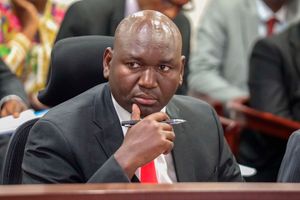
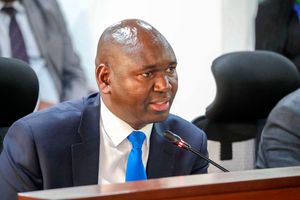
State Department for Basic Education Principal Secretary, Julius Bitok, when he appeared before the National Assembly Public Accounts Committee chaired by Butere Mp Tindi Mwale at the Bunge Tower Nairobi on Wednesday, April 22, 2026.
Photo credit: Dennis Onsongo | Nation
Basic Education Principal Secretary Julius Bitok has admitted that public schools are facing serious funding gaps, blaming the shortfall on fiscal constraints and rising enrolment.
Prof Bitok told National Assembly’s Public Accounts Committee that the gap between government policy and actual capitation disbursement is largely driven by budget constraints and growing enrolment pressure across public schools.
Even so, the PS maintained that the State Department for Basic Education has continued to distribute available resources transparently, equitably and strictly on the basis of verified learner numbers.
Prof Bitok further admitted that budget allocations for junior schools have consistently fallen below the actual funding needs.
“At the junior school level, budgetary and enrolment data for the 2022/2023 and 2023/2024 financial years show an underfunding gap of Sh3.6 billion. While the approved capitation rate remained constant at Sh15, 043 per learner, enrolment rose sharply from one million learners in 2022/2023 to 2.17 million in 2023/2024,” said Prof Bitok.
At the secondary school level, Prof Bitok said budgetary and enrolment data between the fiscal years 2020/2021 and 2023/2024 reveal an underfunding gap of Sh76.9 billion.
“The approved capitation rate has remained constant at Sh22,244 per student in secondary schools, yet enrolment during the same period rose from 3.3 million to 4 million learners,” noted the principal secretary.
The MPs questioned whether basic education is truly free, noting that if it is not, Kenyans should be prepared to shoulder the responsibility despite the fact that the Constitution guarantees the same.
Mr Kuria, who spoke during the Murang’a principals’ annual conference in Mombasa, said the situation has been building over the years, with schools now struggling to stay afloat.
He revealed that a persistent capitation deficit has left many institutions on the verge of paralysis.
“Over the past five years, from 2020 to 2025, schools have received an average of Sh17, 339 per learner annually, just 77.95 per cent of the approved capitation of Sh22, 244. This translates to a shortfall of Sh4, 905 per learner every year,” he said.
According to school administrators, the funding gap has significantly undermined their ability to deliver quality education, maintain infrastructure, and provide essential services.
The cumulative effect has been mounting debts, delayed projects, and reduced capacity to support both academic and co-curricular programmes.
To ease the pressure, principals are now proposing a one-off government grant to offset the accumulated deficit and restore financial stability in schools.
The crisis has been further compounded by the ongoing rollout of the Competency-Based Education (CBE) system, which has introduced new demands on infrastructure, teaching resources, and staffing.
“Despite the heavy infrastructural requirements of CBE implementation, full capitation for Term One 2026 has not been disbursed. The funding gap is severely constraining schools and compromising the transition process,” said the principals.
The transition that saw about 1.1 million Grade 9 learners move to Grade 10 early this year ushered in a new phase under the competency-based curriculum. However, schools are already facing major challenges, including a shortage of teachers to handle specialised subjects introduced under the new system.
Mr Kuria said the total funds owed to schools for 2025 alone stand at Sh22.5 billion, a figure that underscores the scale of the financial crisis.
He said school heads are increasingly forced to operate under tight budgets, often accumulating debts just to keep institutions running.
“This affects the provision of learning materials, payment of support staff, maintenance of infrastructure, and co-curricular programmes,” he said.
Adding to the strain is declining enrolment in some schools, particularly day institutions. Lower student numbers translate to reduced capitation, further weakening already fragile budgets.
School heads also pointed to inequalities in the distribution of learners, which have left some schools with fewer learners, hence financially exposed.
At the same time, the gap between government funding and actual school costs continues to shift the burden to parents.
Under the current fee structure, national schools (C1) require Sh95,426 per learner annually, with the government contributing Sh22,244, leaving parents to pay Sh73,182.
In extra-county and county schools (C2 and C3), the total cost stands at Sh90,267, with parents expected to pay Sh68,023 after government support.
For day schools (C4), fees are capped at Sh27,616, with parents contributing Sh5,372 after capitation.
However, principals argue that these figures are unrealistic, as the government rarely disburses the full capitation amount.
Kenya Union of Post Primary Education Teachers (Kuppet) National Chairman Omboko Milemba.
Photo credit: File | Nation
Kenya Union of Post-Primary Education Teachers (Kuppet) National Chairman Omboko Milemba called for full capitation as prescribed.
“Teachers have consistently emphasised the need for timely and full disbursement of capitation Sh22, 200 for senior schools, Sh15,000 for junior schools, and Sh1,400 for primary schools to ensure stability and effective implementation of school programmes,” he said during a parliamentary session.
Education stakeholders, led by the Kenya Human Rights Commission (KHRC) and the Elimu Bora Working Group, have warned that inadequate funding risks disrupting learning and deepening inequality in the education sector.
KHRC deputy executive director and Elimu Bora Working Group Convenor, Mr Cornelius Oduor, said despite government assurances that funds have been disbursed for the second term, many schools are yet to receive the money.
“The State has indicated that capitation funds have been released, but school administrators confirm the money has not reflected in their accounts. Even in the first term, the full amount was not disbursed, meaning the funds did not address arrears from the previous financial year,” said Mr Oduor.
National Parents Association Chairman David Obuhatsa Silas (centre) and other members of the association.
Photo credit: File | Nation Media Group
National Parents Association Chairman Mr Silas Obuhatsa said parents are ready for the new term, expressing optimism that the government has addressed some of the sector’s challenges.
“The State has assured us that capitation funds will be released before reopening. There is no reason for any child to remain at home,” he said.
Mr Obuhatsa also stressed that all Grade 10 learners must report to school regardless of their financial circumstances, urging school heads to comply with government directives on access to education.
Members of Parliament also raised concerns over illegal levies in schools, including charges for remedial classes and desks, calling for stricter enforcement of regulations.
As the second term begins, stakeholders agree that while access to education must be safeguarded, the long-term solution lies in addressing persistent funding gaps.