Hello

Your subscription is almost coming to an end. Don’t miss out on the great content on Nation.Africa

Ready to continue your informative journey with us?

Hello

Your premium access has ended, but the best of Nation.Africa is still within reach. Renew now to unlock exclusive stories and in-depth features.

Reclaim your full access. Click below to renew.

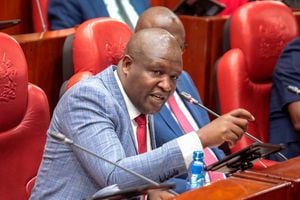
State Department for Basic Education Principal Secretary, Julius Bitok
Caption for the landscape image:

Why parents could be back to facing “illegal levies” when schools reopen next week

Scroll down to read the article

State Department for Basic Education Principal Secretary, Julius Bitok, when he appeared before the National Assembly Public Accounts Committee chaired by Butere Mp Tindi Mwale at the Bunge Tower Nairobi on Wednesday, April 22, 2026. 

Photo credit: Dennis Onsongo | Nation

Basic Education Principal Secretary Julius Bitok has told MPs that the government’s public school capitation policy is not working as intended, despite rising expectations, in a veiled signal that parents should brace for “illegal levies” when schools reopen next week for the second term.

At the centre of the financing crisis is a Sh7,000 per learner per term deficit against the required capitation amount which the PS attributes to budgetary constraints that have undermined a policy that appears sound on paper.
Appearing before the National Assembly Public Accounts Committee (PAC), the PS conceded that the system is running, but not efficiently.

“It is working, but not working perfectly due to financing challenges. It is true that budgetary allocations for secondary schools fall short of the submitted requirements during the years under review.” PS Bitok told MPs.

The PS disclosed that the government will disburse Sh23.4 billion to public schools by Friday ahead of the second term, which begins next week. However, he noted that this reflects a reduced capitation amount, highlighting a widening gap between approved funding and actual disbursements to schools.

Under the capitation policy, the government funds schools based on student enrolment. The current allocations per learner are Free Day Secondary School Education (FDSSE) Sh22,244, Free Day Junior Secondary Education (FDJSE) Sh15,043, Free Day Primary Education Sh1,420, and Special Needs Education Sh57,974.

However, Mr Bitok clarified that learners do not receive the full amounts. He told MPs that in secondary schools, each learner effectively receives Sh15,244, leaving a Sh7,000 funding gap per student. This shortfall has contributed to mounting pending bills, as schools plan budgets based on the official capitation figures but receive less funding.

PAC members Marianne Kitany (Aldai), Wilberforce Oundo (Funyula), Joseph Namuar (Turkana Central), and Mary Emase (Teso South) said the funding shortfall continues to burden parents.

“You are the ones who come up with the capitation amounts but end up underfunding the schools. Principals plan and budget based on those figures. What do you expect schools to do?” posed Ms Kitany.

Dr Oundo questioned whether the government remains committed to its policy. “Is basic education free? If not, because you are unable to send the right capitation amounts to schools, tell us so that we can inform parents to prepare,” he said.

Ms Emase said the country was “living a lie” on free education.

“We need to review the policy so that parents can plan for reality. We are preaching water but drinking wine,” she said.

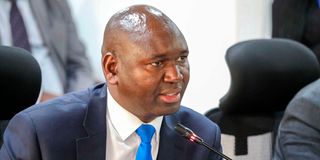
The Chairperson of the National Assembly Public Accounts Committee and Butere MP Tindi Mwale

The Chairperson of the National Assembly Public Accounts Committee and Butere MP Tindi Mwale during a session at Bunge Tower, Nairobi, on Wednesday, April 22, 2026, when Basic Education Principal Secretary, Julius Bitok, appeared before the committee. 

Photo credit: Dennis Onsongo | Nation

The MPs warned that unclear financing is worsening pressure on households and undermining the credibility of free education.

Mr Namuar said parents should be informed early to avoid accumulation of school debts.

“We may end up with pending bills that are not sustainable. We had a similar issue in public universities,” he said.

The PS’s admission comes against a backdrop of Auditor-General Nancy Gathungu’s findings that billions of shillings were lost through capitation funds sent to 33 non-existent schools and ghost learners over the past four financial years, even as schools remain severely underfunded.

A special audit on capitation and infrastructure grants revealed that public schools were underfunded by Sh117 billion over the period under review. Secondary schools accounted for the largest deficit at Sh71 billion, followed by junior schools at Sh31.98 billion and primary schools at Sh14 billion. Special needs education in secondary schools faced a shortfall of Sh67.1 million.

The audit also raised concerns about the equity of the capitation model, suggesting that some unintended beneficiaries may have accessed funds meant for learners in need.

“The main problem facing public schools is underfunding, because the Ministry of Education develops budgets for various activities that are always scaled down,” said Justus Okumu, Director of Audit at the Office of the Auditor-General.

“Some activities end up being shelved or converted into pending bills. Ghost schools are those that exist in the system, but when we went to the ground, we did not find them,” he said.

Follow our WhatsApp channel for breaking news updates and more stories like this.