Parents, school heads and education officials could face fines and jail terms under a proposed law seeking to tighten enforcement of free and compulsory basic education in Kenya.
The Basic Education Bill, 2026, currently before Parliament, proposes criminal penalties for a range of violations, including keeping children out of school, charging unauthorised fees and operating unregistered schools.
The toughest penalty targets anyone who prevents a child from attending school. Such a person could face a fine of up to Sh5 million, imprisonment for up to five years, or both if found guilty of keeping a child out of school because of employment, income-generating activities, religion, parental conflict, cultural practices or other reasons.
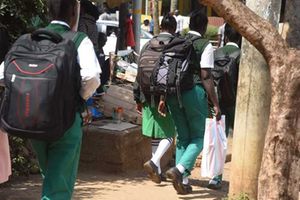
Pupils go for break.
Photo credit: File I Nation Media Group
The Bill also places a direct responsibility on parents and guardians to ensure children are enrolled and attend school regularly. According to the Bill, a parent or guardian who fails to present a child for admission could face a fine of up to Sh100, 000, imprisonment for up to two years, or both.
“Failure to ensure regular attendance could attract a fine of up to Sh100, 000 or one year in prison, while ignoring a written notice from a school over persistent absenteeism could attract a fine of up to Sh200, 000 or two years in prison, or both,” reads the Bill.
Further, the Bill has put public schools on notice, with any school that charges tuition fees to Kenyan learners facing a fine of up to Sh1 million, imprisonment for up to three years, or both.
The Bill further seeks to prohibit schools from imposing other charges without approval from the Cabinet Secretary and provides that a learner should not be denied education for failure to pay an authorised charge.
A person who promotes or manages an unregistered basic education institution could face a fine of up to Sh20 million, imprisonment for up to three years, or both, while the institution could also be closed.
The Bill prohibits corporal punishment, torture and cruel, inhuman or degrading treatment of learners. A person who violates the provision could face a fine of up to Sh100, 000, imprisonment for up to six months, or both.
Under the Bill, inspectors could enter a basic education institution with or without notice and inspect classrooms and other facilities, including workshops, dormitories, kitchens, sanatoria, hostels and ancillary buildings.
They could also demand school records and documents, require people to provide information, summon individuals to appear before them and take photographs or video recordings where considered necessary for an inspection.
Where standards are not met, an inspector, in consultation with the County Education Board, could order the closure of a school for a specified period until the required standards are achieved.
The Bill also creates an office of the Director of Schools Inspections, with responsibility for setting standards, monitoring quality, overseeing curriculum implementation and conducting periodic audits of school systems, financial management, assets and governance.
A member of a Board of Management who has a direct or indirect interest in a contract or other matter before the board must disclose the interest and stay out of the discussion and vote.
A member who breaches the requirement commits an offence and could face a fine of up to Sh50,000, imprisonment for up to six months, or both.
The proposed law also criminalises false information supplied during the registration process. A person who knowingly makes a false statement, or refuses without reasonable cause to provide required information or documents, could face a fine of up to Sh100,000 or imprisonment for not less than six months, or both.
Where the Bill creates an offence but does not prescribe a specific punishment, the proposed general penalty would be up to Sh200,000 or 12 months’ imprisonment for a first conviction, or up to Sh300,000 or two months’ imprisonment in other cases, or both.
The measures form part of a wider overhaul of basic education covering school governance, registration, quality assurance, special-needs education, scholarships and bursaries, and education data. The Bill is one of six education Bills recently tabled in the National Assembly as part of proposed reforms to the sector.