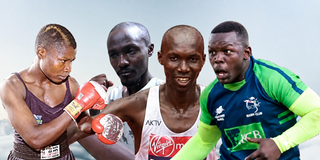
On September 29, 2013, Wilson Kipsang sliced 15 seconds off Patrick Makau’s world marathon record, clocking an impressive time of two hours, three minutes and 23 seconds at the Berlin Marathon. Among the victims of Kipsang’s historic pace was one Eliud Kipchoge.
Kipsang maintained his dominance on the marathon course, winning five World Marathon Majors races, including twice in London (2012, 2014), and once each in New York City (2014) and Tokyo (2017).
Kipsang won a bronze medal at the 2012 London Olympics and was the top global distance runner for over a decade. However, in January 2020 he was banned for four years for anti-doping violations.
His “whereabouts” failures saw him being forced into isolation, as anti-doping rules prohibit banned athletes from training in official camps, attending events, or associating with active competitors.
London Marathon men's winner Wilson Kipsang poses for photographers with the trophy in central London on April 14, 2014.
Photo credit: File
In sport, a ‘whereabouts’ suspension is an anti-doping violation that occurs when an elite athlete repeatedly fails to accurately report their location at specific times, preventing testing officials from accessing them for out-of-competition blood or urine sample collection.
A group of elite athletes has mobilised to visit Kipsang in Iten on August 22 to appreciate him for the role he played in uplifting others during his career peak. A supporter, Matelong Arap Ronoh, said the athletes may also contribute toward his welfare.
“The challenge I’ve had mostly, after the suspension came up, is that I couldn’t fit into my normal routine of waking up early, training, and meeting former athletes,” Kipsang shared in an exclusive interview in Iten this week. “You are off camera, and you have to fit back into society. An athlete becomes stressed, sinks into depression, and eventually dies.”
But while Kipsang managed to pivot to a quiet life of farming and business, he watches with growing alarm as other suspended athletes disintegrate under the weight of the exile.
The lethal combination of sudden financial ruin and community shaming often drives athletes toward substance abuse and deep psychological crises.
Kipsang’s warning that an athlete without a support system will “sink into depression and eventually die” is not an exaggeration. The trajectory from national hero to neglected citizen spans across various sporting disciplines in Kenya.
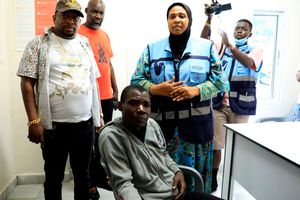
Ken Isaiah Moseti was once a celebrated backline player who represented Kenya’s “Simbas” and “Shujaa” sides internationally and also helped KCB Rugby to three straight Kenya Cup titles.
But he experienced a downward spiral during Covid-19, facing financial strain that led to substance addiction. This left him homeless for five years, suffering from severe depression and anxiety, before he was admitted to a rehabilitation centre.
Ken Isaiah Moseti.
Photo credit: Chris Omollo | Nation Media Group
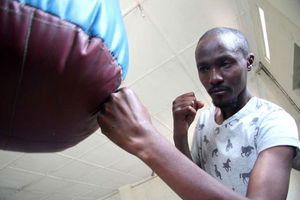
Boxing stars have had their fair share of challenges. Three-time Olympian Suleiman Bilali was the star of the Sydney 200, Athens 2004 and Beijing 2008 Olympics, rising to become Africa’s light flyweight champion. His life hit rock bottom in 2012 when he was involved in a freak road accident that triggered memory loss. Broken, penniless and dependent, he began another fight outside the ring to overcome depression and substance abuse in the Nairobi city slums. His struggle continues.
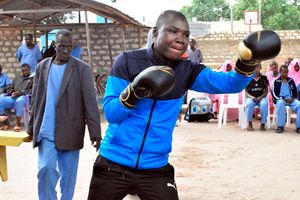
Mental illness has been most visible in Kenyan sport through the former WBA Middleweight Champion, Conjestina Achieng. She has battled chronic schizophrenia, severe stigma and financial destitution, undergoing psychiatric care at specialised centres – at one point under the care of former Nairobi Governor Mike Sonko Mbuvi.
Kenyan legendary female boxer Conjestina Achieng during a mock training session at the Mombasa Women Empowerment Network Hospital in Miritini on September 3, 2022.
Photo credit: Wachira Mwangi | Nation Media Group
Mental health professionals say the psychology of an elite athlete leaves them uniquely vulnerable to rapid psychological decline, whether as a result of suspensions or post-competition financial distress.
Dr Anundo Jacqueline, a consultant clinical psychologist and the Clinical Director of Kisiwa Wellness and Psychosocial Support Services, says mental challenges are treatable.
“High-functioning athletes can hide depression very well. This is because they may win games or races and smile in public, but they suffer in secret. This is called masked depression,” she observes.
She added: “During this vulnerable time, some may turn to negative coping mechanisms, such as the use of psychoactive substances (alcohol and drugs), excessive use of pain medication due to stress-related aches and pains, or sleep medication due to lack of sleep. This can lead to financial strain, poor eating habits, broken relationships, and a drop in sports performance.”
“Depression is treatable. Those who get care see major relief and are able to go back to sports with impressive performance. Let us normalise talking about mental wellness among the sports fraternity to eradicate stigma and encourage help seeking behaviour. ”
Kipsang’s case shows safe spaces with elders, professionals, and spiritual leaders can help. Communal accountability and spiritual grounding are vital to Kenyan athletes.
Retired Kenyan light flyweight boxer Suleiman Bilali sparring at the Muthurwa boxing club on November 6, 2018
Photo credit: File | Nation Media Group
“If Athletics Kenya cannot open a counseling center, the government must step in and build them, particularly where athletes train in places like Eldoret and Iten, the former world record holder states,” says the former world record holder. “Each counselling centre should have three key people: an elderly woman, an elderly man, and a spiritual leader or pastor. With this team present, athletes will feel confident visiting the office for support.”
Kipsang’s voice is an urgent warning. Until federations move past their obsession with medals and invest in mental health infrastructure, Kenya will continue to see its greatest ambassadors finish their races in the dark.
Established in April 2017 and based in Monaco, the Athletics Integrity Unit (AIU) is an independent organisation created by World Athletics to combat corruption, doping, and all forms of ethical misconduct in track and field. Raphael Roux, AIU’s Global Out-of-Competition Testing Manager, concedes that something must be done and that the anti-doping watchdog is taking action to help rehabilitate athletes who have been suspended for violating anti-doping rules, in order to prevent them from sinking into depression due to their circumstances.
“We have a “work in progress” procedure to establish something, but it is not ready yet,” Roux told Nation Sport. “I’ve talked to Athletics Kenya and, as we believe there is a lot to be done with those who have received a ban. Not only do we want to advise them, but we also want to use them for education purposes if they show a desire to share their experience.”
Roux said there is currently a working group involving Kenyan medical personnel to work on this topic, among other medical matters.
Peninah Wahome, the Anti-Doping Agency of Kenya CEO, noted that while they enforce compliance, they are also aware of the challenges facing athletes serving doping bans.
“We acknowledge and appreciate our role as regulators and our mandate to implement anti-doping requirements in accordance with the Code. However, we also recognise that banned athletes experiencing periods of ineligibility exhibit different behaviours, particularly with regard to social stigma, career endings, and the negative consequences of sanctions,” says Wahome.
“We have not hidden our heads in the sand, and we would like athletes to see ADAK as a trusted partner for follow-ups. They can feel free to talk to us, and we can recommend or connect them with trusted partners who can help with rehabilitation.”
Kenya’s sports federations have been accused of having a knee-jerk reaction to such cases and of treating mental illness as an individual disciplinary or medical fault rather than a systemic issue.
However, Barnaba Korir, the Vice-President of the National Olympic Committee of Kenya (NOCK) and head of Athletics Kenya’s Youth Development Programme, agrees with Kipsang on the need for counselling for athletes serving anti-doping bans or facing financial difficulties.
“Athletes who acknowledge the challenges they are facing and accept their wrong decisions can be used as ambassadors against these vices and reintegrated into society, as they are not criminals,” Korir says.
Boxing Association of Kenya secretary-general David Munuhe regrets Bilali’s situation of “abject poverty”. He says his association has been advising boxers to plan for their retirement from the moment they start boxing.
“We speak to them regularly, and the current crop have done well investing for the future. In sport, anything can happen, so boxers must have an entry and exit strategy.” Various tele-counselling platforms are also available to such athletes in distress, including the Kenya Red Cross Society’s Tol-Free Line (1199) or the Befrienders Kenya Helpline (+254 722 178 177).