Hello

Your subscription is almost coming to an end. Don’t miss out on the great content on Nation.Africa

Ready to continue your informative journey with us?

Hello

Your premium access has ended, but the best of Nation.Africa is still within reach. Renew now to unlock exclusive stories and in-depth features.

Reclaim your full access. Click below to renew.

Julius Ogamba
Caption for the landscape image:

Higher education funding model faces tough test as student numbers surge

Scroll down to read the article

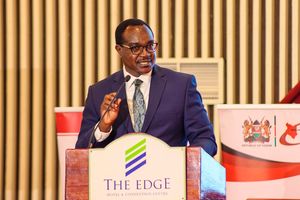
Education Cabinet Secretary Julius Ogamba (center) addresses the media during the Kenya Universities and Colleges Central Placement Service (KUCCPS) stakeholders' forum for the release of the 2026 university and college placement results in Nairobi on July 8, 2026.

Photo credit: Wilfred Nyangaresi | Nation Media Group

The higher education funding model that was introduced in 2023 after President William Ruto assumed power faces its biggest test yet as a rise in university enrolment stretches government resources, exposing funding gaps and fresh questions about its sustainability.

Official data shows the number of students placed to join universities has increased from about 70,000 in 2017 to the 202,133 who were placed this year, representing a rise of more than 300 per cent in less than a decade. The rapid expansion has significantly increased demand for more financing at a time when public universities are grappling with mounting debts.

Currently, 437,648 students are funded under the student-centred funding model introduced in 2023. They comprise 122,634 students admitted in 2023, 134,889 admitted in 2024 and 180,125 admitted in 2025.

The pressure is expected to intensify following the latest Kenya Universities and Colleges Central Placement Service (KUCCPS) placement exercise, which saw more students qualify for university admission.

KUCCPS data shows that 268,700 candidates attained the minimum university entry grade of C+ and above in the 2025 Kenya Certificate of Secondary Education (KCSE) examination, up from 244,563 the previous year—an increase of 24,137 students.

The placement agency admitted 293,869 students into degree, diploma and certificate programmes, including 202,133 placed in degree programmes, 28,246 to the Kenya Medical Training College (KMTC), 765 to Kenya Utalii College and 500 to the Kenya School of Law’s Paralegal Studies programme.

About 8,915 university-qualified students opted to pursue Technical and Vocational Education and Training (TVET) programmes instead of degree courses, reflecting growing interest in skills-based training.

“In terms of student numbers, the growth is very significant. Over the last 10 years, enrolment has grown by more than 300 per cent," Universities Fund acting CEO Dr Edwin Wanyonyi told the Nation.

Julius Ogamba

Education Cabinet Secretary Julius Ogamba and Kenya Universities and Colleges Central Placement Service CEO Agnes Mercy Wahome (right) during the Kenya Universities and Colleges Central Placement Service (KUCCPS) stakeholders' forum for the release of the 2026 university and college placement results in Nairobi on July 8, 2026.

Photo credit: Wilfred Nyangaresi | Nation Media Group

Budget estimates for the 2026/27 financial year show that the Higher Education Loans Board (HELB) requires Sh112.1 billion to finance about 1.38 million university and TVET students through loans. However, the National Treasury allocated only Sh56.3 billion, leaving a funding shortfall of Sh55.8 billion.

Based on the allocation, government funding works out to approximately Sh40,694 per student against an estimated requirement of about Sh81,020 per learner, leaving a financing gap of roughly Sh40,327 for every student expected to benefit.

The Universities Fund is also facing financial pressure.

The agency requires Sh47.36 billion to finance scholarships and institutional support but has been allocated Sh31.1 billion, creating a deficit of Sh16.26 billion.

At the same time, public universities are burdened by pending bills estimated at more than Sh100.3 billion, a situation education stakeholders warn is affecting learning, research, infrastructure development and the overall quality of higher education.

Pending scholarship obligations are projected to increase from Sh22.26 billion in the current financial year to Sh38.52 billion in the 2026/27 financial year, further compounding the funding crisis.

HELB) has opened applications for first-time undergraduate and TVET loans and scholarships for the 2026/2027 academic year, paving the way for thousands of students placed through KUCCPS to apply for government financial support. 

“Eligible first-time applicants can now submit their applications for the 2026/2027 undergraduate and TVET loans and scholarships. Apply early and follow the application guidelines carefully,” HELB in a statement.

The chairperson of the Vice-Chancellors Committee of Public Universities, Prof Daniel Mugendi, said universities are ready to receive students despite concerns over funding under the new financing model.

“Of course, there has been anxiety, particularly because of the changes in the university funding model. As you know, universities have been facing financial challenges arising from the transition to the new funding framework,” said Prof Mugendi.

“Even with these challenges, I want to assure students, parents and the public that our universities are fully prepared to receive the students who will be placed today. Once the placement portal opens and students receive their admission results, the registration and admission processes will begin immediately,” he added.

Follow our WhatsApp channel for breaking news updates and more stories like this.