The government has officially set in motion a radical transformation of the education sector, approving seven Bills that include the merger key parastatals and a fundamental shift in how university and TVET students are placed, funded and assessed.
This follows the adoption by the Cabinet of the recommendations of the Presidential Working Party on Education Reform (PWPER) in 2023. The Bills were drafted in 2024 but had never been approved by the Cabinet for tabling in Parliament.
The objective of the changes in law is to eliminate long-standing duplication of roles, administrative overlaps, and systemic inefficiencies that have plagued the Ministry of Education for decades.
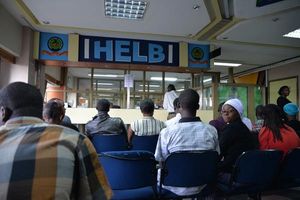
At the tertiary level, the Tertiary Education Placement and Funding Bill, 2024, stands as the cornerstone of the restructuring. The Bill proposes the consolidation of the Higher Education Loans Board (HELB), the Universities Fund (UF), the TVET Funding Board, and the Kenya Universities and Colleges Central Placement Service (KUCCPS) into a single entity: the Tertiary Education Funding Authority.
Currently, the three agencies are running independently. HELB is headed by Geofrey Monari, the Chief Executive Officer while Dr Agnes Wahome is the outgoing KUCCPS Chief Executive Officer. The UF is headed by Dr Edwin Wanyonyi.
This proposed body is designed to streamline the student journey, managing placement, loans, scholarships, and career guidance under one roof. For years, students have navigated a bureaucratic maze, dealing with multiple government offices for a single university admission. The state believes this one-stop shop will provide a seamless transition from secondary to higher education.
"As we speak, these institutions exist with a budget allocation, and some of them are anchored in law. So for us to effect the merger or a dissolution, we need to have the law changed. So the institutions will continue operating until the law is changed. A team will work on harmonising and changing the law," explained the Cabinet Secretary for Education Julius Ogamba recently.
However, he said even as the State merges or dissolves the entities, there will be no loss of jobs or functions.
Education Cabinet Secretary Julius Ogamba (right) and Teachers Service Commission Chairperson Jamleck Muturi address journalists on February 1, 2026 in Nairobi.
Photo credit: Billy Ogada | Nation Media Group
“That is why some are being moved back to the Ministry so that we do not lose the functions. We want to avoid duplicating duties and inefficiency. It's either move to the ministry or merge with a different institution for efficiency," he said.
The Cabinet also endorsed the Kenya National Educational Assessments Bill, 2025, marking a historic departure from the traditional, examination-centric model associated with the Kenya National Examinations Council (KNEC).
The Bill establishes the Kenya National Educational Assessments Council (KNEAC), which will prioritize continuous assessments measuring a learner's practical skills and competencies rather than a single, high-stakes final score.
To support this shift, the Kenya Institute of Curriculum Development (KICD) Amendment Bill, 2024 was approved, narrowing the institute's mandate strictly to basic and teacher education to prevent jurisdictional overlap with other sector regulators.
Agencies deemed to have outdated mandates, such as the Jomo Kenyatta Foundation (JKF) and the School Equipment Production Unit (SEPU), are also set for dissolution. The JKF has since ceased it publishing function to concentrate of scholarship functions. To anchor this in law, it will change its mandate and name to a proposed Basic Education Scholarships and Bursaries Council under the Cabinet Secretary’s office, creating a real-time central database to track all bursaries.
However, the State has moved to reassure hundreds of employees within these agencies that the restructuring will not result in job losses. Mr Ogamba clarified that staff would be absorbed into the Ministry of Education or the new merged entities.
"Even as we merge or dissolve, there will be no loss of jobs. We are moving functions back to the Ministry to avoid duplicating duties and to end inefficiency," the CS assured.
He added that for regulators like the Commission for University Education (CUE) and the Technical and Vocational Education and Training Authority (TVETA), the goal is to strengthen them to a point where they can be weaned off the exchequer within three years by utilizing the fees they collect from the institutions they regulate.
The Kenya Institute of Curriculum Development (Amendment) Bill, 2024, seeks to limit the institute’s mandate to basic and teacher education and restructures its board to eliminate overlaps.
Kenya Institute of Curriculum Development CEO Charles Ong’ondo.
Photo credit: File | Nation
“KICD acknowledges the bill and appreciates the transfer of development of curricula to TVETT CDAAC. The Institute will be happy to share experiences. We hope; nevertheless that development of curricula and programmes for Teacher Education at College level shall be reserved at KICD for consistency with Basic Education,” said Kenya Institute of Curriculum Development (KICD) Director Prof Charles Ong’ondo.
Despite the government’s confidence, the process has been met with caution from legislators. Taita Taveta Senator Mr Johnes Mwaruma warned against rushing the implementation, citing the confusion that characterised the initial junior school transition three years ago.
"We do not want a scenario where the State says one thing today and changes it tomorrow. Let us ensure the law is changed first and that there is adequate public participation before these mergers and dissolutions are implemented," Mr Mwaruma stated during a session in Mombasa.
Mr Mwaruma specifically questioned the dissolution of CEMASTEA, noting its vital role in teacher induction and STEM training.
"How do we want to kill such a crucial agency when our focus is on STEM in the new curriculum?" he asked.
Similarly, Kajiado Senator Lenku Seki raised concerns regarding the fate of the vast land, infrastructure, and equipment held by School Equipment Production Unit and JKF, asking if the State intended to sell off the public assets.
To ensure the policy changes have physical support, the Cabinet authorised Phase III of the Kenya-China Project. This multi-billion-shilling initiative will equip 70 TVET colleges with state-of-the-art machinery, targeting eight priority technical disciplines. It also includes the training of 1,190 instructors to facilitate the full rollout of Competency-Based Education and Training (CBET), aligning human capital development with the goals of Vision 2030.
The Ministry of Education has already directed a stoppage of all recruitment, promotions, and internal restructuring within the affected agencies until the process is complete.