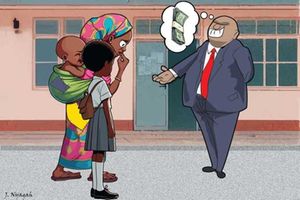
Kenya’s promise of free and compulsory education is collapsing under the weight of corruption and impunity, with school heads having perfected the art of exploiting parents.
An audit report by Action Group Kenya (CIAG-K) covering two financial years (2020 to 2022), reveals the methods employed by crooked school principals to charge illegal fees and divert public funds, aided by weak oversight and entrenched patronage networks.
The report shows that most public schools continue to impose a host of illegal and unregulated charges, ranging from admission, desk and locker fees to book levies, remedial tuition, development charges, and examination or activity fees.
It emerged that nine out of 10 public schools charge illegal admission fees, from as little as Sh500 to Sh25,000, in outright defiance of fees guidelines periodically issued by the Ministry of Education. The Constitution and the Basic Education Act guarantee free and compulsory basic education.
“Nearly 68 per cent of schools lacked adequate documentation for expenditures or revenues, while 85 per cent of the schools showed significant discrepancies in financial records, with inadequate documentation and reconciliation of expenditures,” said CIAG-K Executive Director Chris Owalla.
If the illegal fees represent the retail side of corruption, then the wholesale side is captured in the financial audits of some of the country’s top schools.
The analysis uncovered irregular transfers of public funds to the Kenya Secondary School Heads Association (Kessha), a principals’ welfare body that operates outside the scope of the Public Finance Management Act.
For example, Maranda High School and Moi Girls’ Kamusinga were found to have paid over Sh1.7 million to Kessha, while S. A. Kolanya Boys and Musa Gitau Girls each made payments running into hundreds of thousands of shillings. The data also shows Dr Kiano Boys Secondary School transferred Sh635,000 to Kessha, Masii Boys High School Sh50,000, and Nyamathi Secondary School Sh478,000.
Since Kessha is not a government-recognised entity in funding regulations, these transfers amount to direct misappropriation of resources.
Another recent survey by the Elimu Bora Working Group (EBWG), of which CIAG-K is a member, revealed that 90 per cent of public schools impose illegal charges.
Elimu Bora Working Group members Cornelius Oduor(left), Maxwel Magawi and David Karani addressing journalists in Nairobi on December 15,2024.
Photo credit: Evans Habil | Nation Media Group
The lobby also noted that corruption extends beyond simple fee collection to encompass recycling of board of management members, conflict of interest in procurement and transfer of school funds to school heads associations.
“The devastating impact on Kenya’s children is immediate and measurable. 65 per cent of schools regularly send children home when parents cannot pay illegal fees, with 40 per cent of primary school children currently at home due to unpaid fees and 45 per cent of junior school students at risk of permanent dropout,” said the lobby.
EBWG raised the alarm over what it described as “systematic collapse” of the education sector, citing chronic underfunding, corruption, and the widespread imposition of illegal levies.
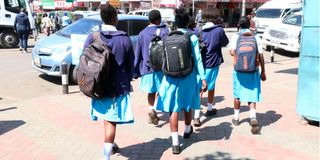
Students across the country started returning to school on Monday for the third term, stepping into a school calendar that is overshadowed by delayed government capitation , strained household finances, and growing concerns over the state of public education.
The short nine-week term will culminate in national examinations, including the Kenya Certificate of Secondary Education, Kenya Junior Secondary Education Assessment, Kenya Primary School Education Assessment and Kenya Learners Education Assessment.
For parents, the return to school comes at a time of biting inflation and shrinking disposable incomes, making it harder to meet school-related expenses. Many families are struggling to buy school supplies, clear fees and cover transport costs.
Separately, a storm is brewing at the Teachers Service Commission (TSC) where the Diocese of Maseno South has raised concerns about one of the commissioners.
Bishop Charles Ong’injo, in a letter to TSC dated August 13, accuses the commissioner of manipulating transfers of principals in Kisumu County to reward relatives, friends and political allies.
“He uses these principals to solicit for funds for his intended campaign to be area MP ... come 2027 and most of the beneficiaries in the latest transfer matrix are in his campaign team,” said Mr Ong’injo.
The bishop alleges that many of the transfers fit into the commissioner’s political machinery, creating a dangerous nexus between school leadership and partisan politics.