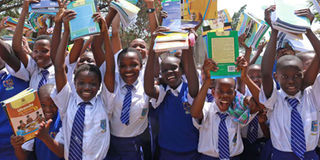
The government lost Sh458.2 million over four financial years due to systemic weaknesses in the disbursement and utilisation of textbook funds in public schools.
A special audit by Auditor-General Nancy Gathungu also faulted the Kenya Institute of Curriculum Development (KICD) for failing to include the purchase of textbooks in its procurement plans.
The special audit on capitation and infrastructure grants in public schools, covering the financial years 2020/21 to 2023/24, exposed massive irregularities, including the distribution of textbooks for subjects not offered in schools, non-delivery and delayed delivery of books.
The special audit sampled 442 secondary schools, 339 junior schools and 336 primary schools.
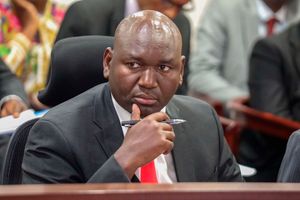
The Auditor-General, Nancy Gathungu, when she appeared before the County Public Investments and Special Funds Committee (CPIC) chaired Otieno Kajwang at the Bunge Tower Nairobi on Tuesday, March 4, 2025.
Photo credit: File| Nation Media Group
During the period under review, the State Department for Basic Education disbursed Sh27.9 billion to KICD to procure textbooks through prequalified publishers. However, the department did not disclose or provide the criteria used in transferring the capitation funds to KICD.
“Contracts between publishers and KICD for the printing, packaging and distribution of textbooks included clauses on the point of delivery and delivery address or final destination,” the audit notes. “Under these contracts, all the books were to be delivered to schools, with delivery addresses provided as per the approved distribution schedules.”
The number of textbooks to be supplied to each school was clearly stipulated in contracts between KICD and the publishers. Corresponding distribution schedules were provided as part of delivery instructions and formed the basis for delivery to individual institutions.
However, a comparison of textbook records maintained by schools against receipts from KICD showed a shortfall of textbooks worth Sh295.63 million delivered to 415 secondary schools, 194 junior schools and 245 primary schools. The shortage ranged from one to 1,485 textbooks in secondary schools, one to 376 in junior school and one to 540 in primary schools.
“As a result, students’ learning becomes a challenge since textbooks may not be readily available, leading to poor academic performance,” the audit states.
An additional Sh30.34 million was spent on distributing textbooks for subjects not offered in the affected schools. This anomaly affected 118 secondary schools, which received 134,199 such textbooks; 225 junior school that received 12,137 books; and 26 primary schools that received 281 books.
The audit further established that the government incurred a loss of Sh41.42 million for textbooks that publishers contracted by KICD failed to deliver to 183 secondary schools, 232 junior schools and 253 primary schools.
Cases of late delivery were also identified. Delays ranged between three and 37 months, by which time significant portions of the syllabus had already been covered, compromising the quality of education and, by extension, learners’ future outcomes.
The audit also revealed that publishers delivered fewer textbooks than required—42,384 fewer books to 183 secondary schools, 71,280 fewer to 232 junior schools and 134,129 fewer to 253 primary schools.
“The instances of over- or under-supply of textbooks constitute a breach of contract, as the quantities delivered did not correspond with the delivery instructions outlined in contracts between KICD and publishers,” the report states.
Prof Charles Ochieng’ Ong’ondo, the Kenya Institute of Curriculum Development director.
Photo credit: Sila Kiplagat | Nation Media Group
Conversely, excess textbooks worth Sh90.83 million were delivered to 394 secondary schools, 94 junior schools and 182 primary schools.
“The number of excess textbooks supplied ranged from one to 1,148 in secondary schools, one to 161 in junior schools and one to 498 in primary schools,” the audit notes.
Inadequate inventory records and poor stocktaking practices were also noted, with 110 schools flagged for failing to maintain proper records of textbooks and other instructional materials received.