Kenyans are digging deep into their pockets to give their children an edge in national examinations and assessments as a lucrative market for papers add a financial burden on households already struggling to make ends meet.
A syndicate that includes “prediction” papers, mock tests, answer booklets and WhatsApp revision subscription groups targets thousands of candidates and their parents.
The materials are sourced individually or some teachers and schools direct parents where to buy them.
The “revision” materials are marketed as resources to assist candidates pass examinations though many are of questionable quality.
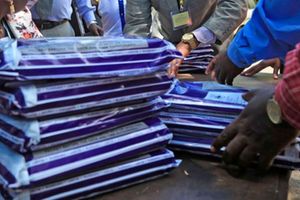
The Daily Nation has established that some businesspeople print bundles of examination papers purportedly from top-performing schools in Kenya.
The marketing bait is that candidates from such schools do well in national examinations because their teachers set examinations similar to those set by the Kenya National Examinations Council (Knec).
However, it is not easy to establish the authenticity of the papers or their source.
The Kenya Institute of Curriculum Development (KICD) is mandated to evaluate and approve learning and learning materials used across the country. These “revision” packages have not been approved.
More than 3.6 million learners are to take part in three national tests, with 1,380,463 registered for Kenya Primary School Education Assessment (KPSEA), a total of 1,206,028 for Kenya Junior School Education Assessment (KJSEA) and 1,048,355 for the Kenya Certificate of Secondary Education (KCSE) tests.
The syndicates are increasingly using social media and messaging platforms to claim they have access to national examination papers.
Some Telegram groups are advertising purported KCSE examination papers and materials for sale, with one channel claiming to offer the entire 2026 examination for Sh60,000, while individual papers are going for Sh4,000.
The materials range from downloadable past papers and marking schemes to privately compiled “prediction” packages that cost Sh300 to several thousand shillings, depending on the provider, content and duration of access.
“Every time you think you have finished paying for everything, another revision package comes up,” a parent of a KCSE examination candidate told the Daily Nation .
“You are told this one has better questions or that other candidates are using it. As a parent, you fear denying your child something that might help them perform well.”
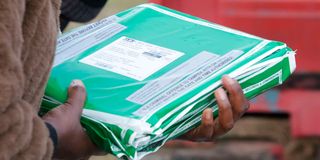
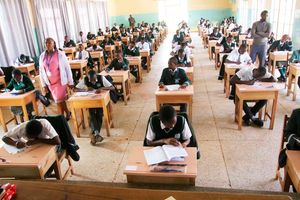
KCSE examination papers. Parents and guardians are digging deep into their pockets to give their children an edge in national examinations.
Photo credit: File | Nation Media Group
The parent added that examination preparations have stretched the family’s budget beyond the ordinary expenses of school fees, transport, meals and stationery.
“I have already spent money on revision books and past papers, but my child keeps asking for additional materials being shared in WhatsApp groups,” the parent said.
“Some cost Sh500, others Sh1,000. When you add everything, it is not a small amount.”
A review of advertised subscription rates shows providers have introduced different payment packages targeting candidates seeking additional practice materials.
One online platform that markets itself for KCSE examination papers, for instance, advertises revision resources at Sh290 for 24 hours, Sh590 for one month, Sh940 for six months and Sh1,480 for a year.
The platform lists past papers, mock examinations, notes and marking schemes among its resources.
For another provider, access to revision materials costs one Sh100 for two weeks, Sh200 monthly, Sh800 for six months and Sh1,200 a year.
“What is worrying is that nobody tells you which materials are necessary. You keep buying because you do not want to regret later that perhaps your child would have performed better had you paid for that extra package,” another parent, who did not wish to be named, told the Daily Nation.
The growing appetite for examination materials has also created opportunities for sellers marketing papers that promise to “predict” the content of the actual examination.
While launching this year’s examination season, Knec Chief Executive officer David Njengere said buying such materials is a waste of time and money.
“Parents need to understand that revision is important, but buying 10 different packages does not automatically translate into better performance. A learner who has revised properly using past papers, textbooks and materials provided by teachers can perform well,” the headteacher said.
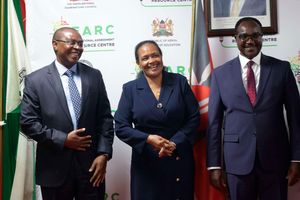
Kenya National Examinations Council headquarters, Mtihani House in South C in Nairobi.
Photo credit: File | Nation Media Group
“The danger is that candidates are increasingly being made to believe that unless they purchase certain prediction papers, they are not adequately prepared. That creates anxiety, especially among children whose parents cannot afford them.”
For households with more than one candidate, the costs can be substantial.
“My two children are sitting national examinations and need revision materials,” another parent said.
“Sometimes they ask for different packages because their teachers or friends have recommended them. You cannot buy for one and leave the other out. At the same time, you still have to provide food, medical care, transport, pay rent and everything else.”
Knec has repeatedly warned candidates and their parents against buying such materials, saying no one has access to the examinations before they are administered.
The council has cautioned households, teachers and schools against paying intermediaries promising leaked papers, saying such schemes often involve fake materials.
Education Cabinet Secretary Julius Ogamba says candidates, centre managers, supervisors and invigilators who violate examination regulations will face the law.
“There will be no mercy on those engaging in any form of malpractice,” Mr Ogamba said during the launch of the examination season.