Public schools are facing a financial squeeze ahead of national examinations, with principals struggling to balance preparations for candidates against mounting debts owed to suppliers after the government disbursed insufficient funds.
With the final school term entering its final stretch, school administrators are under pressure to purchase examination materials, maintain essential services and settle outstanding bills, raising concerns about how institutions will sustain operations during the examination period.
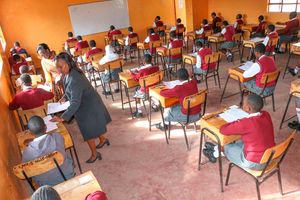
Secondary schools are most affected as they prepare candidates for the Kenya Certificate of Secondary Education (KCSE) examinations because of the nature of practical examinations. Comprehensive schools will also present candidates for the Kenya Junior School Education Assessment (KJSEA) and Kenya Primary School Education Assessment (KPSEA).
For secondary schools, the financial strain has been compounded by persistent shortfalls in capitation, which have left institutions operating on budgets significantly below the government's prescribed annual allocation of Sh22,244 per learner.
According to the Ministry of Education plan, schools should receive Sh11,122 per learner in Term One, Sh6,673 in Term Two and Sh4,449 in Term Three.
However, figures provided by the Kenya Secondary Schools Heads Association (KESSHA) show that schools received less than their expected allocations in the first two terms, creating funding gaps that have carried into the final term.
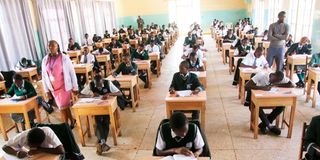
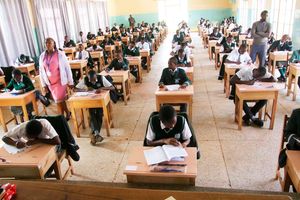
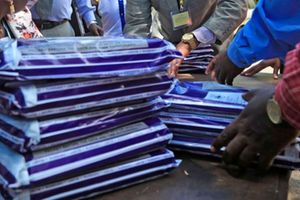
An invigilator distributes exam materials during the Kenya Primary School Education Assessment at Aga Khan School in Kisumu on November 1, 2023.
Photo credit: File | Nation Media Group
In the first term, schools received Sh6,577 per learner, alongside Sh1,375 retained by the government, bringing the total allocation to Sh7,952 against the expected Sh11,122. This represented a shortfall of Sh3,170 per learner.
In the second term, schools received Sh4,852, with a further Sh285 retained, bringing the allocation to Sh5,137 against the expected Sh6,673, leaving a deficit of Sh1,536.
A July 28 circular subsequently indicated a third-term allocation of Sh3,367.60 per learner, against the expected Sh4,449, representing a further gap of Sh1,081.40.
The figures point to a cumulative shortfall of Sh5,787.40 per learner against the annual capitation entitlement, assuming the third-term allocation was released as indicated.
The figures illustrate the financial pressure school administrators face, who must meet operational costs regardless of whether the government releases the full allocation.
The examination period presents an additional challenge because schools must continue providing essential services for candidates even as regular teaching activities wind down.
“The challenge is the national examinations because schools have to buy materials and laboratory supplies for practical examinations. Salaries and other essential expenses must also be paid, whether the money is available or not,” said KESSHA chairperson Willy Kuria.
“Most schools tend to borrow the chemicals and equipment for the examinations from suppliers, then see what they can do in January. Other schools go back to parents, but some parents cannot afford it,” said Mr Kuria.
According to the Kenya National Examinations Council (KNEC) timetable, KCSE rehearsals are scheduled for Friday, October 16 2026, ahead of the examinations beginning on October 19 and running until November 20.
KPSEA and KJSEA candidates will have their rehearsals on October 23, with the assessments beginning on October 26. KPSEA will conclude on October 28, while KJSEA will run until October 30.
The examination calendar means secondary schools must sustain operations for several weeks beyond the regular learning period, particularly those hosting KCSE candidates.
The financial difficulties are not new. Last year, secondary schools received Sh14,572 per learner, with another Sh817 retained for textbooks, bringing the total allocation to Sh15,389 against the annual entitlement of Sh22,244.
Mr Kuria said schools must continue meeting obligations such as salaries and other operational expenses even when government funding is insufficient.
“The challenge is the national examinations because schools have to buy materials and laboratory supplies for practical examinations. Salaries and other essential expenses must also be paid, whether the money is available or not,” he said.
Day schools are particularly affected because they lack boarding fees, which some institutions use to supplement their income when government disbursements fall short.
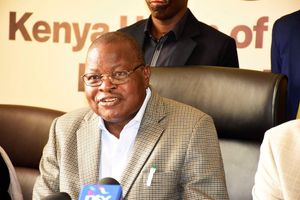
Kenya Secondary Schools Heads Association (KESSHA) chairperson Willy Kuria.
Photo credit: File | Nation
Mr Kuria said some day schools had resorted to asking learners to bring exercise books and foolscaps from home to reduce costs.
“Day schools do not have such [boarding charges]. Some end up asking students to bring exercise books and foolscaps from home. That is a major challenge,” he said.