Over two million candidates for the Kenya Primary School Education Assessment (KPSEA) and the Kenya Junior School Education Assessment (KJSEA) will begin the assessments today across the country.
Learners in Grade 6 will undertake the KPSEA, marking the end of primary school studies while those in Grade 9 will transition from junior school to join senior school in January 2026, a significant milestone for the competency-based education (CBE). This will be the first KJSEA under the system.
Learners who have disability and follow the stage-based curriculum will undertake the Kenya Intermediate Level Education Assessment (KILEA). Those at a more advanced level will be assessed through the Kenya Pre-Vocational Level Education Assessment (KPLEA).
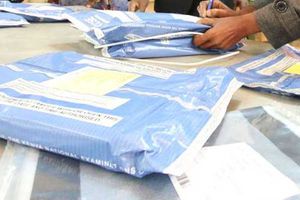
Containers storing assessment materials for the KPSEA and KJSEA will be opened at 6am at sub-county offices or other designated places. The Kenya National Examinations Council (Knec) has mapped out schools to collect the materials from the nearest containers to ease logistical challenges.
To prevent malpractices, all authorised personnel at the examination centres will surrender their mobile phones, which will be locked up and the key kept by the supervisor.
“All centre managers must have the approved list of persons in the centre who must have national identity cards for identification. KPSEA and KJSEA supervisors must ensure they open the right packet for the right session,” Knec said in a statement yesterday.
The Knec timetable shows rehearsals were conducted on Friday October 24, paving the way for the first written papers scheduled for today. The assessments will run for three days.
Candidates at Manyatta Primary School in Kisumu County take their Kenya Primary School Education Assessment (KPSEA) exam paper in October 29, 2024.
Photo credit: Alex Odhiambo Nation Media Group
According to Knec, a total of 3,424,836 candidates will sit various national examinations this year — comprising 1,130,669 junior secondary learners taking the inaugural KJSEA, 996,078 candidates for the Kenya Certificate of Secondary Education (KCSE), and 1,298,089 learners sitting KPSEA.
This makes 2025 the largest examination year in Kenya’s history, coming just one year after the last batch of 1.4 million pupils sat the final KCPE in 2023 before transitioning to Form One early last year.
Knec Chief Executive Officer Dr David Njeng’ere said the council had completed all logistical preparations, including a pilot study for the junior school assessments in 265 schools earlier this year. Sample KJSEA papers were distributed through the CBA portal in January to help schools prepare for the inaugural assessment.
“Knec will involve 10,765 centre managers, 12,126 supervisors, 54,782 invigilators, 22,247 security officers and 2,692 drivers. Centres hosting both KJSEA and KPSEA will require even larger numbers: 24,213 centre managers, 26,479 supervisors and 125,492 invigilators. To further strengthen the security of examination materials, Knec will pilot the use of digital smart padlocks in 250 containers this year,” said Dr Njengere.
Knec has also issued new directives to strengthen examination integrity. Managers have been instructed to ensure that supervisors and invigilators have not served in the same examination centres for more than three consecutive years.
Every 200 candidates will have a supervisor, and each examination room will have one invigilator for every 20 candidates. At least two police officers are required in each KCSE examination centre, with larger schools allowed to request additional security personnel.
“The 2025 examination season is historic. It is the first under the new pathways of the Competency-Based Curriculum. It is also the largest examination cycle Kenya has ever handled,” Dr. Njeng’ere said.
The exams will involve one of the largest logistical operations in Kenya’s education history. Knec will deploy 10,765 centre managers, 12,126 supervisors, 54,782 invigilators, 22,247 security officers, and 2,692 drivers for the KCSE alone.
Centres hosting both KJSEA and KPSEA will require even larger numbers: 24,213 centre managers, 26,479 supervisors, and 125,492 invigilators.
To safeguard exam integrity, apart from digital smart padlocks, Knec has increased the number of storage containers from 617 to 642.
For the KCSE, each centre will have at least two police officers, while for KJSEA and KPSEA, security officers will only be deployed in areas facing specific challenges.
An invigilator distributes exam materials during the Kenya Primary School Education Assessment at Aga Khan School in Kisumu on November 1, 2023.
Photo credit: File | Nation Media Group
“In the last two years, we managed to deal with early exposure of afternoon papers by using the double collection system. This will continue this year,” said Dr Njeng’ere.
He noted that School-Based Assessments (SBAs) remain a critical component, contributing to the final grades of learners at both KPSEA and KJSEA. He revealed that, the council will continue with personalisation of exam papers, first introduced last year to safeguard credibility.
Each question paper will bear the candidate’s name and index number, and learners will append their signature and date on both the script and its counterfoil, which will be detached and packed separately after each paper.
“To eliminate any bias during marking of candidates' scripts, last year we introduced personalisation of the KCSE candidate question papers. This practice will also continue. The KJSEA question papers with structured questions will also be personalised and candidates will be expected to provide their responses within the question papers,” said Dr Njeng’ere.
“These counterfoils will then be detached at the end of each paper and packed separately in envelopes that shall be provided. Supervisors, invigilators and centre managers will be adequately briefed on this beginning from Monday next week,” he added.