A wave of student unrest across the country has left schools counting losses, families mourning deaths and education stakeholders warning of a deeper crisis driven by overcrowding, strained infrastructure and pressure from the Competency-Based Education (CBE) transition.
At least 16 students died at Utumishi Girls Senior School in Gilgil, Naivasha, in one of the deadliest incidents linked to the unrest, while dozens of schools have reported destruction of property of yet-undisclosed value amid strikes, riots and closures.
The violence, now spreading to leading national schools including Alliance High School, Mang’u High School, Lenana School and State House Girls School, has exposed a widening gap between enrolment and available learning and boarding facilities.
Although the National Security Advisory Committee has not released its findings after a Monday meeting on the crisis, accounts from students, teachers and administrators point to a shared challenge: overcrowding, strained facilities and weak communication between learners and school authorities.
Homa Bay High School closed indefinitely after dormitory fire
The government maintains that schools will remain open until the midterm break scheduled for June 24–28, insisting that only a small number of institutions have been affected and that the academic calendar will proceed uninterrupted.
Education Cabinet Secretary Julius Ogamba has ordered intensified inspections of schools to enforce safety and operational standards, while urging stronger dialogue between students and administrators to prevent further unrest.
“The school calendar will be implemented as is to ensure that normal teaching and learning operations are not interrupted. We are working in a multi-agency approach, with regional commissioners, county commissioners and other National Government Administration Officers coordinating with heads of institutions and other education officials in their areas of jurisdiction to prevent or remedy any cases of unrest and destruction of property,” he told the Nation.
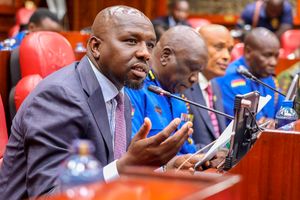
Cabinet Secretary for Education Julius Ogamba addresses participants during the 3rd KNEC Symposium in Nairobi on May 4, 2026.
The principal secretary for Basic Education, Prof Julius Bitok, has linked part of the unrest to examination pressure and rising learner anxiety under new academic demands.
“In some cases, rather than forcing students to sit examinations, schools can consider postponing them. We have also intensified audits, dialogue and consultations to address the situation and ensure learning continues uninterrupted,” he said.
The official added that shortages in meals, water, accommodation and general welfare may also be fuelling rising tensions in schools.
“Some incidents are linked to examination anxiety, especially under current pressure. In other cases, students are reacting to grievances over meals, water, facilities or poor communication with administrators. The answer is to listen early and address concerns before they escalate,” Prof Bitok said.
At the centre of the crisis, education sector sources cite a sharp rise in enrolment following the rollout of senior school under the Competency-Based Education system, which has expanded student numbers without a matching increase in infrastructure.
Cluster One schools, many formerly national schools, have come under intense pressure as parents seek placement in institutions perceived to have better CBE facilities.
This has led to over-enrolment in both Cluster One and Two schools, though national figures have not been released.
As a result, classrooms and dormitories designed for far fewer learners are now overcrowded, straining dining halls, water points, toilets and sanitation systems.
A teacher in one national school said congestion has made teaching and learning increasingly difficult.
“The students have been complaining that the food is not enough, and many leave the dining hall still hungry. We are also struggling with overcrowded classrooms; there is barely space to move while teaching. It has created an uncomfortable environment for both students and teachers,” the teacher said.
Another teacher from a Nairobi-based national school said pressure on facilities has worsened tensions among students.
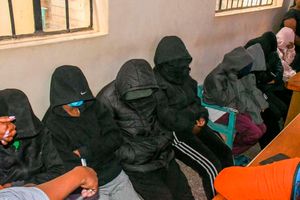
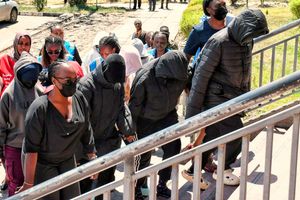
The nine Utumishi Girls Senior School students suspected of torching their school dormitory killing 16 colleagues before the Naivasha Law Court on June 3, 2026.
Photo credit: File | Nation Media Group
“Students are constantly scrambling for limited facilities. Form Three and Four students feel disadvantaged, while Grade 10 learners are seen as intruders who have worsened conditions. This has created unhealthy tension,” the teacher said.
Students interviewed anonymously described a daily struggle to access basic services, with long queues for almost every facility.
“It is not just sleeping space—you queue for food, water and even bathrooms. Everywhere there are queues,” one student said.
Beyond congestion, stakeholders point to a mix of social and institutional drivers, including weak communication, inadequate counselling, peer pressure, social media influence, generational gaps between students and teachers, and low parental involvement.
They also cite growing perceptions of inequality within schools, with claims that students from wealthier families receive preferential treatment over those from poorer backgrounds.
National Parents Association chair Silas Obuhatsa said poor communication between administrators and learners is a key trigger of unrest.
“Learners are treated as children who must only listen, but nobody listens to them. That is where the problem begins,” he said.
He argued that exclusion from decisions affecting daily school life fuels frustration that often escalates into strikes and destruction of property.
Mr Obuhatsa also linked the unrest to the government’s 100 per cent transition policy, saying it has overstretched school facilities beyond safe limits.
“Some schools look like forests. You cannot tell where the dormitory, clinic or canteen is because everything is congested. We are courting disaster,” he warned.
The parents’ lobby further raised concerns over widening inequality, saying socioeconomic differences among learners are increasingly visible and affecting relations in schools.
A section of the Blessed Sister Irene Nyaatha Dormitory at St Paul’s Githakwa Secondary School in Nyeri that was torched on the night of May 26, 2026.
Photo credit: Mercy Mwende | Nation Media Group
“We have rich versus poor in schools. Some teachers favour children from wealthy families while orphans are treated like children of a lesser god,” he said.
He added that financial disparities are also shaping school dynamics, including access to informal privileges.
“There are students giving teachers loans when they are broke. Something is fundamentally wrong. Children are not donkeys to be caned. No parent wants that. The Children’s Act is clear,” he said.
Educationist Jonathan Wesaya said the unrest reflects long-standing structural weaknesses in the education system.
“What is happening is not new. The difference is that schools we never expected are now striking,” he said.
As inspections and multi-agency interventions continue, stakeholders warn that unless overcrowding, infrastructure gaps and communication failures are addressed, unrest may persist even after the current crisis eases.