Cash-strapped Moi University has ventured into large-scale sugarcane farming to generate its own revenue, in an ambitious attempt ease financial strain and reduce its dependence on government funding.
The institution has already put 750 acres under sugarcane on its main campus, with plans to double the acreage to 1,500 as it seeks to transform its extensive landholdings into a commercial agricultural enterprise.
The Sh105 million project is expected to provide an alternative revenue stream for the financially troubled institution, while supporting its academic programmes and creating employment opportunities for surrounding communities.
The initiative is part of the government's push for public universities to develop internal revenue-generating activities to supplement their funding and sustain operations.
Vice-Chancellor Prof Kiplagat Kotut said the institution had resolved to utilise its land resources to generate income rather than rely entirely on government allocations.
"Our main aim is to ensure the institution runs seamlessly, and for that to happen, we must generate adequate internal funds to keep everything going," said Prof Kotut.
Moi University acting vice chancellor, Prof Kiplagat Kotut, during the interview in Nairobi on May 15, 2025.
Photo credit: Lucy Wanjiru | Nation Media Group
He said the university intended to utilise its 3,000 acres of land, with nearly half earmarked for sugarcane, to address its financial challenges while supporting programmes in the schools of agriculture and engineering.
"The government has always encouraged institutions to come up with their own internal revenue streams, and we are no exception. We want to utilise our 3,000 acres by putting almost half of it under sugarcane to curb our financial challenges, support our programmes and the communities around us through job creation," he said.
Speaking on Tuesday while inspecting the progress of the plantation, Prof Kotut said the project followed consultations with sugar millers, agricultural stakeholders and the local community to establish a commercially viable venture that would also benefit the wider region.
The university has partnered with West Kenya Sugar Company, which is providing technical expertise, seed cane and guidance on crop management. The company will also purchase the harvested cane for milling.
"We have partnered with West Kenya Sugar Millers so that they make sure we are doing the right thing. They are also providing seed cane for us and will be taking the cane for milling after harvesting," said Prof Kotut.
The partnership is expected to give the institution access to expertise in modern farming practices, appropriate cane varieties and crop management, while providing an established market for its produce.
The project is estimated to cost Sh105 million, covering land preparation, planting, weeding and other related activities.
Farm manager Tobias Okeno said the initial expenditure had been estimated at about Sh70,000 per acre, although the cost could change depending on climatic conditions and the state of the farms.
He said the university had planted eight fast-growing sugarcane varieties across the 750 acres to establish which ones perform best under local conditions.
The trials are expected to provide useful information for the institution and neighbouring farmers who may wish to venture into commercial sugarcane production.
"We have planted eight varieties which mature differently across the farm. By June next year, we expect to have harvested the whole farm. We are doing this as a form of research to establish which variety does well in this region," said Mr Okeno.
The university estimates a yield of about 40 tonnes per acre, depending on the variety planted and the level of crop maintenance.
At the current Kenya Sugar Board price of Sh5,500 per tonne, the projected yield would translate into gross earnings of approximately Sh220,000 per acre over the crop cycle, before deducting production and operational costs.
The actual returns will depend on the performance of the different varieties, weather conditions, crop management and harvesting costs.
The first harvest is expected to provide an important measure of the project's commercial viability and the university's ability to generate meaningful returns from the investment.
Students, residents to benefit from farm jobs
Beyond the prospect of generating revenue, the sugarcane venture is already creating employment opportunities for residents and students.
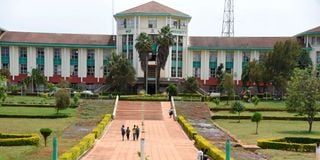
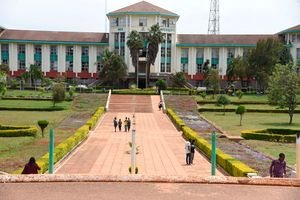
Moi University main campus.
Photo credit: File | Nation
Prof Kotut said hundreds of members of the surrounding community had been engaged during the planting and weeding phases, giving them an opportunity to earn an income while contributing to the institution's agricultural expansion.
The university has also recruited students to work on the farms, including during the lecturers' national strike, when some were able to earn money to support themselves.
"It's not just community members who work here on our farms. Students also help us with weeding and spraying, and in return we pay them. During the strike, they were working here," said Prof Kotut.
He said the initiative was part of the university's effort to build a mutually beneficial relationship with neighbouring communities through employment and agricultural opportunities.
"During the planting of our 750 acres, we hired members of the community to help us, and they also worked with us during weeding. That is how we are building a sustainable, symbiotic relationship with our neighbours," he said.
The project is also expected to support practical learning and research in the university's agricultural programmes, particularly through the assessment of different sugarcane varieties and farming methods.
The sugarcane project is part of a wider strategy to expand commercial agriculture on the university's land, with plans for coffee and tea plantations alongside existing apple and avocado initiatives.
The institution launched an apple-growing project in May 2021, establishing an orchard covering nearly 100 acres. The Vice-Chancellor maintains that the project remains operational, although its commercial performance and returns have not been established in the information provided.
The university is conducting further research into apple varieties, including MUA52, which Prof Kotut says is being developed by the institution. The next harvest is expected around February next year, although changing climatic conditions have affected the harvesting schedule.
Moi University is also pursuing avocado farming through a partnership with Safaricom. According to farm manager Mr Okeno, the first batch of seedlings was planted in November last year, followed by a second batch in March this year.
The institution hopes that these ventures, alongside the proposed coffee and tea plantations, will broaden its agricultural portfolio.
However, the immediate focus remains the sugarcane project, which represents a substantial investment in the university's attempt to turn its land into a productive asset.
For a university facing financial pressure, the success of the venture could determine whether its vast landholdings become a meaningful source of financial support rather than simply an underutilised resource.