The scramble by the opposition presidential hopefuls to mobilise funds and establish international networks through overseas trips has lifted the lid on the high cost of the country’s election campaigns.
Beyond popularity, manifestos and appealing narratives, presidential contenders require a sizeable war chest to sustain months of political mobilisation, movement by air and high-end vehicles, as well as the procurement of campaign merchandise and erection of billboards across the country.
Electoral experts and political analysts say those seeking to run a serious presidential campaign may not necessarily be billionaires, but must have access to billions of shillings.
The Independent Electoral and Boundaries Commission has set a spending limit of Sh6.1 billion for the 2027 presidential campaign, making next year’s contest one of the most expensive.
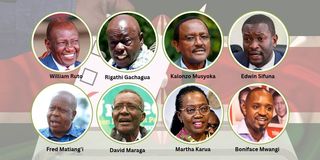
The five critical resources for a successful presidential campaign in Kenya.
Photo credit: Nation Media Group
The figure by the electoral body only covers the official campaign period, which lasts two months. Those who have declared an interest for the top seat are already campaigning, meaning they are likely to spend more than the set limit.
Fears of possible manipulation of results have made the hiring of poll agents a necessity and a major expenditure component for any serious presidential candidate. The country is projected to have a total of 55,393 polling stations in the 2027 General Election, up from 46,229 in the 2022 elections.
The culture of handouts, which is becoming more pronounced as the country inches closer to the elections, has also emerged as a major expenditure line.
Politicians and election experts who have participated in past presidential campaigns describe running for the top seat as an expensive venture that requires more than personal wealth.
They list personal donations, organised fundraisers, support from tycoons and the local business community as well as contributions from international networks as key sources of funding.
Political strategists who have participated in past presidential contests place the figure between Sh10 billion and Sh20 billion.
University of Nairobi political economist Prof Karuti Kanyinga has previously estimated that mounting a serious presidential campaign costs about Sh14 billion, largely because candidates must maintain a presence in all the 47 counties and nearly all the 290 constituencies during the campaign period.
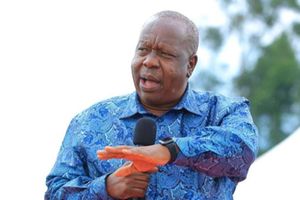
Central Organisation of Trade Unions Secretary-General Francis Atwoli is among those who believe that presidential campaigns cannot be sustained through donations from supporters.
The demand for money, resources and political networks explains the current scramble by opposition leaders to visit the United States to woo diaspora voters and to mobilise campaign money.
Democracy for the Citizens Party Leader Rigathi Gachagua returned from the US on October 20 after a 50-day tour. He held several meetings with Kenyans, rallying them to back the opposition in the 2027 polls. The sessions also involved raising funds.
Linda Mwananchi Movement Leader Edwin Sifuna has lined up a two-week tour of the US to try and establish international contacts and to mobilise campaign funds.
Mr Sifuna is set to begin his tour on Friday, with plans to meet Kenyans living in various American cities to popularise his presidential bid.
Wiper Patriotic Front leader Kalonzo Musyoka had planned a seven-day tour of the US to promote his candidature and raise funds. But on Sunday, he put on hold the trip that was to kick off yesterday. He has said he will embark on the tour in February 2027.
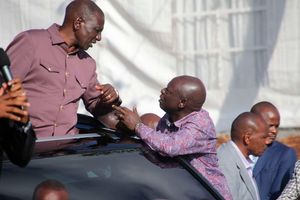
Democracy for the Citizens Party (DCP) Party Leader Rigathi Gachagua (second right) addressing a press briefing at the SKM Centre on April 15, 2026. With him are (from left) Wiper Party Leader Kalonzo Musyoka, Jubilee Deputy Party Leader Fred Matiangi and Democratic Action Party-Kenya (DAP-K) Party Leader Eugene Wamalwa.
Photo credit: Francis Nderitu | Nation Media Group
Jubilee Party Leader Fred Matiang’i and his Safina counterpart Jimmy Wanjigi, who have also declared interest in the presidency, have contracted US firms to spruce up their political images and enhance their international networks.
Beyond the desire to be in Washington’s good books, the diaspora is also coveted for campaign funds. The US is home to one of the largest populations of Kenyans abroad, responsible for a large share of the total estimated Sh650 billion in remittances received in 2025 alone, according to the Central Bank of Kenya.
Traditionally, the US and other Western nations have played a role in Kenyan elections by funding candidates and political parties. Individual candidates have also used lobbyists in the US to fundraise and mobilise for support.
Prof Macharia Munene, a university lecturer and political analyst, like other analysts, said those running for the presidency must have access to billions through donations by tycoons and the business community.
“One does not have to be a billionaire, but needs to have access to billions. It means having networks. It helps to have a little money of your own also,” said Prof Munene.
“To have tycoons believe in you so that they can pump money into your campaigns, there has to be that combination of political appeal and access to resources. You need to have both,” he added.
Former Cabinet Secretary Moses Kuria, who was in President William Ruto’s campaign in 2022 and that of former President Uhuru Kenyatta in both 2013 and 2017, described presidential campaigns as “very expensive”.
He said putting a figure on the campaigns is near-impossible since presidential campaigns start long before the gazetted period. He gave the example of President Ruto’s campaigns, which he said started immediately after Mr Kenyatta secured his second term in 2017.
According to Mr Kuria, being visible across the country means spending money on branding, mobilisation and nationwide campaigning. He observed that only those with a chance of winning attract donations.
“You have to be viable. People must perceive you as a frontrunner before they can put their money [in your campaign], and whether you can deliver their agenda. Some people just want good governance,” said Mr Kuria.
He listed the diaspora as one of the many sources of campaign money, while adding that business people only put their money in a candidate’s campaign if their manifesto promises economic growth.
Financing the opposition, he said, was difficult because of State surveillance.
“Funding the opposition is not easy because of the scrutiny involved,” he said.
Opposition politicians have had their accounts frozen after receiving campaign donations, or to make it difficult for them to access their campaign money.
DCP Party leader Rigathi Gachagua addressing journalists in Nairobi on July 10, 2026.
Photo credit: Bonface Bogita | Nation Media Group
Mr Gachagua, in a past interview, disclosed how the Jubilee administration froze his accounts during the 2022 campaigns.
“I was in trouble with the previous administration because I was funding Ruto’s campaign. They froze my accounts, blocked my businesses and tried to stop me. I invested heavily in his campaigns,” Mr Gachagua said following his impeachment as Deputy President.
Jubilee Party Deputy Party Leader Jeremiah Kioni said one must have their own money to avoid being a project. He said presidential candidates who rely on donors end up losing their independence.
“If you don’t have your own money to run your own programme, you will be frustrated. You must have your money,” said Mr Kioni.
He explained that although Mr Kenyatta also sourced money through fundraisers, he was his own man and could make things move.
He corroborated Mr Kuria’s assertion that tycoons and the business community only invest their money in candidates who have a high chance of winning. He said some donors fund the campaigns of two frontrunners.
“You must be a candidate for you to attract money. No one puts their money in people still running around to gauge their popularity,” said Mr Kioni. “You also have to be the winning candidate. People put in their money when they are sure of a win. ”
Nyando MP Jared Okello, who was a close ally of the late Raila Odinga, said the former prime minister was able to mount serious presidential campaigns because of his local and international networks.
He said Raila had built strong networks with sitting presidents in Africa and leaders in the Western world, as well as the business community.
“Raila was always a formidable candidate because of his networks across the continent and globally. He had friends, some sitting presidents. He was able to get support from them during campaigns,” said Mr Okello.
“He had a lot of friends and business partners, who were willing to go over and above for him,” he added.
Kenya Revenue Authority board chairperson Ndiritu Muriithi, who was in Raila’s 2022 campaign, put a premium on organisation, which he said requires money to recruit the right personnel.
“You need a fairly large team that is working consistently. The other big thing you need is a compelling narrative,” he said.
According to Mr Ndiritu, campaign fundraising remains a major source of funds for running a presidential bid. He gave the example of former US President Barack Obama, who ran his campaign through small-dollar online donations.
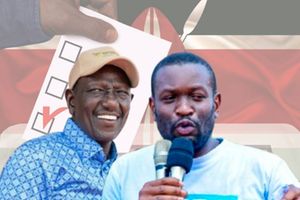
Nairobi Senator and Linda Mwananchi Movement leader Edwin Sifuna during a Sunday service at Jesus Teaching Ministry in Nairobi on October 18, 2026.
Photo credit: Lucy Wanjiru | Nation Media Group
Mr Sifuna has been receiving donations from his supporters during his campaigns. He has also set up a paybill account to mobilise funds. Former Chief Justice David Maraga has also deployed a similar approach to receive donations from his supporters. Critics have, however, dismissed the model as unsustainable.
In a previous interview, Nairobi Governor Johnson Sakaja, who was in Mr Kenyatta’s 2013 and 2017 campaigns, and President Ruto’s 2022 campaign, said procuring campaign merchandise, mobilisation and hiring of agents consume a large share of campaign funds. He claimed a presidential candidate would require half a billion shillings to print merchandise, including T-shirts, caps and placards.
Nairobi has a total of 3,300 polling stations. Mr Sakaja said deploying four agents – two during the day and two at night – would cost an estimated total of Sh26.4 million, if each were paid Sh1,000 and provided with food costing another Sh1,000.
The country is projected to have a total of 55,393 polling stations spread across the country. Going by Mr Sakaja’s estimates, a presidential candidate seeking to deploy two agents in each of the stations would have to set aside at least Sh221 million to pay each of the agents Sh2,000 for one day.
“Doing a rally may not be that expensive because you don’t pay people to come, but you will spend about Sh2 million on logistics; things like a dais, sound system and chairs. You mobilise a small group, the rest would come based on the party support and hype you create around the event,” said Mr Sakaja.