Taxpayers lost Sh912 million in the third term last year alone due to inaccurate enrolment data in secondary schools, according to a report of a nationwide data verification exercise conducted by the Ministry of Education.
The exercise that started in September 2025 established disparities between data logged in the National Education Management Information System (NEMIS) and the school-level data as submitted by heads of institutions. The report uncovers a fraud committed by school heads and MoE officials, but does not indicate how long it has been going on.
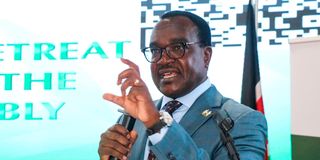
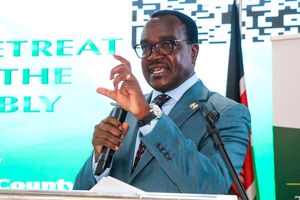
“The amount of money that may have been lost is Sh912 million in the third term only,” said Education Cabinet Secretary Julius Ogamba while releasing the School Data Verification Report yesterday at the Ministry Headquarters at Jogoo House.
CS Ogamba reveals State lost millions through manipulation of schools data
Primary schools' data on Nemis is 5,833,175, whereas the physical count had 4,947,271, indicating a variance of 885,904, while for senior schools have over-reported 87,730 learners on NEMIS.
Ironically, junior schools under-reported their enrolment by 543,250. Speaking to Nation on phone, Mr Ogamba said that the data for primary and junior schools needs further probe since the two sections are hosted in the same compounds but treated differently.
“We don’t know how long this has been going since we only came in recently. We’re the first to verify the learners’ data,” Mr Ogamba said.
The data shows that NEMIS recorded junior school enrolment at 2.4 million against a verified figure of 2.9 million. Mr Ogamba ordered the verification exercise after the Auditor-General raised a red flag over ‘ghost’ learners in schools.
Following the findings, Mr Ogamba has forwarded the names of 20 heads of institutions to the Teachers Service Commission (TSC) for administrative action. However, he did not disclose the affected teachers.
“The schools with the highest variance ranging between 500 to 2,300 are the ones we are taking action on immediately and those are among the first 20 that we are dealing with as we continue taking action against the rest; so it’s an ongoing process,” he said.
Funding for the Free Primary Education, Junior School Education, Free Day Secondary Education and Special Needs Education is allocated strictly based on learner enrolment as captured in the NEMIS.
The Ministry of Education disburses the capitation in three tranches of 50 percent in the first term, 30 percent in the second term and 20 per cent in the third term.
“In light of the findings, the Ministry will suspend all unverified learners from resource allocation in order to protect public funds and uphold accountability. Funding for the affected learners will only be restored upon verification,” said Mr Ogamba, who was flanked by Basic Education principal secretary Julius Bitok.
Aside from discrepancies between NEMIS and the school-level data, the verification exercise noted unauthenticated learner records, including missing or invalid Unique Personal Identifiers, duplicated or incorrect assessment numbers, and mismatched examination centre codes.
During the verification exercise, some 14 institutions did not submit data at all, posing operational challenges during the verification exercise and the TSC is set to take administrative action against the heads of those institutions.
It was also established that 10 secondary schools and 17 primary schools were non-operational due to insecurity, low enrolment, community relocation, or administrative closure — yet their status had not been reported to the Ministry, and they continued to appear in the NEMIS database.
The findings show 102 junior schools and 84 primary schools were found to have enrolments that fell below the stipulated minimum enrolment threshold.
During the nationwide verification exercise, it was noted that there was weak oversight at the sub-county level, where discrepancies were neither reported nor corrected promptly.
As such, administrative action will be taken against 28 sub-county directors of education and quality assurance and standards officers in areas where systemic failures or supervisory lapses are established.
“These 20 include officers who failed to report non-operational schools in their respective areas of jurisdiction,” said Mr Ogamba, adding that the data verification will be carried out on a termly basis.
He said the report will also be forwarded to the Directorate of Criminal Investigations (DCI) for further action.
In light of the findings, the Ministry will subject non-operational schools to formal closure or deregistration in accordance with existing laws and regulations.