A month after the government promised to publish and widely disseminate a comprehensive health benefits package for teachers, confusion and frustration now define the rollout of the Mwalimu Cover under the Social Health Authority (SHA).
Instead of clarity, teachers across the country are encountering new tariffs at hospitals, often learning about them at the reception desk.
What was billed as a comprehensive medical scheme is fast turning into a financial burden for many, as newly introduced ceilings of Sh1,200, Sh2,500, and Sh4,500, pegged to the level of healthcare facility, mean beneficiaries have to top up to access care.
A teacher in Nairobi recounts a recent visit to Westlands Laser Eye Hospital, where a minor eye procedure cost Sh12, 000, which was previously fully covered by the insurer.
“I was shocked to learn at clearance that SHA would only cover Sh4, 500, and attempts to seek clarification through the helpline proved futile,” said a Job Group C teacher.
The teacher, who is a person living with disability and sought anonymity, said he was put on hold on the SHA helpline for 10 minutes, then told there was a network problem before the call was abruptly ended.
For teachers managing chronic conditions, the situation is even more dire. A teacher based in Nakuru undergoing treatment for hypertension and diabetes says that despite having an outpatient balance of Sh150, 000, hospitals are enforcing a daily cap of Sh1, 200.
“My monthly medication costs Sh10, 000, and this means I now have to pay this from my own pocket. It is unfair because I have a comprehensive cover,” the C3 teacher lamented.
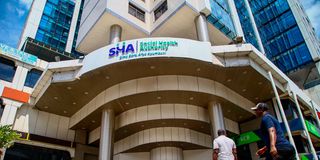
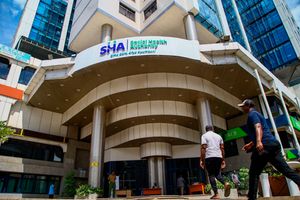
Social Health Authority signage at Mutuini Hospital in Dagoretti South Sub-County, Nairobi, on August 27, 2025.
Photo credit: Wilfred Nyangaresi | Nation Media Group
At multiple facilities, including Nakuru Heart Centre, Valley Hospital, and Mercy Mission, some teachers report being turned away altogether or informed that SHA services for teachers have been suspended until further notice.
Those still offering services are overwhelmed, as reported at Nakuru Specialist Hospital, where there are drug shortages and only one doctor is reportedly attending to teachers, resulting in long queues.
In Nairobi, a teacher who sought treatment at Bliss Healthcare along Moi Avenue for stiff limbs was given only painkillers due to the Sh1, 200 outpatient ceiling.
“Contrary to what has been the case in the past, the waiting lobby at the facility is almost empty, with people leaving once they learn they must top up cash,” the teacher said.
Another teacher at Bliss Healthcare at Teleposta Towers in Nairobi described the shock of discovering that Sh1, 000 of the Sh1, 200 cap is allocated to consultation, leaving only Sh200 for tests and treatment.
“There was no communication about this, and that is the most frustrating part,” the teacher said.
For families requiring specialised care, the impact is devastating.
A teacher in Nakuru with a child suffering from a neurological disorder says accessing specialists has become nearly impossible under the Mwalimu Cover managed by SHA.
“Since teachers were onboarded onto SHA in December last year, my daughter has not been able to see a rheumatologist, as we haven’t been able to trace a specialist under SHA,” she said.
The C2 teacher says she is now considering fundraising to afford a rheumatologist, which costs at least Sh50, 000 privately—an amount she cannot afford on her salary scale.
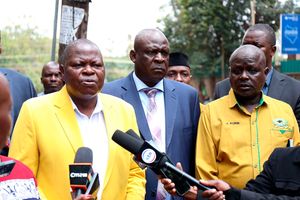
Union officials say these cases are widespread and point to systemic failures in communication and implementation.
Kenya National Union of Teachers (Knut) Nakuru Executive Secretary Gioche Antony confirmed receiving numerous complaints, saying teachers are being told the system is capped at Sh1, 200 or Sh2, 500, even in top hospitals.
“The situation is worse for those with chronic illnesses,” he said.
His Nairobi counterpart, Mugwe Macharia, questioned the abrupt changes, wondering why teachers are being asked to pay from their pockets yet they have comprehensive cover.
“The circular with these new tariffs has not been shared with beneficiaries, who are teachers. It is only healthcare facilities that seem to have it,” he said.
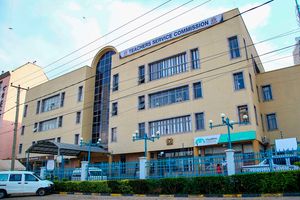
Teachers Service Commission (TSC) headquarters in Upper Hill, Nairobi.
Photo credit: File | Nation Media Group
A notice to healthcare providers by SHA, seen by the Saturday Nation and dated April 12, 2026, notes ongoing implementation of Public Officers Medical Scheme Fund (POMSF) tariffs.
“As a result, SHA has commenced the required market analysis and tariff negotiations under POMSF. So far, negotiations with Level 5 and Level 6 facilities have been completed, and the next phase will focus on Level 4 and Level 3 facilities,” read the notice by SHA Chief Executive Dr Mercy Mwangangi.
In the notice, she notes the exercise is expected to be substantially concluded within 21 days, subject to the outcome of ongoing engagements.
Knut Nyandarua Executive Secretary Charles Njau noted that the current caps are impractical, since if Sh1, 000 goes to consultation, the remaining Sh200 cannot meaningfully cover treatment, leaving teachers stranded.
When he spoke on March 10, 2026, following mounting complaints from teachers that some hospitals had declined or delayed treating them, insisting on cash payment, Health Cabinet Secretary Aden Duale termed this inhumane.
He said there would be publication and clarification of the benefits structure for the Teachers Medical Scheme, aimed at distinguishing the enhanced benefits teachers are entitled to under the Mwalimu Cover.
He added there would be a dedicated toll-free line for teachers, operational 24 hours a day, for rapid response to emergencies or administrative bottlenecks at the point of care.
Teachers have, however, expressed frustration when seeking help through the line, saying that even when someone picks up, the responses are too generic and unhelpful.
System downtimes have also persisted, sometimes for extended periods, forcing teachers to queue for long hours only to be required to pay cash eventually.
Beyond the financial strain, the situation is eroding trust in both the insurer and the employer, and some teachers are now considering abandoning the scheme altogether in favour of private medical cover, despite mandatory deductions.
“I feel disappointed by both my insurer and my employer, the TSC. They should have left the medical allowance money with us to choose our own cover,” she said.
The TSC in December last year migrated teachers from Minet Kenya to the Public Officers Medical Scheme Fund administered by SHA, promising to offer comprehensive medical cover.
The Kenya Union of Post Primary Education Teachers (Kuppet) wants the government to address challenges affecting the SHA medical insurance scheme, warning that teachers will revert to the Minet cover if the issues persist.
West Pokot County Kuppet Secretary Alfred Kamuto said many teachers are facing challenges accessing medical services under the new health insurance plan.
“The current SHA system is not working effectively for teachers. Many are unable to access treatment when they need it most, and this is putting their lives at risk. The government must act immediately or return us to the Minet scheme, which was more reliable,” Kamuto said during a burial in Kwanza.
His sentiments were echoed by Kuppet coordinator Patrick Sulel, who said many teachers are forced to pay for medical services out of pocket despite regular deductions for insurance.
“It is unacceptable that teachers are contributing monthly to a health scheme that does not guarantee them services. Some are now digging into their own pockets to get treatment, which defeats the purpose of having medical insurance,” Sulel said.
The leaders spoke during the burial of Mana Lenah Khatenge, mother to Totum Mixed Secondary School Principal Julius Natoka, in Kwanza.
Kuppet officials now want the government to streamline the SHA system to ensure seamless access to healthcare services, warning that failure to act could trigger nationwide discontent among teachers.
A section of medical practitioners working with the county government in Trans Nzoia told the Nation that most residents seeking services, including teachers, pay in cash due to challenges associated with the medical cover.
“In our public facilities, some patients opt to use cash. For instance, if one is supposed to pay Sh600 per month and needs admission, they have to pay Sh7, 200 before admission, yet the total bill may be Sh3,000. They prefer to pay the actual amount instead of the SHA amount,” said a medic at Wamalwa Kijana Referral Hospital (WKRH).
Data from medics’ unions in the county also indicate that most teachers registered under the national medical cover do not enjoy services compared to their previous scheme under Minet.