A proposal by secondary school principals to increase school fees has sparked a public backlash, with parents questioning why they are once again being asked to shoulder the cost of running public schools instead of the government fully financing education through timely and adequate capitation.
The proposal, tabled last week during the Kenya Secondary School Heads Association (KESSHA) annual conference in Mombasa, seeks to review the school fees structure that has remained unchanged since 2015, arguing that schools can no longer sustain operations under the current funding model.
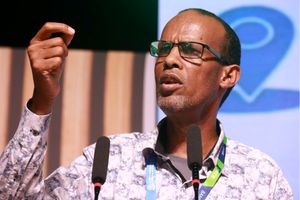
Kenya Secondary Schools Heads Association (Kessha) boss Willy Kuria addressing the press during a past conference in Mombasa.
Photo credit: Kevin Odit | Nation Media Group
If adopted, parents with children in national schools would see annual fees rise from Sh53,554 to Sh87,781, while those in extra-county and county boarding schools would pay Sh83,622, up from Sh40,535. Parents with children in day schools, who currently do not pay tuition fees beyond government support, would also contribute Sh7,675 annually.
The budgetary allocation for each learner in secondary school is Sh22,244 per year, although this has been reducing over the years.
While KESSHA insists a review of the fees is necessary to keep schools operational, parents argue the proposal reflects a deeper failure in the financing of public education.
The National Parents Association (NPA) opposed shifting the financial burden to parents, saying that while it appreciates the financial challenges facing schools, increasing fees is not the answer.
“The government is funding education to the extent that it can afford. However, if the government is unable to fully finance education, parents should not be made to bear the burden of fee increases,” said Silas Obuhatsa, the NPA national chairperson
The association instead urged the government to explore alternative ways of supporting schools financially, warning that higher fees would pile more pressure on households already struggling with the high cost of living.
“How logical is it to ask a parent who cannot raise Sh1,000 because of poverty to suddenly find Sh30,000? We understand the financial difficulties schools are facing, but the government should come up with an alternative mechanism to support schools and save parents from further financial strain. Otherwise, vulnerable families, particularly those with children joining senior school, risk being locked out of education,” the association said.
“The heads of schools are asking for fees increment because of the current economic problems. However, before parents are burdened further, the question should be: how much more capitation is the government willing to increase on its side?” said Mr Obuhatsa.
He added that while the government ultimately has the mandate to approve any fees review, any decision should take into account the financial strain many households already face.
Parents have said school administrators should direct their demands to the State, arguing that families are already weighed down by the high cost of living.
“Parents are already paying for learning materials, transport, uniforms and many other school-related expenses. If schools need more money because capitation is delayed or inadequate, why should parents always be the first source of that money?” the parent posed.
KESSHA says schools have been receiving only a fraction of the capitation promised by the government.
According to the proposal, by the second term of 2026, schools had received only 56 per cent of the expected annual capitation, creating a funding deficit equivalent to 24 per cent of the annual allocation per learner.
KESSHA further argues that inflation has drastically increased the cost of food, fuel, electricity, salaries and learning materials, while implementation of Competency-Based Education has introduced additional costs through specialised subjects that require new equipment, infrastructure and teachers.
If the government does not increase capitation or release it on time, schools will have limited options. They can either cut services, postpone repairs, delay payments to suppliers or seek additional contributions from parents.
Additional annual expenses
For a family with two children in boarding school, the proposed increases would translate into tens of thousands of shillings in additional annual expenses at a time when many households are already struggling with rising food prices, rent and transport costs.
Some parents fear the increases could push vulnerable learners out of school, force others to transfer to cheaper institutions or leave families relying more heavily on loans and fundraising to finance education.
“We all know the state of the economy. If parents are paying almost as much as they would in private schools, then what is the point of public education? The government must find better ways to fund schools, or thousands of children will simply be priced out of learning,” said another parent.
The Kenya Union of Post Primary Education Teachers (Kuppet) also faulted the government over delays in the disbursement of capitation funds to schools, warning that the funding crisis is undermining the smooth running of learning institutions across the country.
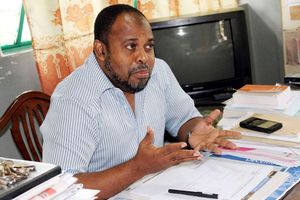
Kenya Union of Post Primary Education Teachers (Kuppet) Deputy Secretary-General Moses Nthurima.
Photo credit: File | Nation Media Group
Kuppet Deputy Secretary-General Moses Nthurima said schools continue to face financial uncertainty due to inconsistencies in the release of government funds.
"As a union, we remain concerned by the perennial delays in the disbursement of capitation funds. Indeed, it is becoming difficult for us to track how much capitation funds are being disbursed due to constant changes in the disbursement criteria and contradictory circulars issued by the Ministry of Education," said Mr Nthurima.
Kenya Teachers in Hardship and Arid Areas Welfare Association (KETHAWA) National Secretary Ndung'u Wangenye opposed proposals to increase school fees, saying any adjustments should only be made by individual schools after receiving approval from parents and the Ministry of Education.
Kethawa said schools face different financial pressures and it would be unfair to adopt a one-size-fits-all approach.
“I do not support the proposal. Schools have different needs, and any decision to increase fees should be left to individual institutions and parents. What we want to see is the immediate release of capitation. There still arrears that still date back to 2018 and have continued accumulating over the years we want the ministry to gradually start paying this arrears,” he said.
He said schools that require additional funding should first seek the approval of parents during an annual general meeting before forwarding the proposal to the Ministry of Education for approval.
“If parents agree that fees should be increased because of the needs of their children, the proposal should be documented, approved during an AGM and submitted to the ministry. Only then should the school implement the increase,” he said.