For much of the post-independence period, Kenya’s public education system was anchored on a clear ideological promise—education as a public good and a nation-building tool.
Schools were not merely spaces of instruction but sites of social mobility, civic formation and economic hope. However, that has changed over the years, through policy choices.
A review of official data on national examination results and school progression by the Nation shows that while access to education has expanded, learning outcomes are stubbornly uneven. Also, over the last three decades, there has been a significant shift from public to private education, as more parents lose confidence in the State’s provision of education.
Between 2010 and 2025, the number of candidates sitting the Kenya Certificate of Secondary Education (KCSE) examination grew steadily, reflecting an impressive transition to secondary school. However, this expansion has not translated into a proportional increase in quality grades and transition to higher education.
Former Teachers Service Commission (TSC) boss Benjamin Sogomo said planning for public education has deteriorated over the last two decades.
“The departments responsible for budgeting and strategic planning often lack the necessary expertise in both economics and education. Recommendations from task forces and committees are frequently ignored, leaving schools without clear guidance or resources,” said Mr Sogomo.
After Kenya attained independence, President Jomo Kenyatta constituted the Ominde Commission in 1964. The commission was tasked with reviewing the national education system to replace the colonial structure.
This led to the birth of the 7-4-2-3 (A-level) system. Its primary goal was to foster national unity and reflect Kenya’s new-found sovereignty by providing a uniform curriculum for all citizens regardless of race. This commission focused on skills, knowledge and competencies that Kenyans needed to take over from the colonists. The curriculum was geared towards white-collar jobs.
However, by the 1970s, critics had begun to argue that the 7-4-2-3 system lacked the flexibility to respond to the changing aspirations of the labour market. There was a perceived gap in new skills, technology and attitudes toward work.
After more than a decade, the A-level system was deemed too academic and detached from the country’s economic needs. These concerns culminated in the Mackay Commission Report of 1982, which paved the way for the introduction of the 8-4-4 system in 1985.
Mr Sogomo noted that in 1974, Kenyatta introduced free primary education. However, parents were still expected to contribute funds for building classrooms, latrines and other essential infrastructure, highlighting early tension between policy intent and implementation.
The early years (1978–1985) of President Daniel Moi’s presidency brought renewed investment in education. Moi, a former teacher, prioritised the construction of secondary schools, teacher training colleges and even a second public university.
According to Mr Sogomo, the late1980s marked the beginning of a long decline. Structural Adjustment Programmes by the World Bank and the International Monetary Fund slashed government funding, forcing parents to pay fees for education that had previously been free. The introduction of the 8-4-4 system further strained schools with limited resources.
“Schools could no longer provide basic services without asking parents to contribute. That started the slow erosion of public education,” he said.
Mr Sogomo faulted the implementation of free education programmes under subsequent administrations, including President Mwai Kibaki’s (2003–2013).
“When 8-4-4 was introduced, schools that already had A-level infrastructure had a big advantage. But many other schools were left behind. Funding was always insufficient. The government gave, for example, 1,420 shillings per child per year. If you do the math, that’s less than 100 shillings per day. How can a school run on that? How can a child get a proper education?” he asked.
“Yes, free primary education was reintroduced in 2003, and it allowed poor children to go back to school, especially in slums and poor counties. But the resources did not match the enrolment. Classrooms were overcrowded, teachers couldn’t cope, and many families with means took their children to private schools. Even some teachers sent their children to private schools because they knew first-hand what the public schools were like,” he added.
He pointed out that the planning and economic oversight of education has weakened over the past 20 years, with fewer trained specialists in the ministry.
“Teachers are not deployed according to the real need, and funding has not increased. Even the competency-based curriculum, which is well-designed, suffers because the system doesn’t support it,” he observed.
An evaluation by the Kenya Institute of Curriculum Development indicated that the 8-4-4 system had become overly examination-oriented, placing too much emphasis on content coverage while neglecting special needs education, skill development and application, ICT and career guidance.
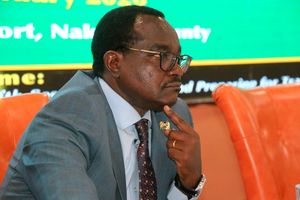
Seeking to realign the education sector with the Constitution of 2010, the government adopted the recommendations of the Prof Douglas Odhiambo Taskforce, leading to the current 2-6-3-3 system, better known as Competency-Based Education (CBE).
The 2-6-3-3 system aims to make Kenyan learners globally competitive while ensuring quality education for sustainable development. Unlike its predecessors, the CBE system prioritises seven core competencies: communication and collaboration; self-efficacy; critical thinking and problem solving; creativity and imagination; citizenship; digital literacy; and learning to learn.
Prof Laban Ayiro.
Photo credit: Daystar University
Renowned educationalist and Vice-Chancellor of Daystar University, Prof Laban Ayiro, said CBE’s intention is progressive and humane. The system, he said, seeks to reduce the trauma associated with high-stakes national exams, to recognise diverse talents and to align schooling with aptitude and interest rather than prestige alone.
“On paper, it represents a decisive break from the Kenya Certificate of Primary Education era, sorting out that often narrowed opportunity and defined children by a single number. Yet noble intentions do not automatically translate into sound outcomes,” said Prof Ayiro, adding that the Kenya Junior School Education Assessment design raises serious questions of equity and economic feasibility.
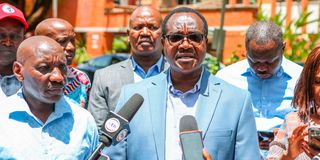
Hesbon Otieno, deputy secretary-general of the Kenya National Union Teachers (Knut) during a press conference after a meeting at Winstar Hotel in Eldoret town, Uasin Gishu County, on June 21, 2021.
Photo credit: Jared Nyataya | Nation Media Group
Kenya National Union of Teachers Deputy Secretary-General Hesbon Otieno said 8-4-4 focused a lot on ranking and examinations rather than competencies learners were supposed to acquire in school. He explained that schools prepared candidates to pass the national examinations.
“Competencies of a child were measured by the certificate they had, and not necessarily the competencies they had acquired. That is what led to CBE. Which accommodates every learner. Not every child could pass an exam, but that did not mean that the children had not learned,” said Mr Otieno.
“Even the middle-level colleges were almost collapsing, especially the vocational training colleges. Embracing CBE was a global move towards competency where everyone mattered regardless of what they had,” said Mr Otieno.
Humphrey Sitati, an education consultant at Sub-com Company Limited, argued that the growing concern over the decline of public schools in Kenya cannot be explained simply by policy failure. Instead, he framed the crisis as a system that is evolving but without clarity of purpose, leadership accountability, or alignment to the learner’s needs.
According to data, from 2004 to 2019, primary completion rose gradually. There was a dip around 2010 where the completion rate dropped from 83 per cent to 75 per cent, followed by a steady recovery. By 2022, completion rates were at 87 per cent. There is no available data after that.
On transition from primary to secondary school rates, the percentage of pupils moving to secondary schools in the 2000s was between 56-60 per cent, but this steadily rose to 91 per cent in 2020. Data on transition is no longer provided, but the government put in place a 100 per cent transition policy that it says has worked—every year since 2022, the government has reported that all pupils have transitioned to secondary schools.
“Without a shadow of doubt, I am confident that on our shelves, from the lowest level of the ministry’s stakeholders to the highest, we have sufficient policies. The problem is that most of these policies are just sitting on those shelves,” he said.
“Different ministers have come into the ministry, and they did not do anything new; they simply went to the shelves, pulled out policies that should have been implemented a long time ago, and when they unleashed them, they only prompted a little bit of change,” he added.
As a result, he argued that policy gaps account for only a small portion of the challenges facing public education.
“For that reason, I would not personally give policy issues anything close to 5 per cent of the contribution to the mess we have in the ministry. The bigger issue is leadership and direction. When public education is evolving, we must ask ourselves who that evolution is serving; is it serving the learner, the State, or the market? The moment we misdirect education into another interest group, that is when we escalate the decline,” he said.
Mr Sitati also questioned whether current reforms, particularly the CBE, are aligned with realities on the ground.
“When we talk about education reform, we cannot avoid the hard questions. What is the population of learners we have, and what is the infrastructure capacity that is supposed to facilitate those learners?” he asked.
“Do we have the appropriate ratio of teachers to learners? Do we have the appropriate ratio of teachers to subject demand? When we talk about transitioning into CBE and saying 60 per cent alignment, how practical is that when the current teacher capacity is not inclined in that direction? Or is this simply a wish that we are hoping will work with time?” he added.
He linked the declining confidence in public schools to weak supervision and inspection, particularly in marginalised areas.
“You cannot talk about public confidence in schools when oversight is missing. You go to a school, you check the visitors’ book, and you find that the last time a ministry official was in that school was probably two years ago,” Mr Sitati said.