Secondary school principals have warned that persistent underfunding by the government is affecting the quality of education and called for a review of the rates set in 2014.
An analysis of the funds disbursed to schools to cater for learners’ tuition needs indicate that since 2023, the figure has been fluctuating and below the approved Sh22,244 per learner annually under the Free Day Secondary Education programme.
The warning comes as schools open for the critical third term when candidates prepare for the Kenya Certificate of Secondary Education examinations. Schools are required to purchase chemicals, equipment and other materials needed for practical examinations. They also incur huge expenses printing revision materials for candidates.
According to a statement by the Kenya Secondary Schools Heads Association (Kessha) dated August 24, schools had this year received Sh16,056.29 per student against the expected Sh22,244. This represents 72.18 per cent of the expected capitation, leaving a funding gap of about Sh6,188 per student. The analysis shows that the government released Sh7,952.04 per student in term one, Sh4,766.49 in term two and Sh3,337.76 at the beginning of this term.
The delayed and incomplete disbursement means school heads have to operate with less money than the amount budgeted for, potentially putting pressure on already stretched finances. Cluster 4 schools, which are mainly day schools, are most affected since they wholly depend on government funding.
Although the education sector takes the biggest share of the national budget, much of it goes to payment of teachers’ salaries.
The chairperson of Cluster 1 schools, Casper Maina, said the cost of providing education had changed significantly over the years.
The chairperson of Cluster 1 schools, Casper Maina.
Photo credit: File | Nation Media Group
“Capitation is the elephant in the room. It is not enough. This thing was put in place in 2014, 12 years ago. Too much has changed over that time. Why are we not reviewing this? We should be realistic and tell people times have changed,” said Mr Maina, the principal of Nairobi School.
Kessha’s analysis shows that schools received Sh11,892.14 per student in 2023, equivalent to 53.46 per cent of the expected allocation. In 2024, the amount rose to Sh16,205.96, representing 72.86 per cent. In 2025, schools received Sh15,385.12 per student, equivalent to 68.55 per cent, before the figure rose to Sh16,056.29 this year.
“We are being asked to deliver quality education with resources that are not keeping pace with the cost of doing so. The principal is left to balance between what is essential today and what can be postponed until tomorrow,” said a principal in Nakuru.
The government has been insistent that it has improved the timing of the disbursement to coincide with the opening of schools but silent on the adequacy of the funds.
“The government affirms its commitment to fulfil its duty to learners and educational institutions, in line with Article 53(1)(b) of the Constitution that entitles every child to free and compulsory basic education.
“School heads and principals are directed to ensure prudent use of these public resources entrusted to their care for the benefit of learners, and to desist from imposing any unauthorised levies. We will deal firmly with any verified cases of misappropriation of resources and the imposition of unauthorised levies,” said Education Cabinet Secretary Julius Ogamba on Monday.
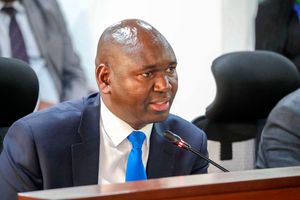
Education Cabinet Secretary Julius Ogamba at a past event.
Photo credit: Kevin Odit | Nation
While this year’s disbursement is higher than the amount received in 2025, schools have still not received the full annual amount expected per learner.
“The cost of running a school has changed considerably. Prices of food, electricity, transport, learning materials and maintenance have all gone up, yet the capitation framework has not kept pace,” said a principal in Nairobi.
“The per-student figure [that is pending] may appear little, but when you multiply it by 2,000 or 3,000 students, you are talking about millions of shillings that the school is waiting for. We are prioritising food, electricity, water and the most urgent learning materials. Other activities and maintenance have to wait until we have sufficient funds,” said the principal.
As school heads prioritise the most urgent expenses, suppliers and service providers may also face delayed payments.
“We are surviving on credit. We negotiate with suppliers and ask them to give us more time, but you cannot keep borrowing indefinitely. We already have debts from previous terms and years, and now we are entering the final term, with the same problem. The government does not seem to understand that even if capitation comes early, schools will remain in trouble if they still carry arrears from previous years,” the principal said.