As learners across the country head home for the August holiday, secondary schools are grappling with a Sh22.5 billion capitation shortfall, leaving institutions deep in debt and struggling to provide food, pay for utilities and meet other basic running costs.
The Kenya Secondary School Heads Association (KESSHA) says the funding crisis has worsened the financial strain on schools, with Principals forced to seek additional support from parents and sponsors to keep their institutions running.
According to the ministry, schools are expected Sh11,122 for Term One, Sh6,673 for Term Two and Sh4449 for Term Three, making a total of Sh22,244 per child in one year.
However, KESSHA chairperson Willy Kuria said school schools received Sh6,577 per learner, while Sh1,375 was retained by the Ministry of Education, bringing the total allocation to Sh7,952 per learner in term one which left a shortfall of Sh3,170 per learner.
In the second term he revealed that schools received Sh4,852 per learner, while Sh285 was retained by the Ministry, bringing the total allocation to Sh5,137 per learner and leaving a deficit of Sh1,535 per learner.
Further he noted that schools received Sh14,572 per learner in 2025, while Sh817 was retained by the Ministry for textbooks. When the retained amount is included, schools received Sh15,383 per learner, leaving a deficit of Sh6,860 per learner.
“Schools are in debt. Sometimes we call the parents and talk to them. We tell them about our deficit, and some of them agree to supplement what the school has. They give us some money, but when they do, the Ministry calls it extra fees. Unfortunately, that is how it is classified. But there is no school that can survive on this amount of money,” said Mr Kuria.
Mr Kuria said the capitation rate had not been reviewed despite the rising cost of running schools, leaving institutions struggling to meet basic operational expenses.
“Because this amount of capitation was set in 2017, and now we are in 2026, there is a problem. We have a problem with utilities like water and electricity. This mostly affects day schools because parents clearly agreed to what they were required to pay, but the cost of running schools has continued to rise,” he said.
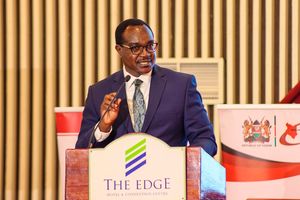
Kenya Secondary Schools Heads Association (Kessha) National Chairman Willy Kuria addresses principals attending the 48th Kessha conference in Mombasa on June 24, 2025.
Photo credit: Kevin Odit | Nation Media Group
The KESSHA chairperson said the cost of feeding learners had also placed additional pressure on school budgets, with schools spending significantly more than the government allocation.
“Right now, to feed a child in a secondary school for one year, according to our calculations, it costs Sh61,000. That is just feeding alone. There are also other expenses, including equipment and all the other things required to run a school,” he said.
Mr Kuria questioned how the Government could provide free secondary education when it was struggling to meet its existing capitation obligations.
“If it has been impossible to give the Sh22,000, how can this one be done? It is impossible.”
He also raised concerns over unpaid KNEC examiners, saying the funding shortfall undermined plans for fully funded secondary education.
“If I have been unable to give KNEC enough money to pay the examiners, how do you talk about providing fully funded secondary education? You cannot.”
Mr Kuria said schools were also relying on sponsors to support learners and institutions, but their contributions did not always cover the full cost of running schools.
“The only thing the government is actually giving is inadequate,” said Mr Kuria.
Several principals, who requested anonymity for fear of victimisation, said they are yet to receive the latest capitation disbursement due to persistent challenges with the Kenya Education Management Information System (KEMIS). They said discrepancies between the learner numbers captured in KEMIS and the actual enrolment in their schools have locked some institutions out of funding altogether, while others received less than they were expecting.
The principals blamed the delays on unresolved technical glitches and difficulties in updating learner records on the system, saying the problem has persisted despite repeated attempts to have the data corrected, leaving schools struggling to meet operational expenses as they prepare to close for the August holidays.
“There are schools that have yet to receive capitation because of the issue with KEMIS. If a school has students physically attending classes, there should be a mechanism to verify those numbers and release the funds without unnecessary delays. Schools cannot be expected to continue operating without capitation simply because of technical challenges in the system. These institutions still have to feed learners, pay for utilities, purchase learning materials and meet other day-to-day operational costs. The government must move with speed to reconcile the data and ensure every school receives the funding it is entitled to,” he said.