Nairobi County recorded the highest cases of violence against learners in schools, including gender-based violence (GBV), online harassment and other harmful practices, a new report by the National Gender and Equality Commission (NGEC) has revealed.
According to the report, 66.7 per cent of schools in Nairobi reported at least one form of learner violence, the highest proportion among all the counties assessed. The most common forms were physical and sexual violence, affecting both boys and girls.
Physical violence emerged as the most prevalent form of abuse in the capital, with 55.6 per cent of boys and girls reporting incidents, followed closely by sexual violence at 44.4 per cent, the report shows.
Nairobi was also identified as the worst-affected county in cases of online harassment, accounting for 11.1 per cent of reported incidents, followed by Baringo at 9.1 per cent. All other counties assessed recorded no reported cases of online harassment against learners.
The analysis conducted in the first week of September 2025 engaged public primary schools located in 19 Arid and Semi-Arid (ASAL) regions.
The public primary schools were also drawn from informal settlements primarily within Nairobi’s urban centres, and other hard-to-access geographical locations.
In the study titled: “Evidence on School Level Factors Affecting Girls’ Access to Quality Education in Marginalized Communities in Kenya, researchers prioritised areas documented to have the highest gender disparities in educational access and outcomes.
Kitui, at 36.4 percent, registered the second-highest cases of various forms of violence against learners reported in schools.
In terms of gender, cases of physical violence against learners were slightly higher among boys (15.9 percent) than girls (13.8 percent), with Nairobi (55.6 percent) and Marsabit (26.7 percent) at the forefront.
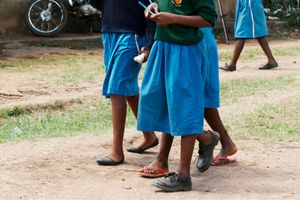
Physical violence emerged as the most prevalent form of abuse in Nairobi.
Photo credit: Photo I Shutterstock
Compared to boys (3.3 percent) girls experienced more incidences of sexual violence (14.4 percent), with the most notorious counties being Nairobi (44.4 percent), Kilifi (21.4 percent) and Marsabit (20 percent).
On violence reported in school settings, more boys (9.9 percent) experienced physical violence than girls (8.7 percent).
Girls, on the other hand, were the most affected by sexual violence within schools (6.5 percent) compared to 1.9 percent among boys.
“On average, 23.9 percent of schools reported that learners experienced some form of violence. Across most counties, girls experienced higher rates of sexual violence, while boys reported slightly higher rates of physical violence,” the report states.
Although online sexual harassment was the least reported, recorded by 1.4 percent of schools, the study cautions that “the presence of online harassment, although minimal, signals emerging digital safety concerns among learners.”
Overall, 2 in 10 schools reported that learners experienced some form of violence, stated the NGEC Chief Executive Officer, Purity Ngina.
“Violence in this context refers to any form of violation against a child, whether by a church elder, neighbour, family member,” Dr Ngina explained
The report further scrutinised harmful cultural practices against children, focusing on Female Genital Mutilation (FGM), child labour, and child marriage, which, data analysis shows, “continue to undermine children’s access to education, with girls disproportionately affected.”
Isiolo topped the list of counties with the most reported cases of child labour, accounting for 50 percent of incidents of boys involved in child labour, while girls faced higher involvement in domestic chores and market work at 40 percent.
Laikipia and Baringo emerged second among counties with the most reported cases of boys engaged in child, at 36 percent respectively.
Meru (20 percent), and Baringo (18 percent) also reported higher involvement of girls in domestic work.
The figures regarding boys and girls in child labour “reflect economic pressures and reliance on herding and casual work,” the report states.
On child marriages, Isiolo and Meru registered the highest incidences of girls affected by child marriages, followed by Narok and Kilifi at 29 percent respectively and Baringo (27 percent).
Cases of FGM were most pronounced in Baringo (27.3 percent), Garissa (27.3 percent), and Narok (21.4 percent), “reflecting persistent cultural practices in parts of ASAL and pastoralist regions.”
Kitui, Makueni, Kwale, Turkana, West Pokot, Samburu, Kilifi, and Nairobi did not report any FGM cases, with the report attributing this to “positive progress in community sensitisation in those areas.”
Marsabit girls who underwent medicalised FGM.
Photo credit: File I Pool
Interviews conducted with key informants, including teachers and community leaders, indicated that child marriage and FGM, particularly in pastoralist and semi-arid areas, are often perpetuated by cultural expectations of womanhood and family honour.
In Isiolo, Narok, and Garissa, respondents cited economic hardship and traditional rites as the main drivers of early marriages, especially where school retention for girls is already low.
“Headteachers in some ASAL regions observed that child labour is often normalised, with boys herding livestock and girls assisting in household work —behaviours viewed by communities as essential life skills rather than violations of child rights.”
“Several county officials emphasised that while awareness campaigns have increased, law enforcement and follow-up mechanisms remain weak, allowing harmful practices to persist informally.”
Gender and Equality Commission Chairperson Rehema Jaldesa.
Photo credit: File | Nation Media Group
According to NGEC chairperson, Rehema Jaldesa, “harmful cultural practices such as FGM, child labour, and child marriage, continue to undermine children’s access to education, with girls disproportionately affected.”
The persistence of FGM and child marriage in certain counties, she explains, “reveals gaps between awareness and enforcement, while child labour among boys reflects deeper economic and social vulnerabilities.”
“Continued cross-sectoral collaboration—linking education, social services, and local leadership— is essential to address the intertwined cultural and economic drivers sustaining these practices,” states Ms Jaldesa.
The Children Act (2022), Prohibition of FGM Act (2011), and National Policy on the Elimination of Child Labour (2023) prohibit child marriage, FGM and exploitative labour.
However, data indicate that 17 percent of girls are still reported in child marriage, 7 per cent in FGM, and 13 percent in child labour, concentrated in Baringo, Garissa, and Isiolo counties.
The report emphasizes the critical role by leadership and governance within schools to foster an inclusive, safe, and supportive environment for girls.